
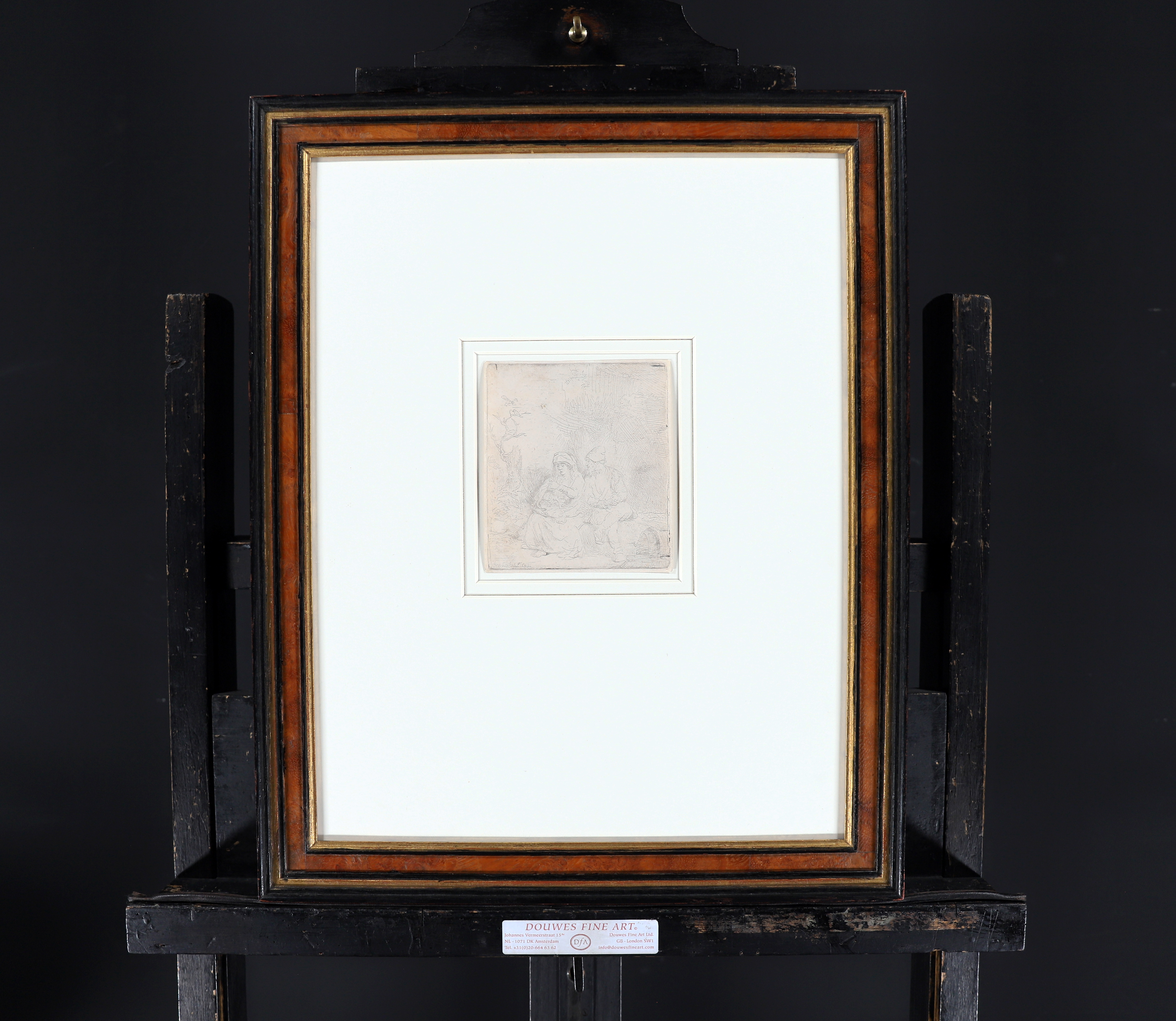
Rembrandt Harmensz. van Rijn
(Leiden 1606-1669 Amsterdam)
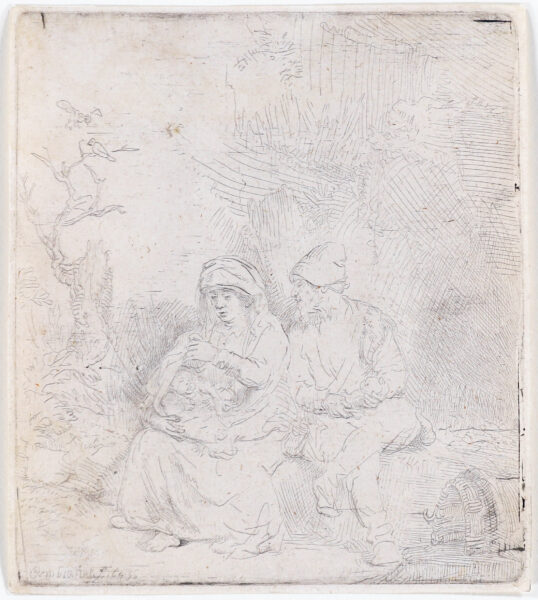
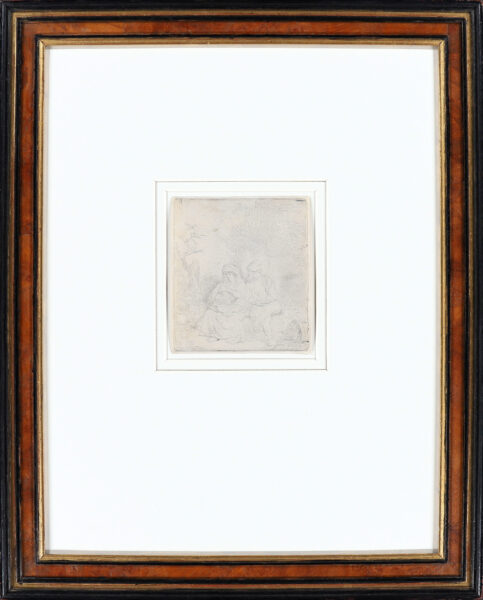
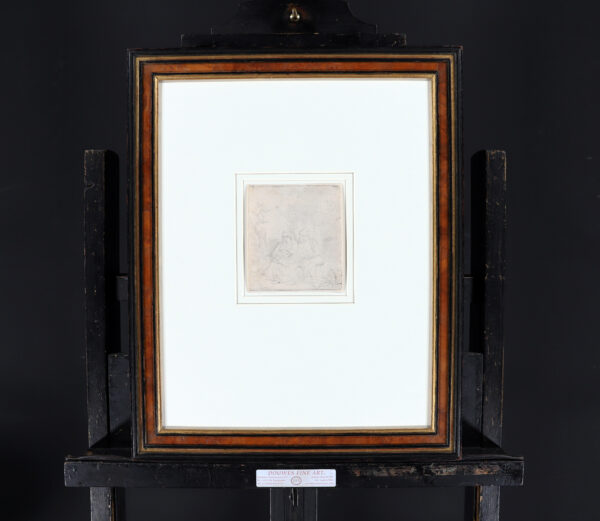
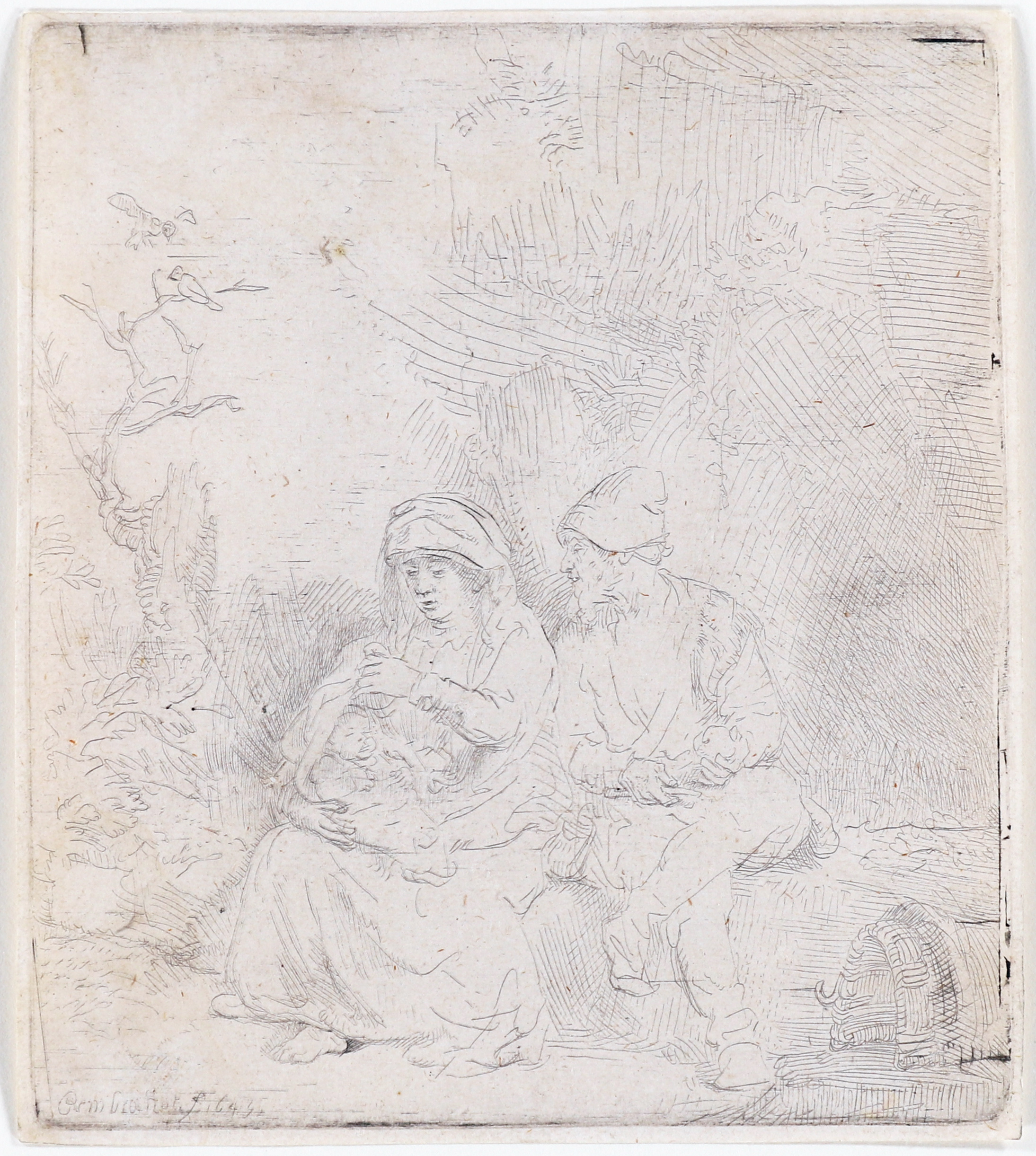
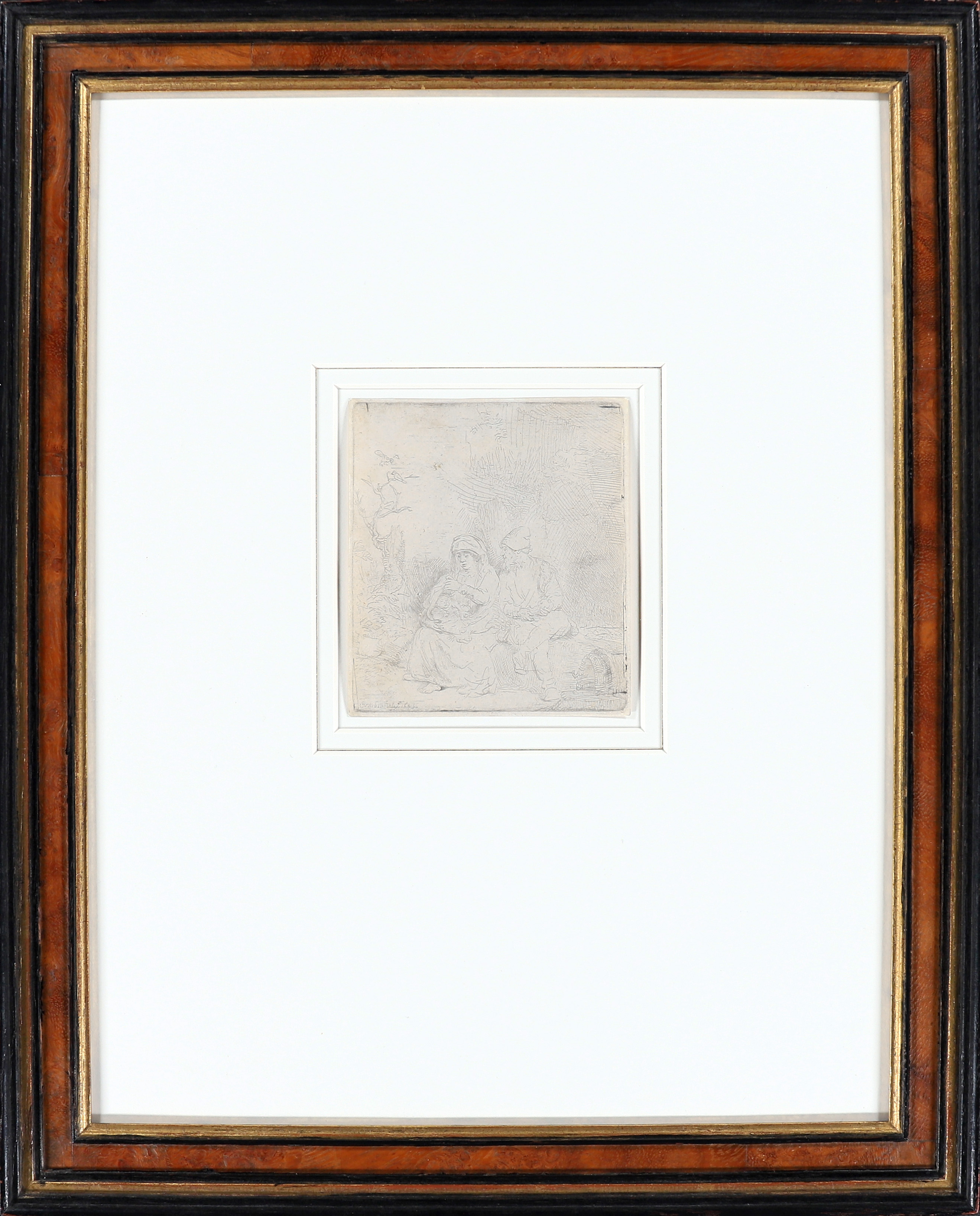
“The Rest on the Flight into Egypt: lightly etched”, 1645
[Pseudo-Matthew 20-21]
Etching and drypoint: 13,4 x 11,9 cm
signed and dated lower left: ‘Rembrandt f. 1645’
watermark fragment Foolscap with five-pointed Collar (Hinterding B.a.a.)
a fine, early impression of this delicate plate
"*" indicates required fields
Notes
A fine, early impression of this delicate plate. Printing with tiny touches of burr, fine horizontal wiping marks and inky plate edges above and below; with a light, uniform plate tone and small margins. There appears to be a crack in the copperplate in the upper left corner. Early impressions like this one seem to have been printed with a greyish ink.
During his lifetime, Rembrandt’s extraordinary skills as a printmaker were the main source of his international fame. Unlike his oil paintings, prints travelled light and were relatively cheap. For this reason, they soon became very popular with collectors not only within but also beyond the borders of the Netherlands.
This delightfully quiet and tender plate, here in a fine and early impression of the only state, shows the Holy Family taking a break on their desperate journey to save Jesus from King Herod’s intention to kill the newborn ‘King of the Jews’ in the Massacre of the Innocents (Matthew 2:1-23). They have sat down at the edge of the road. Mary and Joseph are talking to each other, she is lifting the blanket to show him that the Child is sleeping. Joseph, about to cut and share an apple, is looking over. In the background at upper left, a bird is hovering above its chick sitting on a branch to feed it – an allegory in miniature of parents caring for their child.
Rembrandt etched this plate very lightly, presumably biting it once very briefly in the acid bath. As a result, the lines are very delicate and of similar weight, even in early impressions such as the present one. Quite deliberately, we must assume, Rembrandt wanted to give this print the appearance of a silverpoint drawing.
The comparison of this print with two others of a closely related subject, The Flight into Egypt is striking: the three prints, created within a period of eight years, are entirely different from each other in intention, style, technique, mood and effect. To consider these three prints alone reveals something fundamental about Rembrandt: his immense versatility as a printmaker and his boundless curiosity and willingness to experiment as an artist.
Literature
Bartsch 58; Hind 216;
The New Hollstein Dutch 227 (this impression cited): sixth state (of 10).
Plate not in existence – with Nowell-Usticke (1967):
RRR, a very rare, lightly etched plate
Provenance
- Edward Rudge (1763-1846), Abbey Manor, Evesham, Worcestershire, and London (without mark, as is common, see Lugt 900);
- then by descent to his great-grandson John Edward Rudge (1903-1970);
- his sale, Christie’s, London 16-17 December 1924, lot 80 (with two others; £ 68.5; to Colnaghi).
- With P. & D. Colnaghi & Co., London (their inscription and possibly stocknumber 16767 in pencil verso).
- Richard Dawnay, 10th Viscount Downe (1903-1965), Wykeham Abbey, Yorkshire (without mark, see Lugt 719a, );
- his posthumous sale, Sotheby’s, London, 26 November 1970, lot 62 (£ 65; to Ruth-Marie Muthmann of C. G. Boerner).
- With C. G. Boerner, Düsseldorf.
- Leslie E. Lancy (1911-1996), Ellwood City, Pennsylvania (Lugt 4796).
- With David Tunick, New York (with his code DTMI in pencil verso).
- Sam Josefowitz (Lugt 6094; on the support sheet recto), acquired from the above in 1978;
- Christie’s London, 2023, ‘The Sam Josefowitz Collection: Graphic Masterpieces by Rembrandt van Rijn’
- Private collection, The Netherlands