
Rembrandt Harmensz. van Rijn
(Leiden 1606 - 1669 Amsterdam)
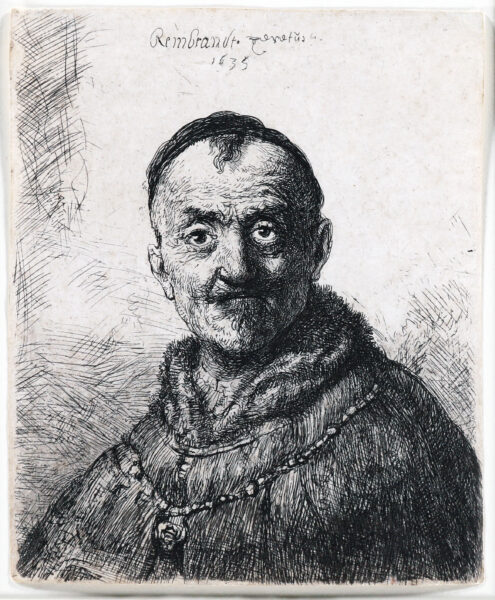
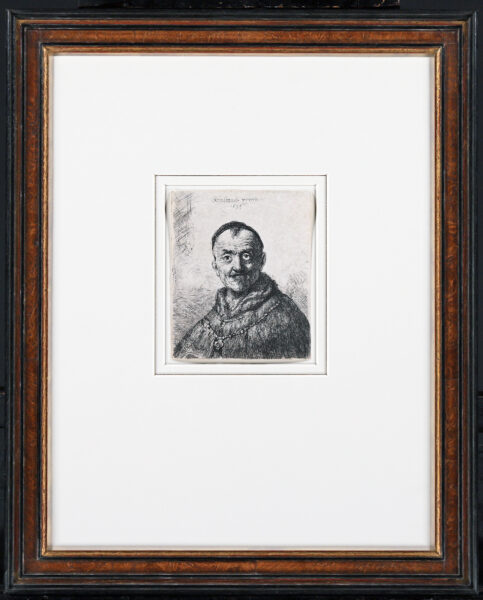
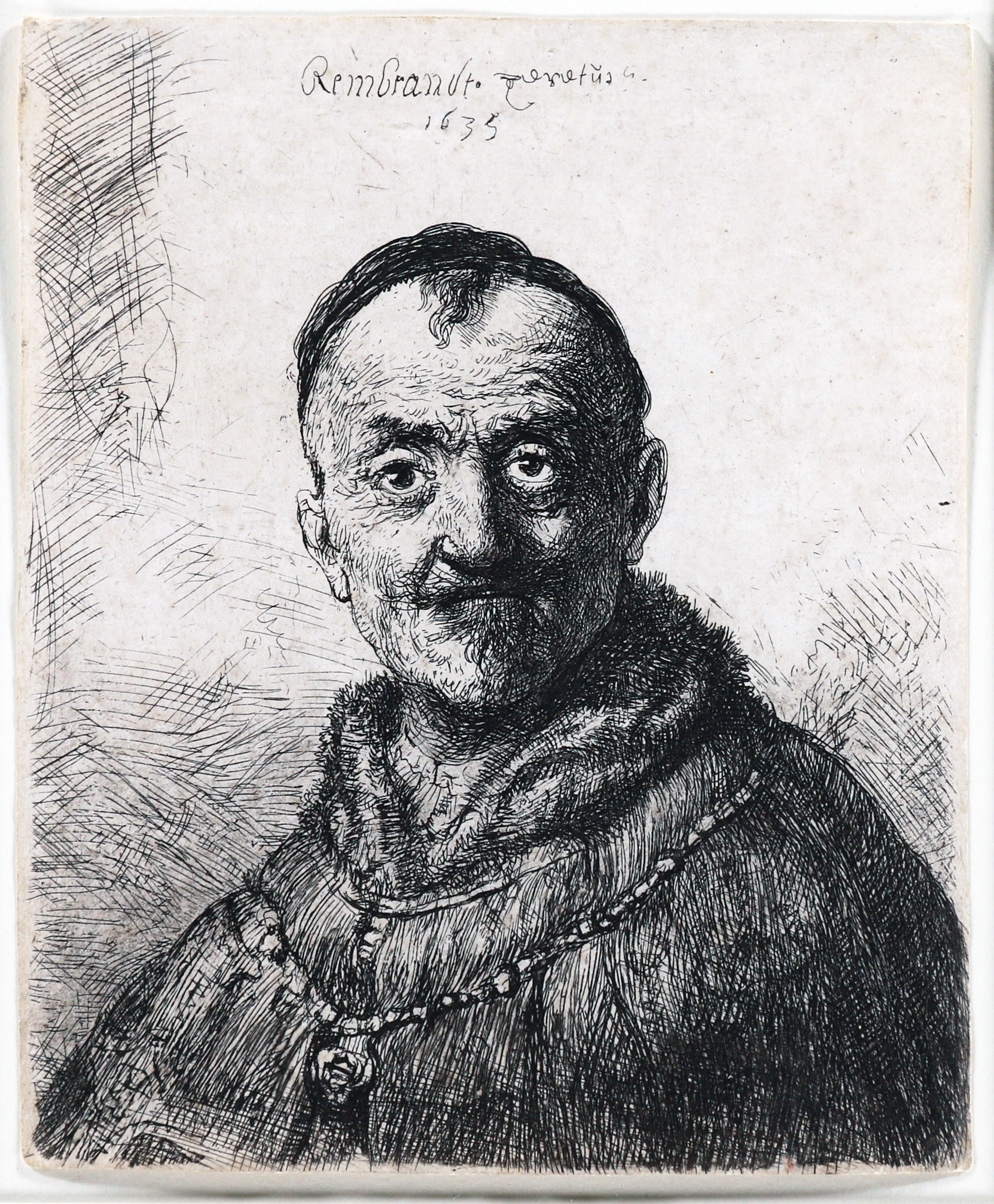
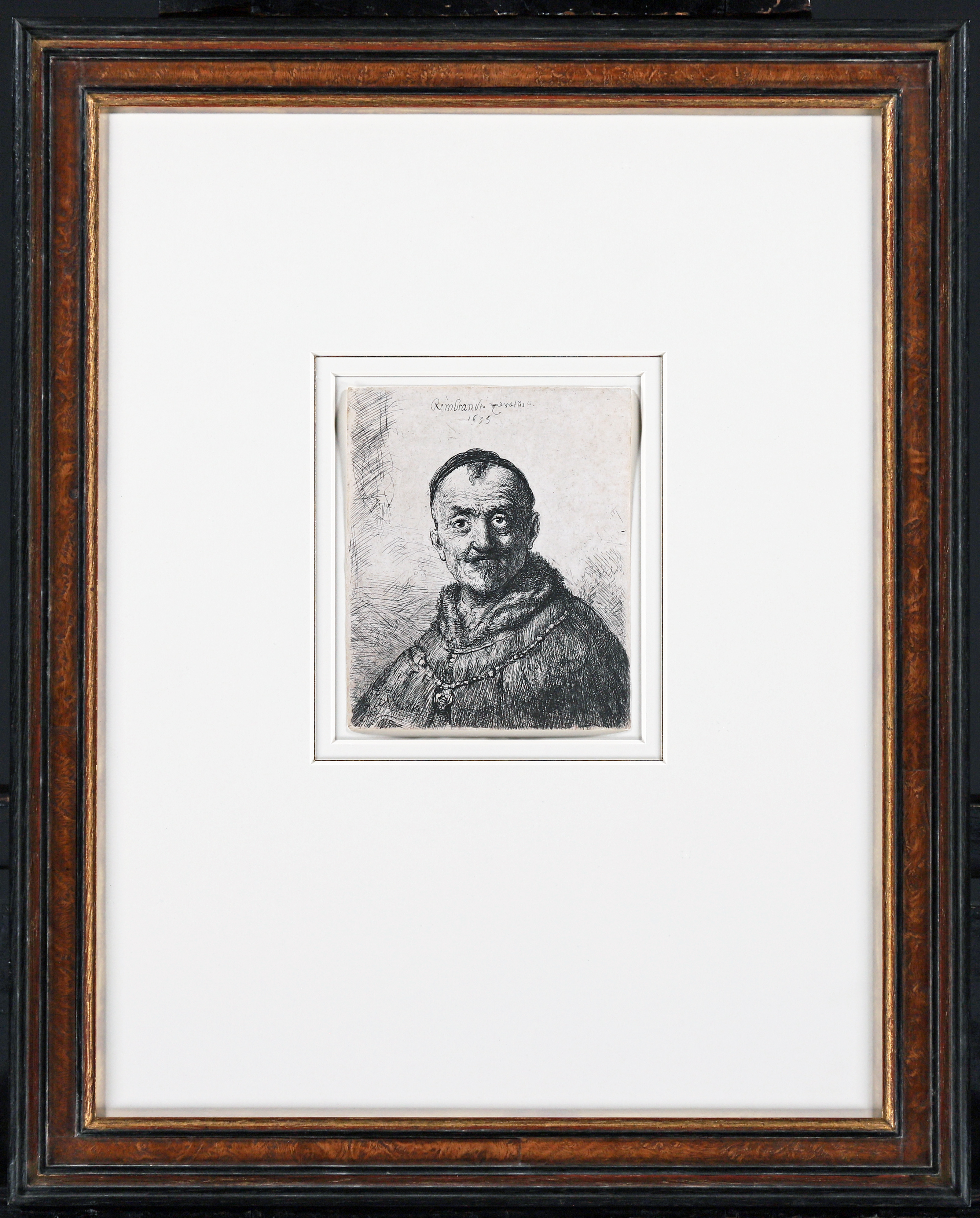
“The First Oriental Head”, 1635
Etching and drypoint: 15,1 x 12,5 cm;
Signed and dated upper centre: Rembrandt. Geretuc | 1635 (g and c in reverse)
watermark Arms of Baden-Hochberg (c. 1638)
"*" indicates required fields
Notes
A very fine impression of New Hollstein’s second state (of five), printing with strong contrasts, fine vertical wiping scratches and touches of burr in the lower left corner. Before the addition of the landscape in the right-hand background – only one unique copy of the first state exists, in London. Early impressions are rare and are inscribed ‘R +’ in Nowell-Usticke.
Widely recognized as the greatest practitioner of the etching technique in the history of art, Rembrandt created 300 prints that constitute a body of work unparalleled in richness and beauty.
This print is part of a set of four, traditionally referred to as the Oriental Heads. They are free copies after prints by Rembrandt’s major contemporary, Jan Lievens, who shared a studio with him in their native Leiden between 1626 and 1631, when they were both young artists on the rise and before their move to Amsterdam.
The Oriental Heads are fine examples of tronies, the Dutch word at the time for a face. Typically these are heads or busts only, concentrating on the facial expression, but often half-length when featured in an exotic costume. Tronies might be based on studies from life or use the features of actual sitters. Both paintings and prints of this kind were sold on the art market without identification of the sitter, and were not commissioned and retained by the sitter as portraits normally were. Rembrandt’s tronies were among his most popular and widely imitated prints.
As one of the towering figures in the history of art, Rembrandt, a miller’s son from the university town of Leiden, was an artist of unmatched genius. Equally gifted as a painter, printmaker, and draftsman, Rembrandt proved himself to be as skillful at making portraits as he was at creating religious and mythological narratives. His landscapes are just as remarkable as his rare still lifes and subjects detailing everyday life.
Literature
Bartsch 286; The New Hollstein Dutch 149: Second state of (V)
Plate in existence in Gottingen University Collection, Sweden
with Nowell-Usticke (1967): R – A scarce print
Provenance
- Emile Galichon (1829–1875), Paris, verso collector’s stamp (Lugt 1058)
- Private collection, Germany
- Karl & Faber, Munich
- Private Collection, The Netherlands