
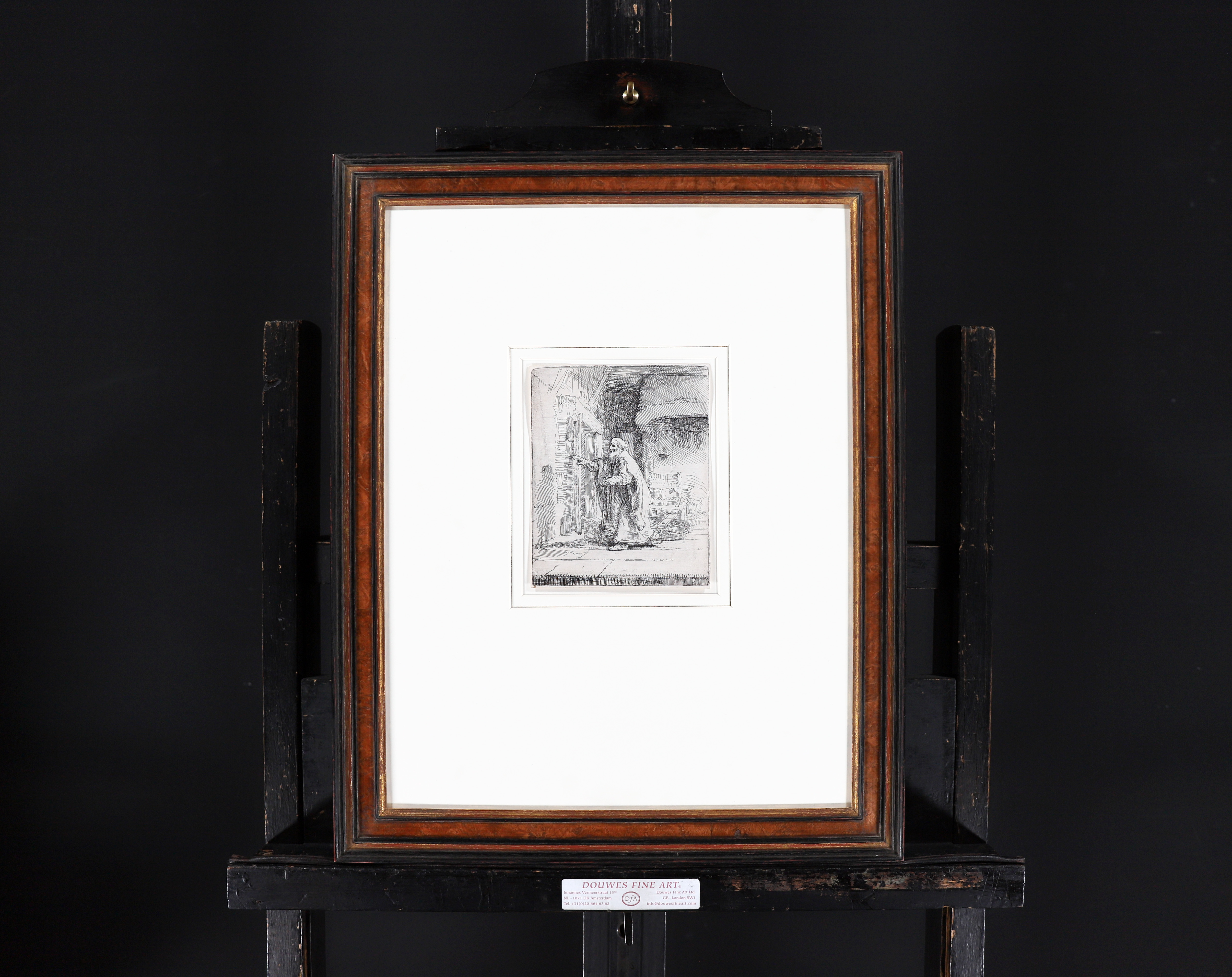
Rembrandt Harmensz. van Rijn
(Leiden 1606-1669 Amsterdam)
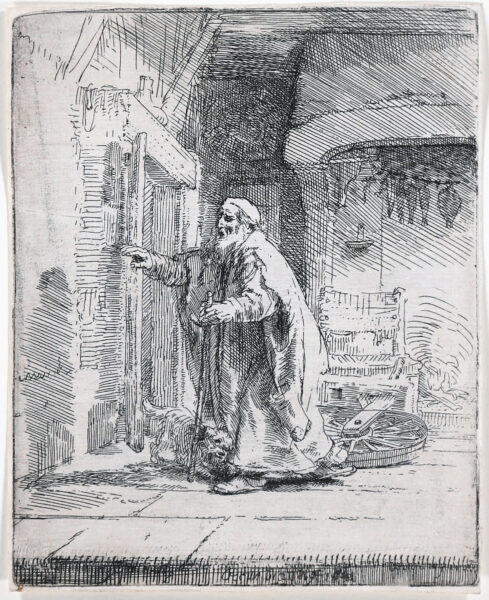
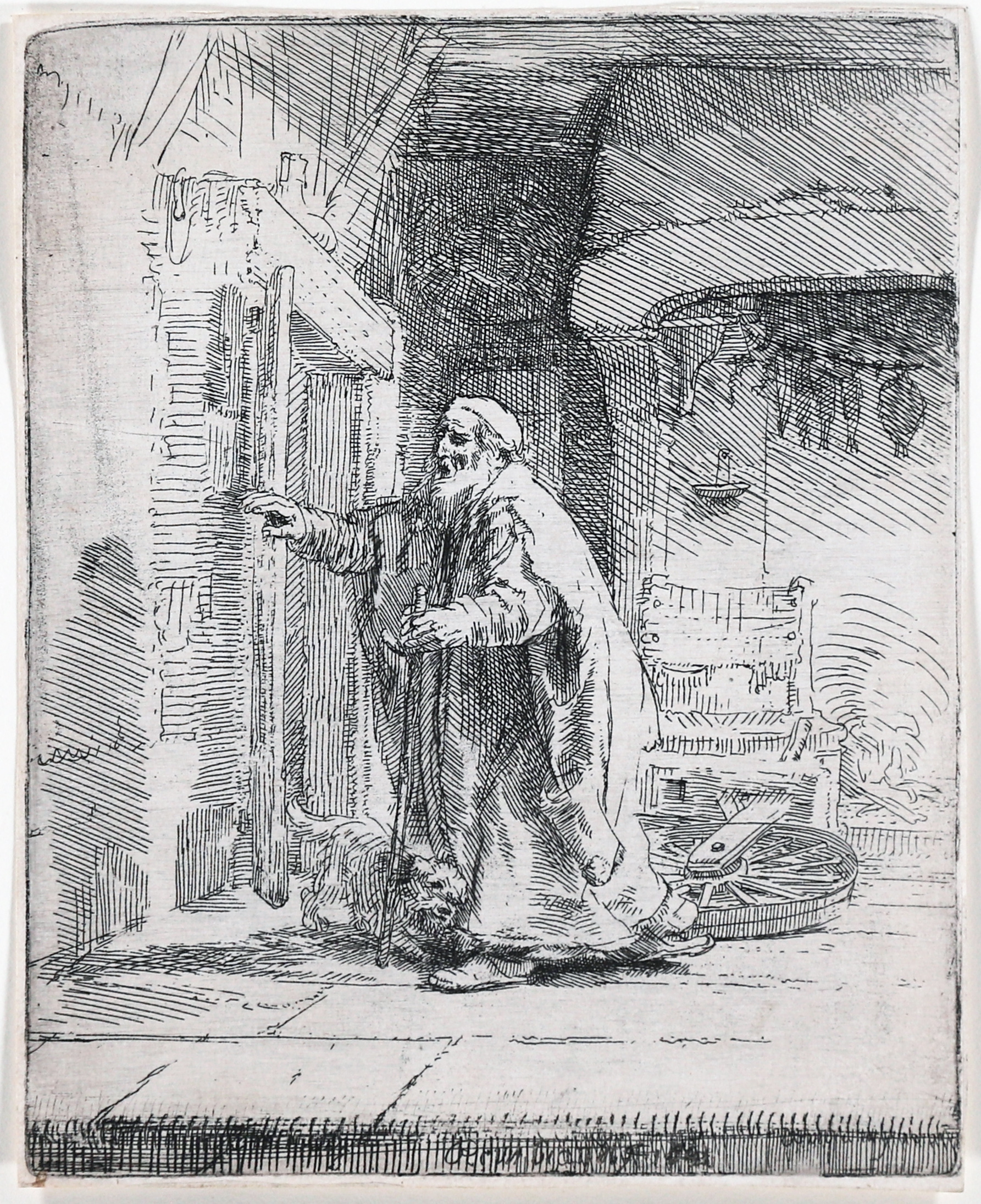
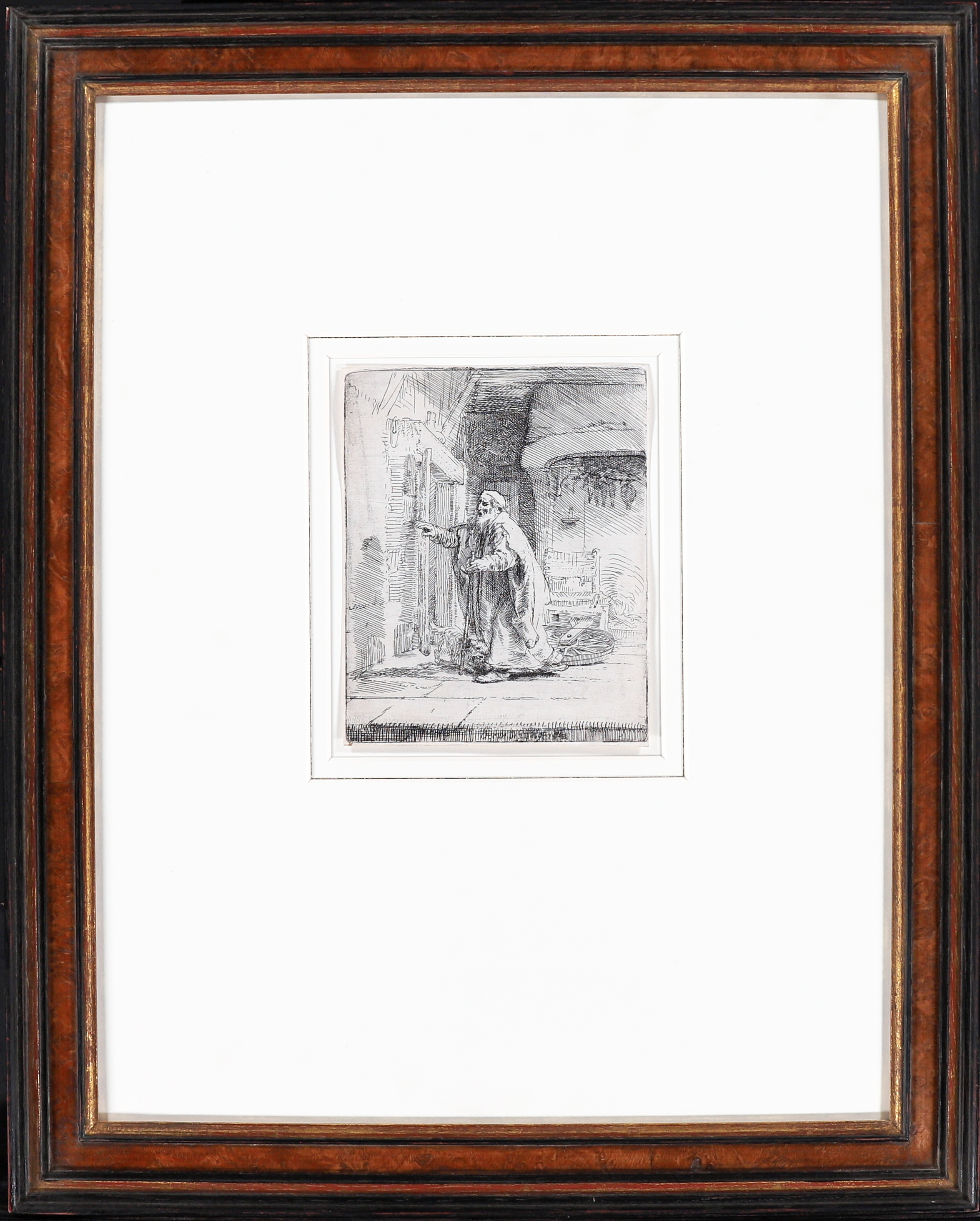
“The Blindness of Tobit: The Larger Plate”, 1651
etching on laid paper: 16,1 x 13 cm
signed and dated lower centre: Rembrandt f. 1651
as well as lower right again: Rembrandt f 1651
Watermark: Foolscap with a seven-pointed collar
"*" indicates required fields
Notes
Rembrandt depicted Tobit numerous times throughout his career. In this composition, he captures an intimate and human moment in which Tobit hastily reaches for the door when he learns his long-expected son has finally returned. In his eagerness, he has knocked over the spinning wheel to reach the son whose dog has run ahead and nestled into his robes in greeting. Tobit holds his hand out in anticipation of reaching his son.
The composition broke from typical representations of this scene that showed Tobit’s wife Anna greeting her son outdoors while Tobit remains in the background. By placing the work in a typical domestic setting with fish hanging in the fireplace, Rembrandt places the moment in a contemporary Dutch setting while also referencing the miracle that reverses Tobit’s blindness.
The subject of this etching comes from the apocryphal Book of Tobit, which tells the story of Tobit, an Israelite living in Assyrian Ninevah. Tobit suffered from blindness and poverty. He sent his son, Tobias, to collect money he had deposited years earlier with relatives and hired a companion to accompany his son. The companion was actually the archangel Raphael in disguise. Their journey was successful: not only was the money recovered, but medicine made from a fish encountered along the way cured Tobit’s blindness.
During his lifetime, Rembrandt’s extraordinary skills as a printmaker were the main source of his international fame. Unlike his oil paintings, prints travelled light and were relatively cheap. For this reason, they soon became very popular with collectors not only within but also beyond the borders of the Netherlands.
Literature
Bartsch 42; The New Hollstein no. 265: First state (of II)
Plate not in existence, lost after 1767
with Nowell-Usticke (1967): C1+, rather uncommon and popular plate.
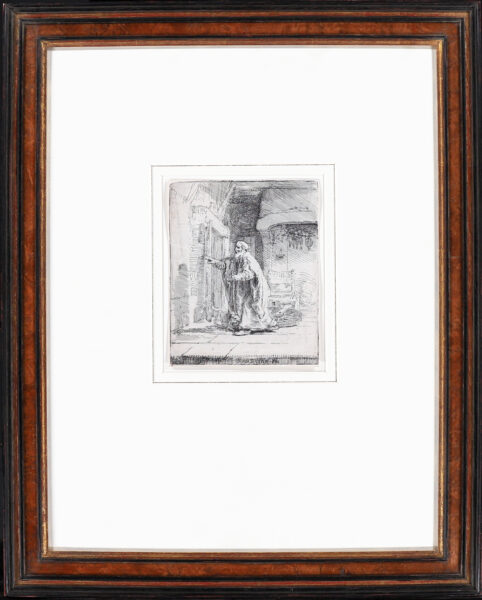
With touches of burr beneath Tobit’s elbows, and in his coat. With light horizontal scratches, sulphur tint on the left and inky plate edges. With fine margins around the platemark.
Provenance
- Karl & Faber, Munich
- Private collection, The Netherlands