
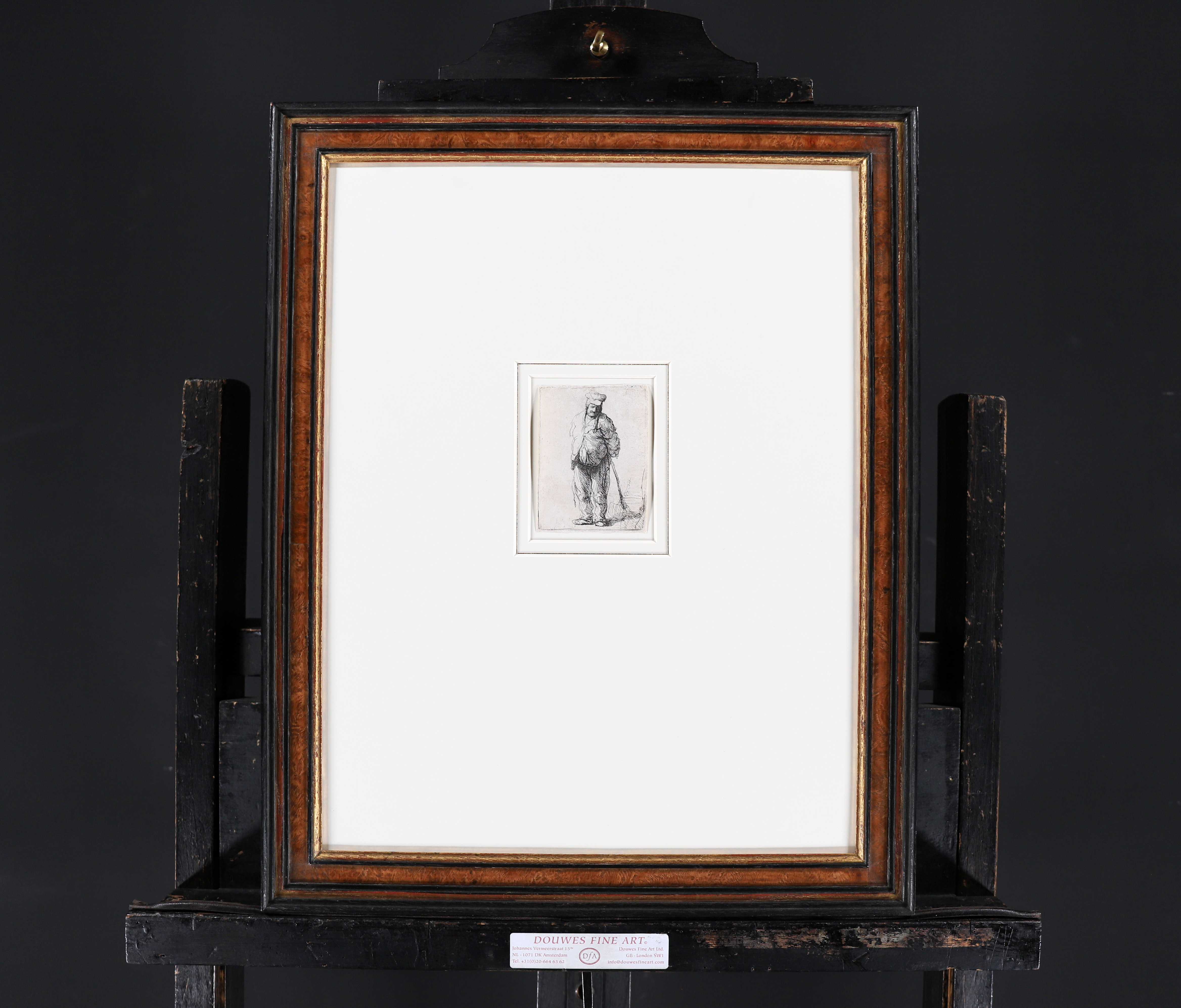
Rembrandt Harmensz. van Rijn
(Leiden 1606-1669 Amsterdam)
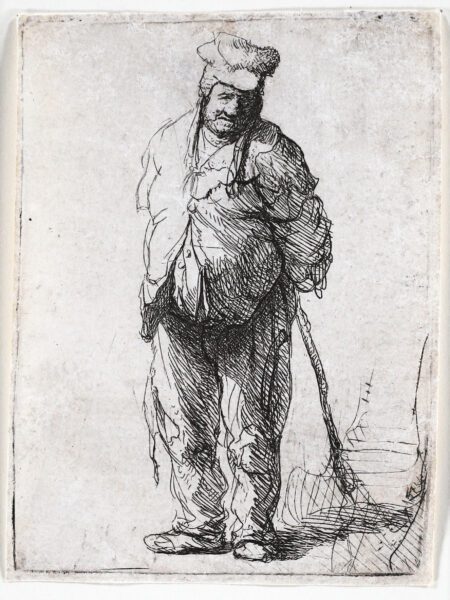
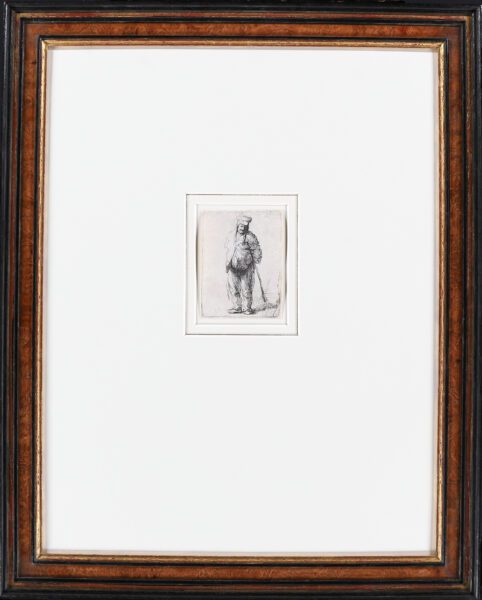
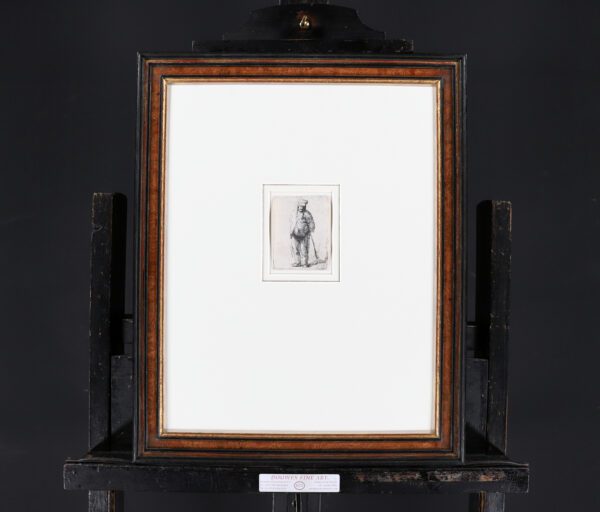
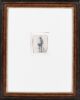
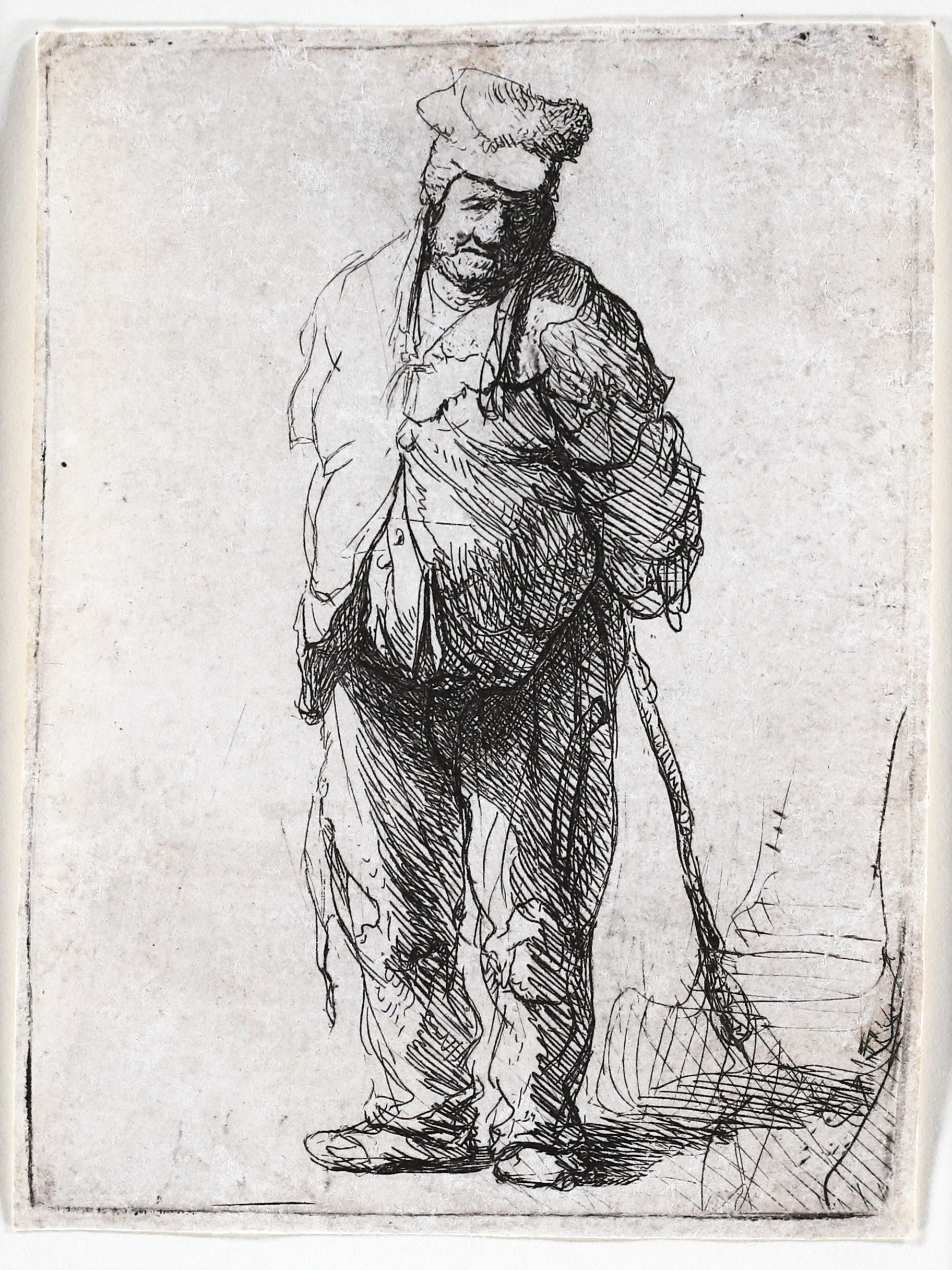
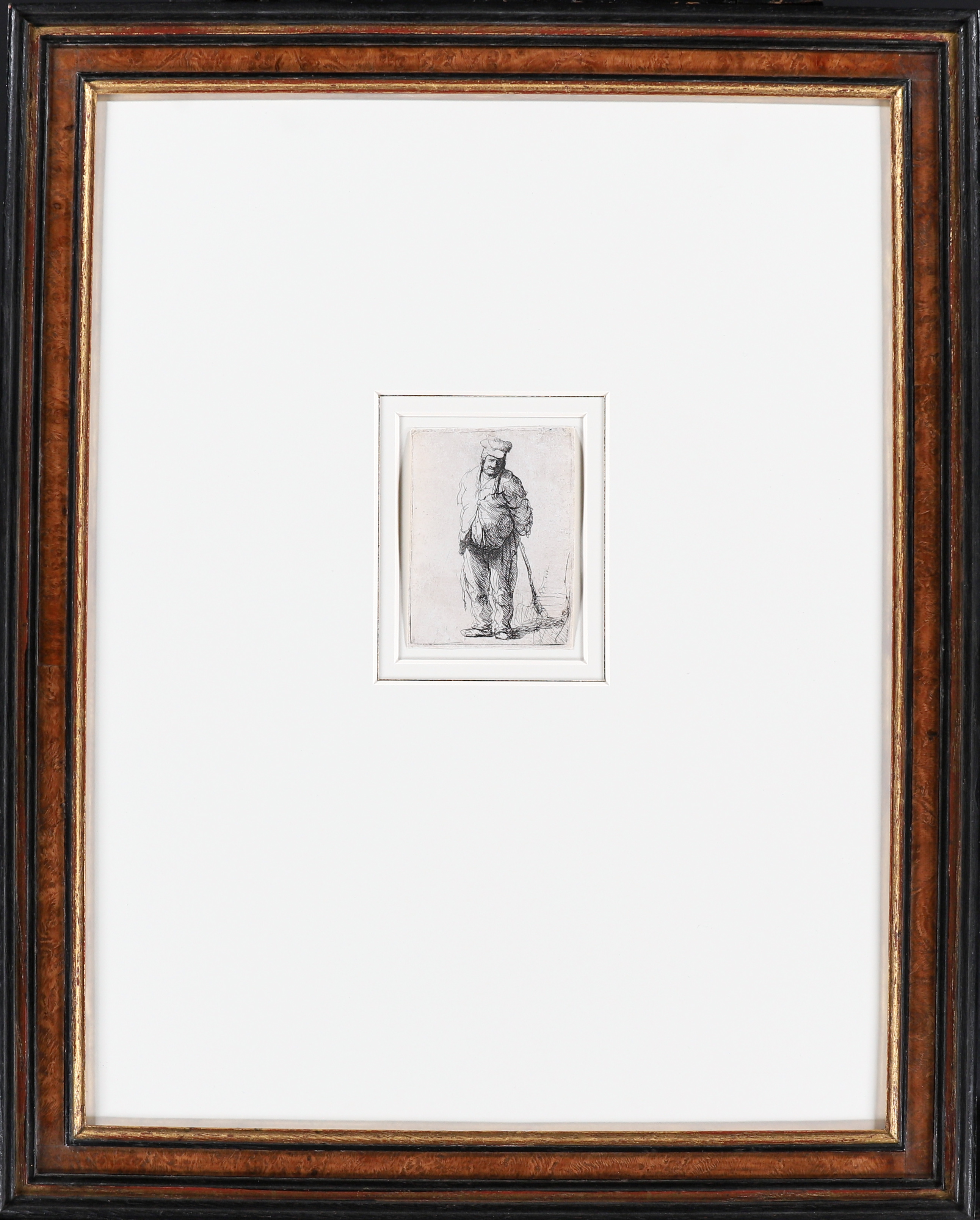
“Ragged peasant with his hands behind him, holding a stick”, c. 1630
Etching on laid paper: 9,3 x 7,8 cm
"*" indicates required fields
Notes
During his lifetime, Rembrandt’s extraordinary skills as a printmaker were the main source of his international fame. Unlike his oil paintings, prints travelled light and were relatively cheap. For this reason, they soon became very popular with collectors not only within, but also beyond the borders of the Netherlands.
A romantic myth about Rembrandt is that he etched so many beggars – more than thirty etchings in all – because he felt alienated from society himself. It is true that he once portrayed himself as a beggar, but he was more attracted to the expressive faces, tattered clothing, and crumpled gait of these “low” subjects. Unusually for the time, Rembrandt gave his beggars real emotions and individualised faces, seemingly intending to stir compassion in his viewers.
Art historians know that Rembrandt was inspired to make these studies after French artist Jacques Callot (1592-1635) published his earlier series of 25 prints devoted to beggars. Rembrandt also owned Callot etchings. But Rembrandt’s beggars, drawn with a fine etching drypoint, don’t look like Callot’s more stylised images or his famed commedia dell’arte series of Italian street entertainers. They are more like drawings with light and dark rendering without color (chiaroscuro).
Rembrandt’s meandering lines travel up, down and around his small figures like minute snail trails. Eventually they capture the beggars’ worn and bent human postures. His latticed cross-hatching conveys shadowing, adding roundness to their bodies. He builds character by giving his small figures outlandish hats, quite likely to hide tidbits or trophies found or filched along their way.
This is one such early example, which the New Hollstein Rembrandt catalogue has dated to about 1630, when the artist was aged just 24. According to New York Times critic Benjamin Ginnochio, this small, low-key etching hints at the greatness to come, adding ‘Ragged’ to its title. He believes it is ‘distinguished by the fineness of lines and greater subtlety of shading and tone’ than Rembrandt’s earliest recorded etchings.
This kind of image would have elicited fierce criticism around 1670, at the time of the artist’s death: were such subjects worthy of being rendered? Shouldn’t art by definition portray only beauty? Rembrandt certainly did not subscribe to this view and most people today would take his side.
Literature
Bartsch 172; The New Hollstein 47: Eighth State (of IX)
Plate not in existence – with Nowell-Usticke (1967):
RRR – Very rare!
Provenance
- Private collection, The Netherlands
- Bubb Kuyper, The Netherlands
- Private collection, The Netherlands