
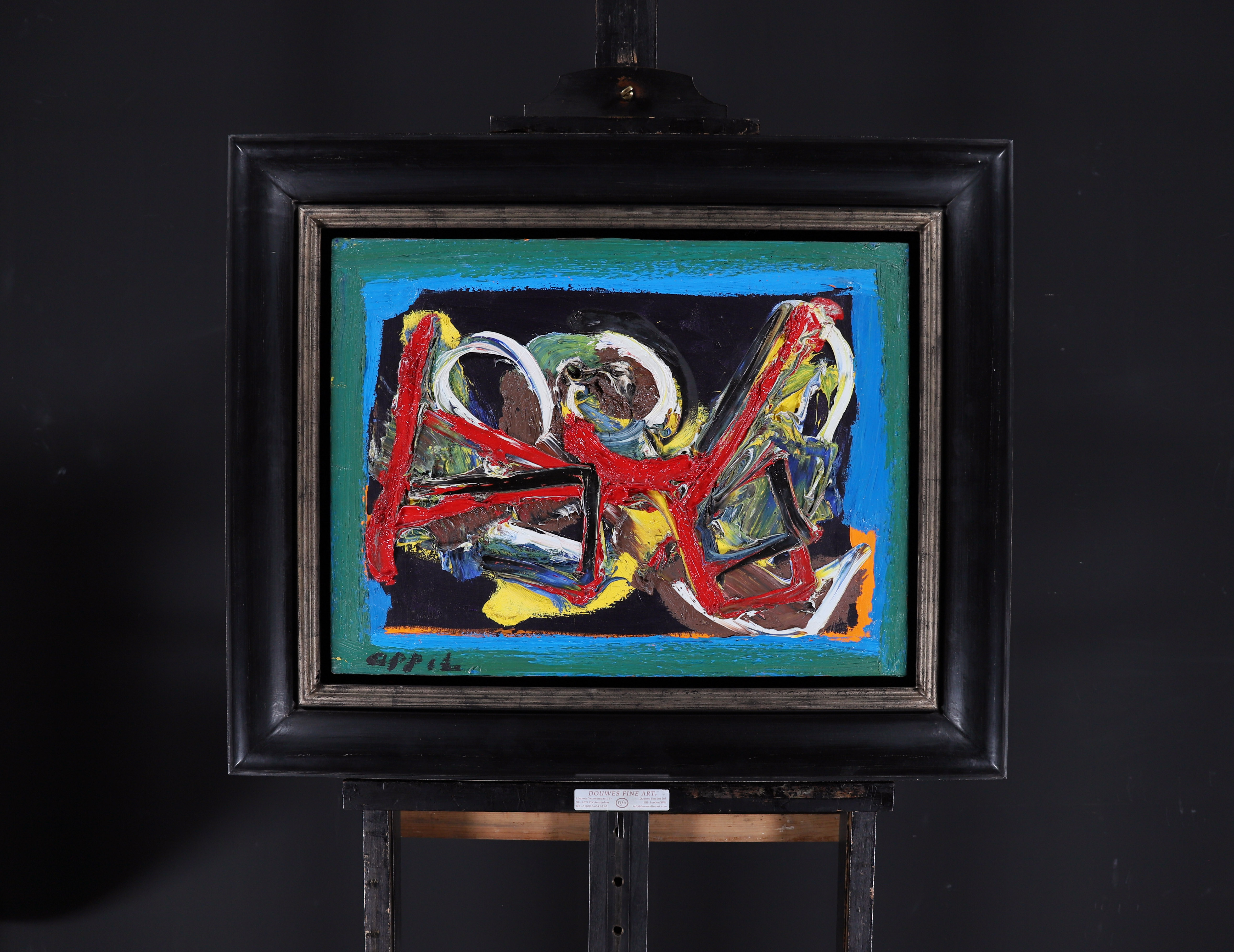
Karel Appel
(Amsterdam 1921 – 2006 Zürich)
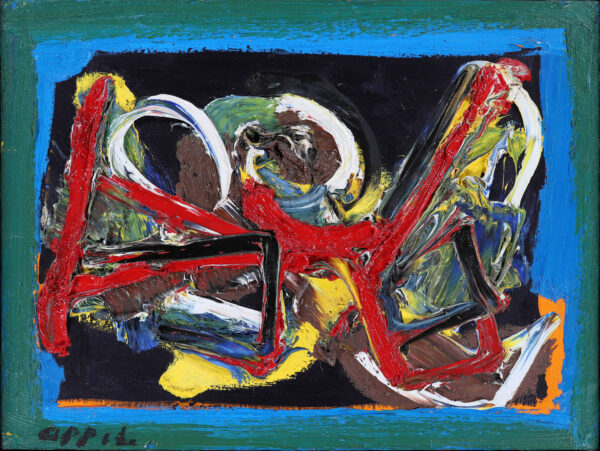
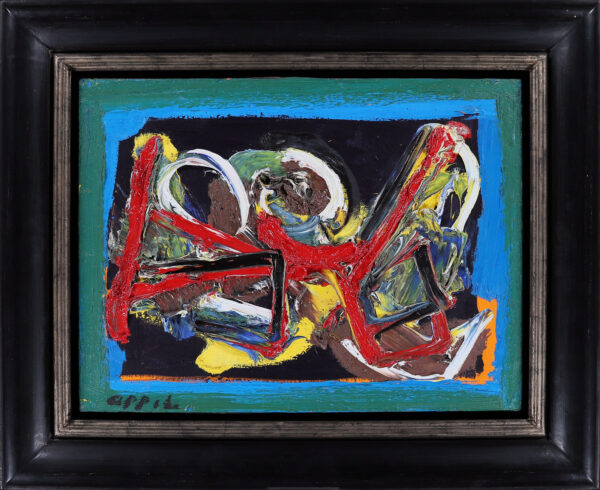
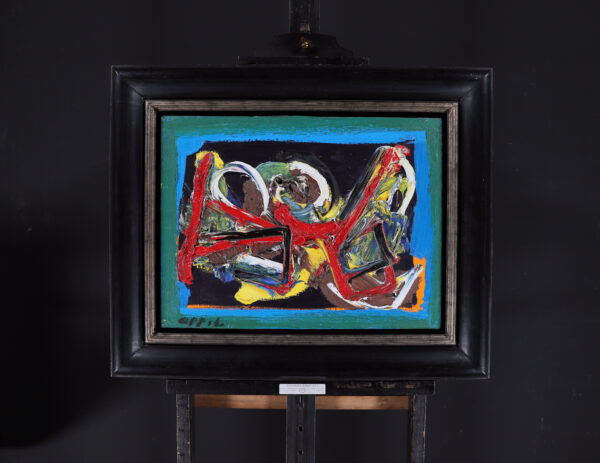
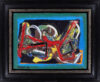
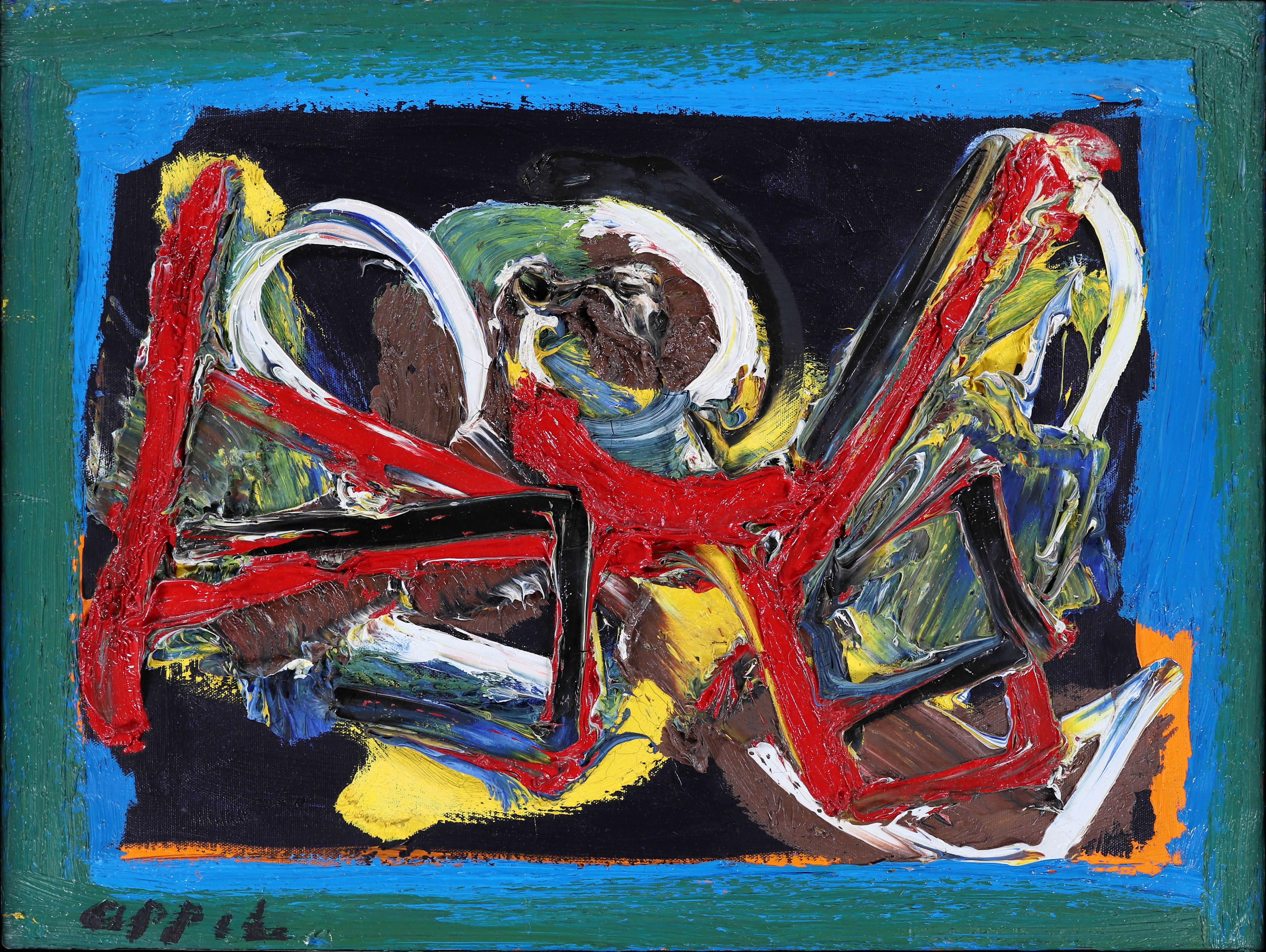
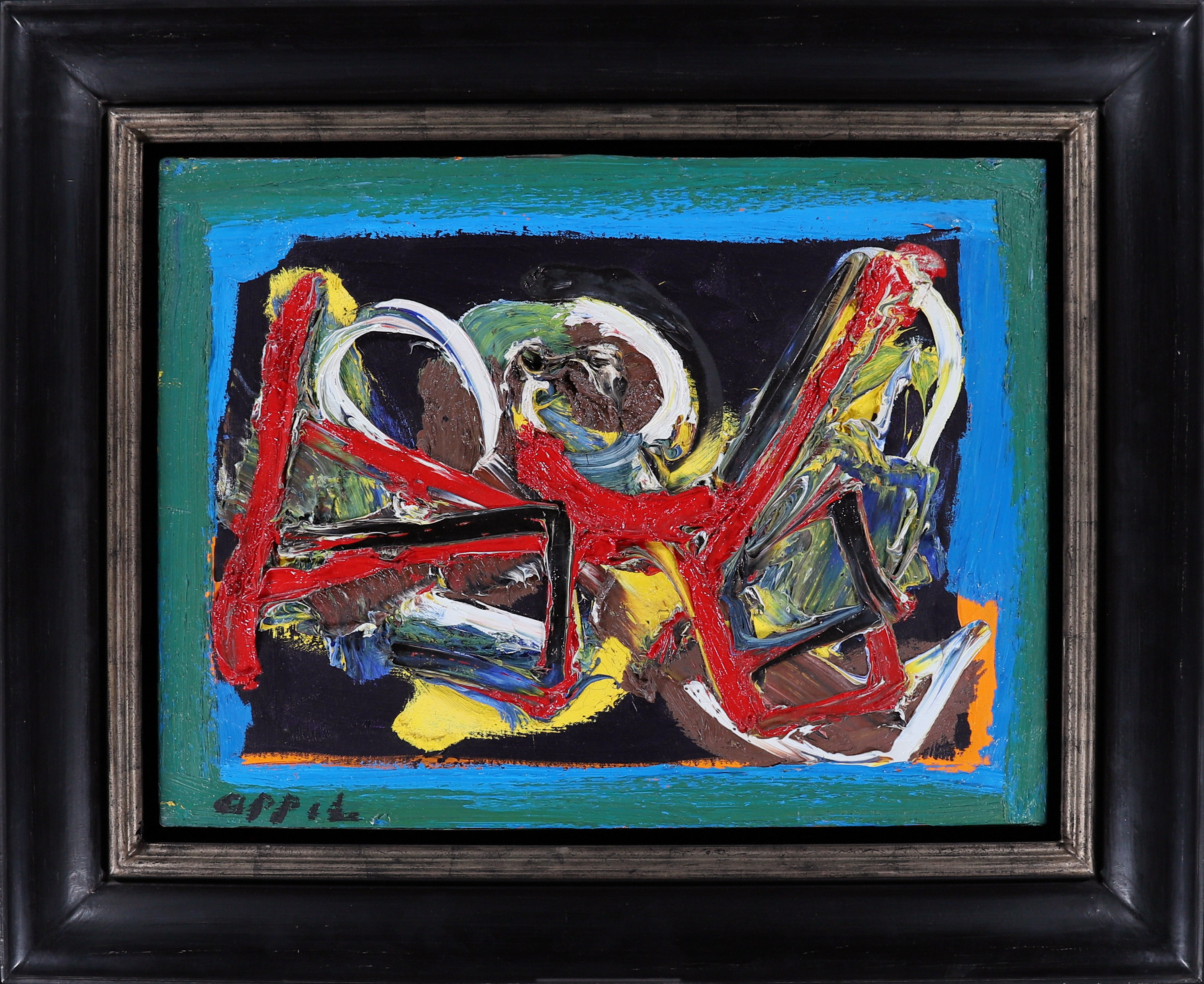
“The Archer No. 13”, 1989
Oil on canvas: 46 x 60,3 cm
Signed lower left: “Appel”
"*" indicates required fields
Notes:
The Archer (often referred to as “The Archer Serie”) is a distinct series of vibrant, gestural oil paintings executed by Karel Appel primarily during 1989.
Karel Appel was a highly influential Dutch painter, sculptor, and poet, widely celebrated as one of the most prominent figures of post-WWII European abstract expressionism. Born in Amsterdam, he became a core co-founder of the avant-garde CoBrA movement in 1948, an acronym for the home cities of its main members: Copenhagen, Brussels, and Amsterdam. Appel’s work is globally recognized for its vibrant colors, thick impasto application, and spontaneous, emotive, and childlike imagery.
The abstract, spontaneous, expressive, and free-spirited style that came to characterise the international CoBrA movement is epitomised in Karel Appel’s figurative compositions.
He began painting at age 14 and formalised his education at the Rijksakademie van Beeldende Kunsten in Amsterdam during the war years (1942–1944), where he originally met lifelong contemporaries like Corneille and Constant.
Seeking complete freedom from traditional academic constraints, Appel and his peers turned to raw creativity in The CoBrA Era (1948–1951). They rejected bourgeois artistic ideals and drew deep inspiration from children’s art, primitive folk forms, and spontaneous jazz rhythms.
In 1949, Appel created a monumental mural titled Vragende kinderen (Questioning Children) for the Amsterdam city hall canteen. Labelled “barbaric and violent” by city officials, it sparked intense public outrage and was covered up for a decade. Disillusioned by his reception in the Netherlands, Appel moved permanently to Paris in 1950.
Karel Appel’s international breakthrough takes place in 1953, a few years after his CoBrA adventure, when his work is shown at the São Paulo Biennale. Solo exhibitions will follow in New York and Paris. The artist becomes successful and receives recognition from museums, at international art presentations and manifestations. He won the UNESCO Prize at the 1954 Venice Biennale and spent the following decades continuously pushing aesthetic borders, dividing his time between the US, France, and Switzerland.
Appel famously declared his uninhibited approach by stating, “I paint like a barbarian in a barbaric age.” His evolution saw structural transformations:
He passed away due to a heart condition at his home in Zürich, Switzerland in 2006. He is buried in the famous Père Lachaise Cemetery in Paris. His estate is managed today by the official Karel Appel Foundation in Amsterdam.
Provenance:
- Directly from the artist
- Marisa del Re Gallery, New York.
- Christie’s Amsterdam, 2009
- Private collection, The Netherlands
- Van Spengen, Hilversum
- Private collection, The Netherlands
Expertise
This work is registered in the Archive of the Karel Appel Foundation.