
Justus de Verwer
(c. 1625 – Amsterdam – 1689)
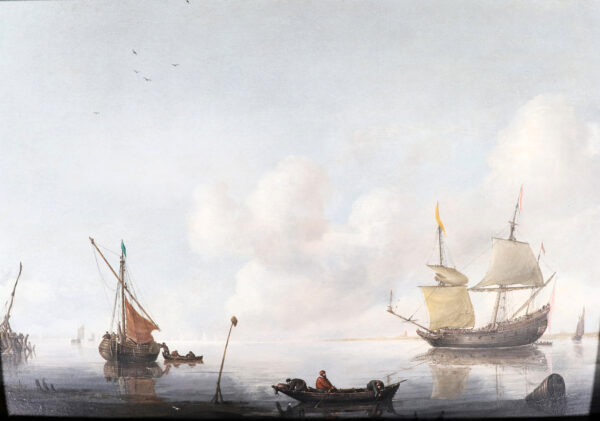
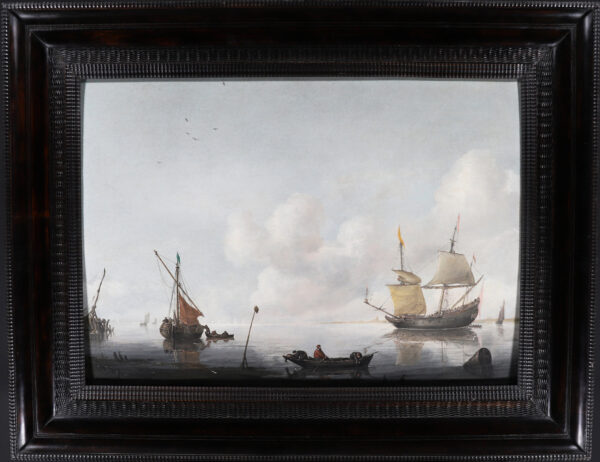
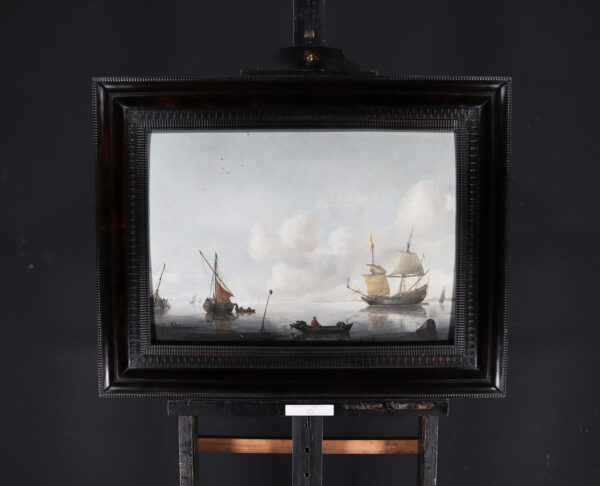
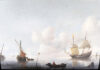
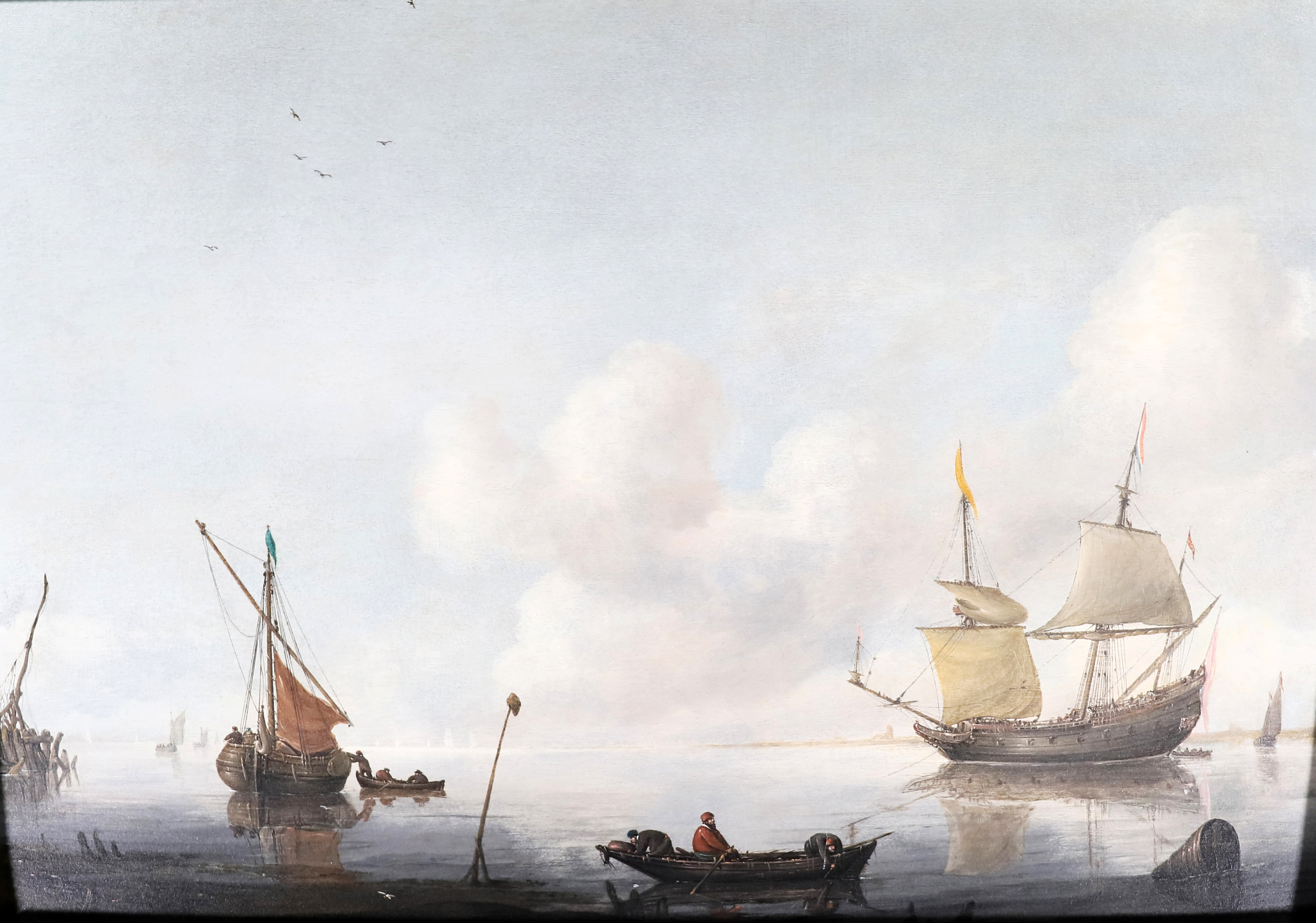
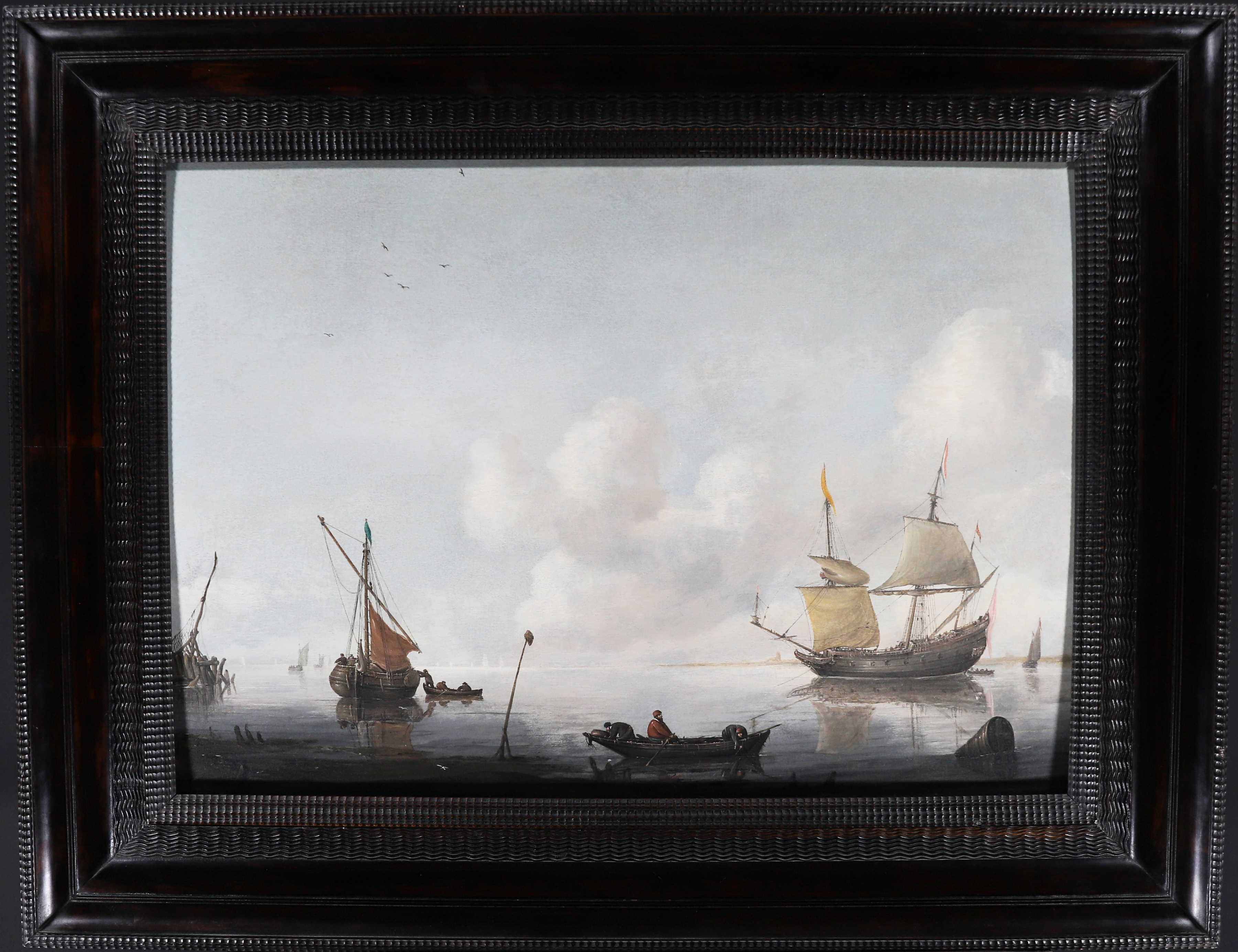
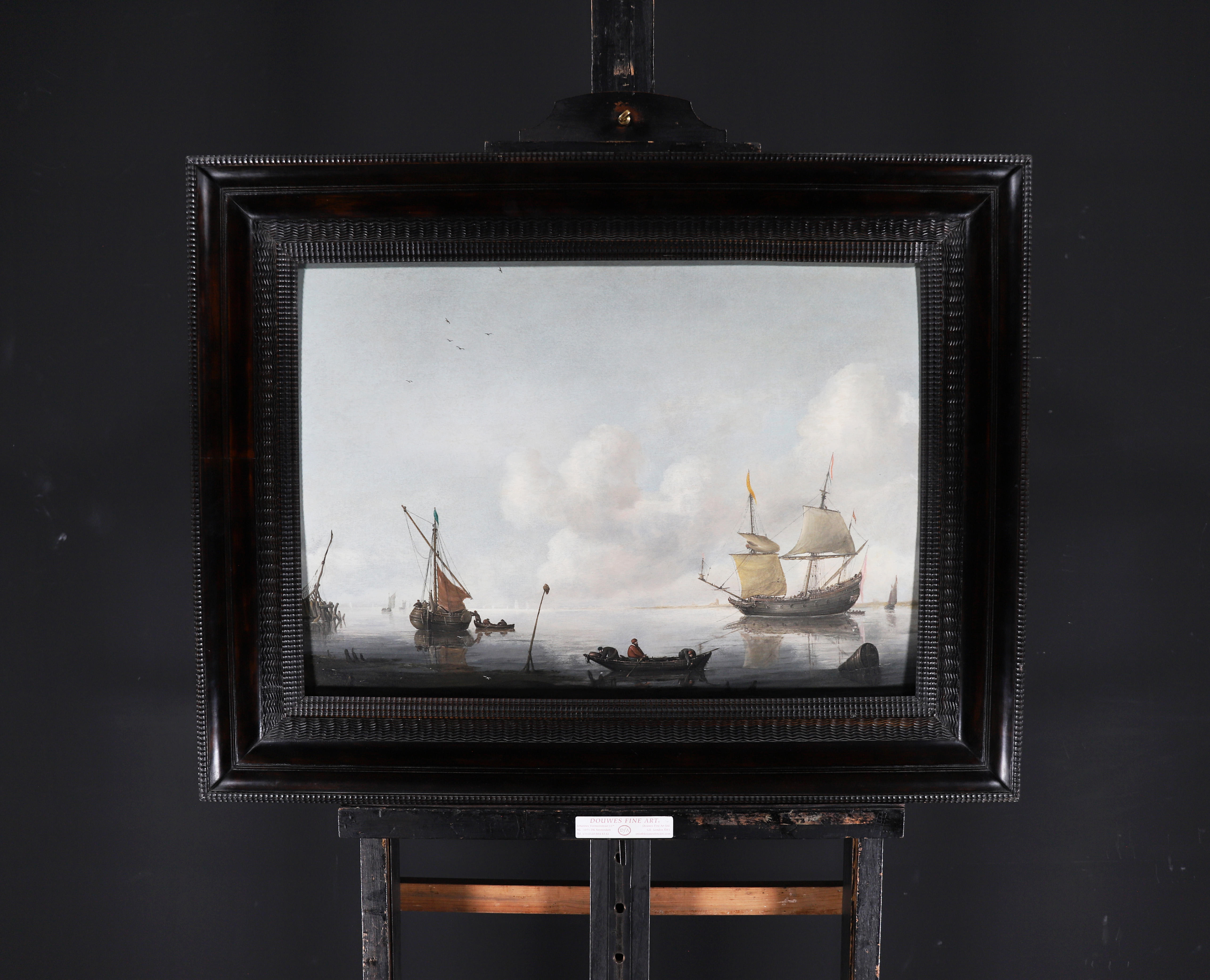
“Shipping in an Estuary”, c. 1665
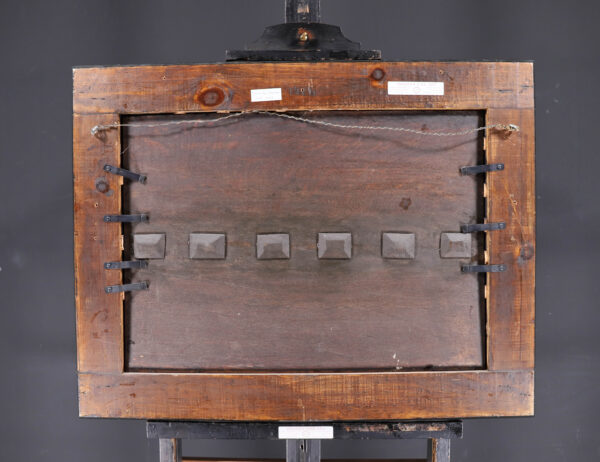
Oil on canvas: 46,9 x 65,3 cm;
Monnogrammed ‘ID V’ (ID in ligature) on the barrel at bottom right
"*" indicates required fields
Notes
De Verwer was the son and pupil of Abraham de Verwer and followed him in style and theme. He produced primarily marine art. From 1651 to 1656 he was employed by the Dutch East India Company and traveled to the East Indies. Then he settled in Amsterdam.
Justus de Verwer very rarely painted marines with an identifiable location. Any trace of land within them is usually limited to a coastline on the horizon. Shipping in an Estuary is unusual for this painter because of its calm sea, but also because it hints at an identifiable location, at least in general terms. De Verwer here chooses to paint a coastal stretch of water. At the lower edge of the picture, short piles discreetly indicate the irregular course of a shallow shoreline, where a weyschuit is coming ashore with three fishermen on board. In front of them is a seamark – at high tide, this would serve as a warning of shallow water. Another seamark rises from the jetty to the left. Between them, these two verticals frame a sailing boat. Light comes in from the left, illuminating the surface of the sea. The outline of many tiny sails creates a sense of great distance.
Opposite the jetty, a narrow strip of distant, ochre-coloured coastline suggests the vessels are near the mouth of a river. Which river this is, however, cannot be further established.
Two ships – a single-master and a three-master – stand out as the main subjects of the painting. They are placed on opposite sides of the picture, resting on the calm water in the middle distance.
De Verwer seems to have based Shipping in an Estuary on this picture, currently in a private German collection, or else on a similar late De Vlieger work. The impressive atmosphere in The Flagship ‘Aemilia’ derives from its elegant composition
Provenance
- Private collection, The Netherlands
- Hoogsteder Gallery, The Hague, 1989
- Inder Rieden Collection, since 1989
Literature
- Gerlinde de Beer, “The Golden Age of Dutch Marine Painting – The Inder Rieden Collection”, edited by Charles Dumas, Primavera Pers, Leiden 2019, Catalogue III, no. 46, page 732-743.
- Charles Dumas, Gerlinde de Beer, “In de ban van de zee – De Gouden Eeuw van de Nederlandse marineschilderkunst”, De Inder Rieden Collectie, Museum Bredius, 2019, Wilco, Amersfoort, The Netherlands, no. 11, with colour ill.
Exhibition
Charles Dumas, Gerlinde de Beer, “In de ban van de zee – De Gouden Eeuw van de Nederlandse marineschilderkunst”, De Inder Rieden Collectie, Museum Bredius, 2019, Wilco, Amersfoort, The Netherlands, no. 11, with colour ill.