
Johan Barthold Jongkind
(Latrop 1819 - 1891 La Côte-Saint André)
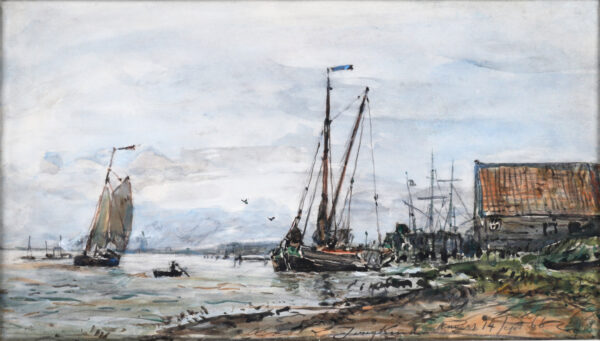
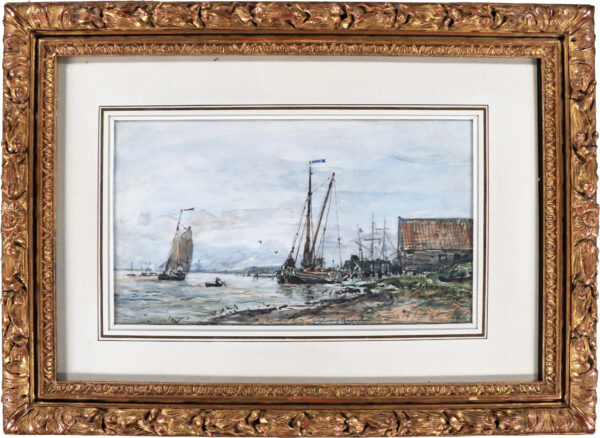
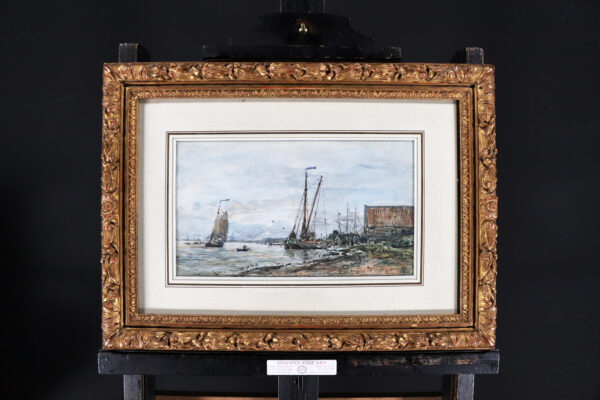
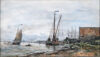
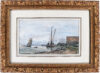
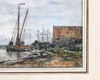
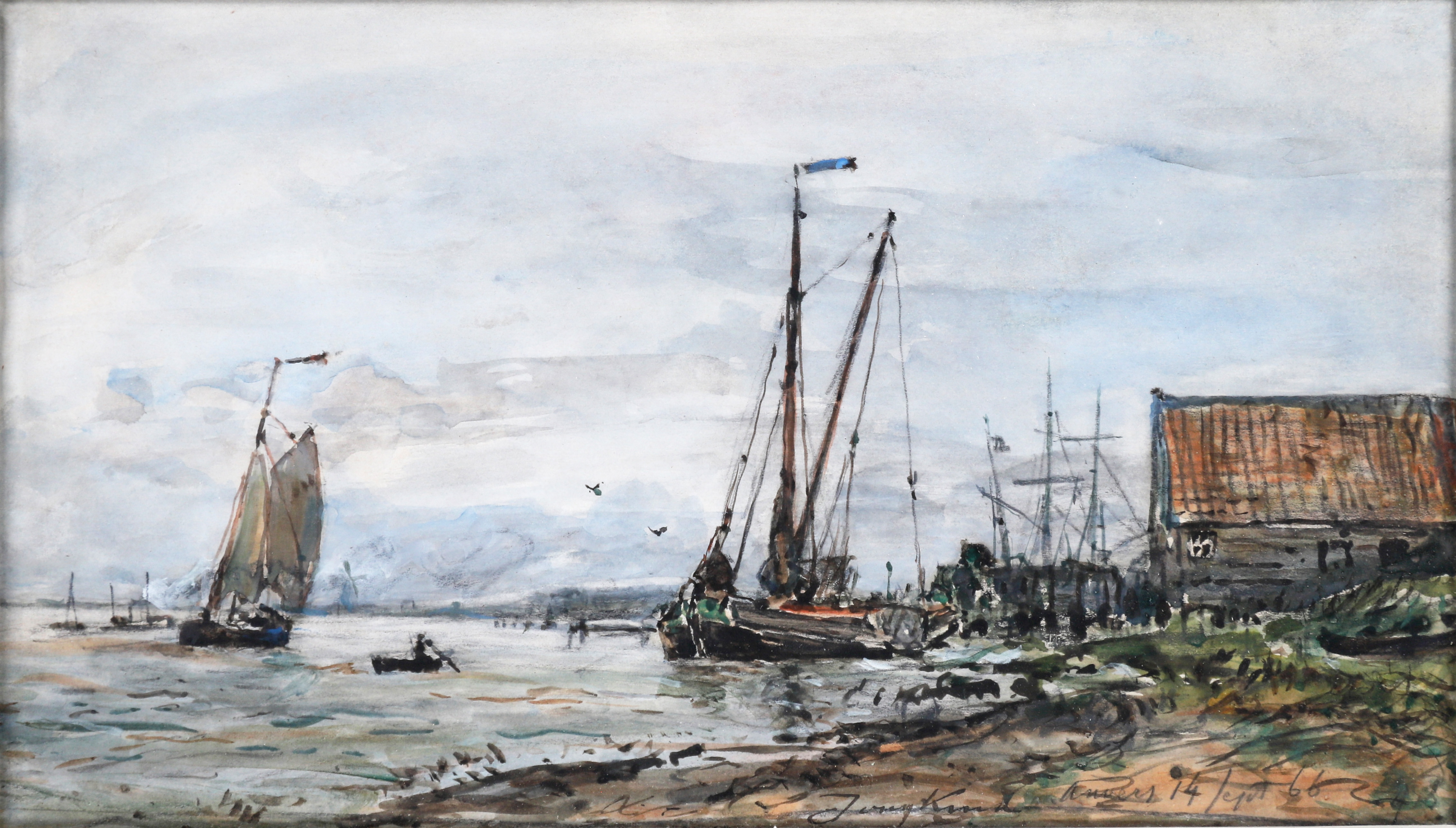
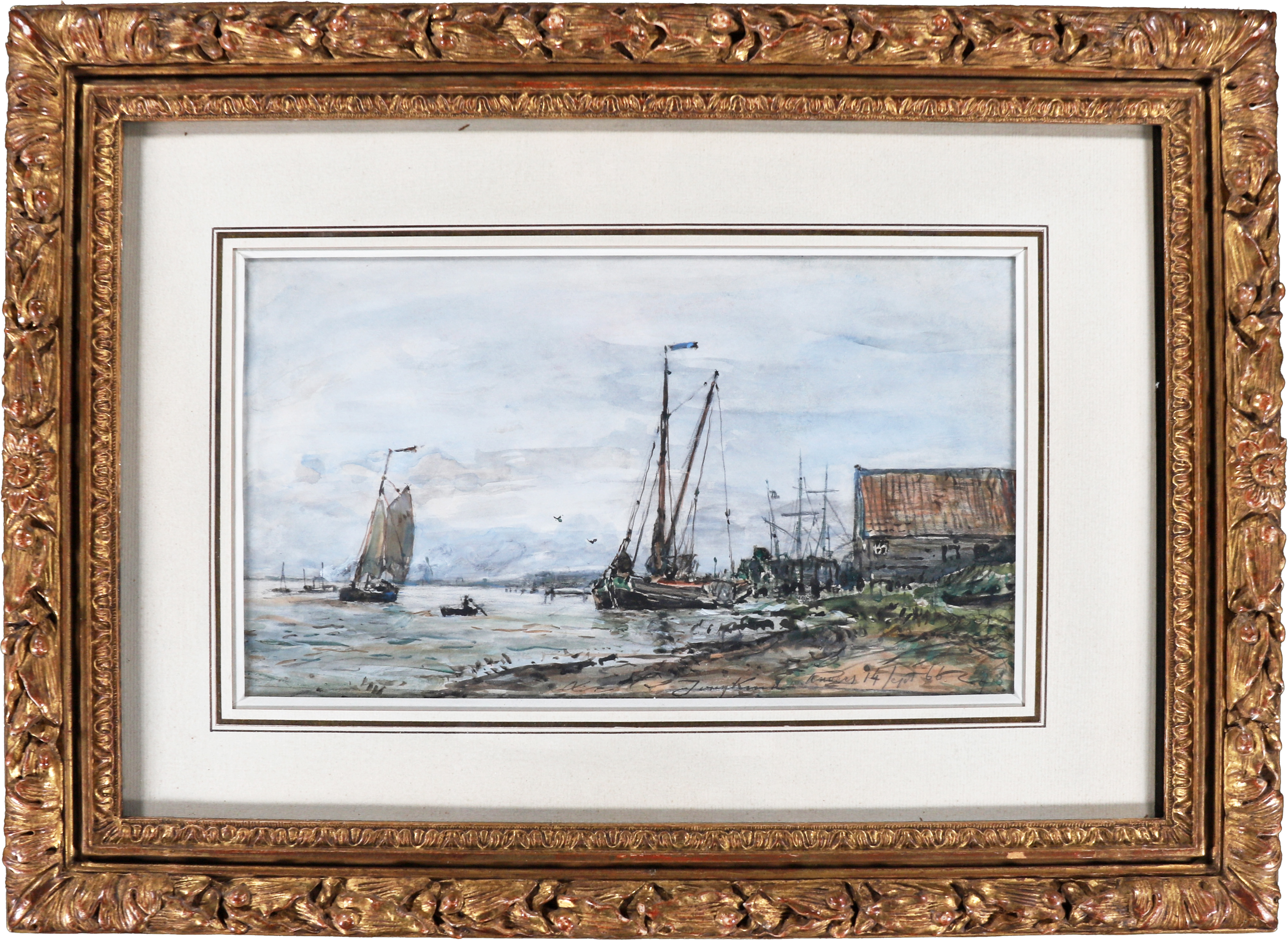
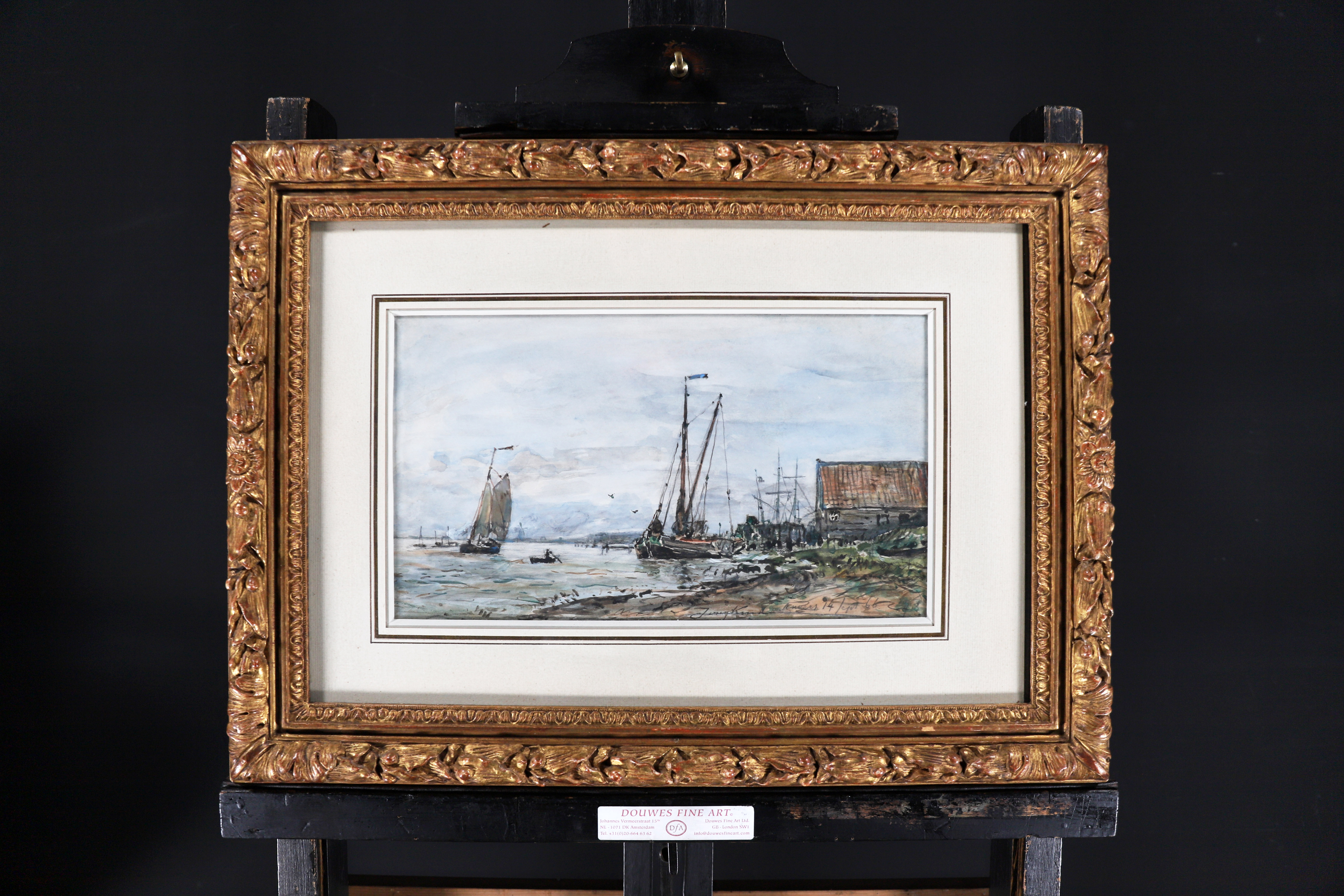
“Boats on the river Scheldt near Antwerp”, 1866
Watercolour, gouache and graphite on paper: 19,5 x 34 cm
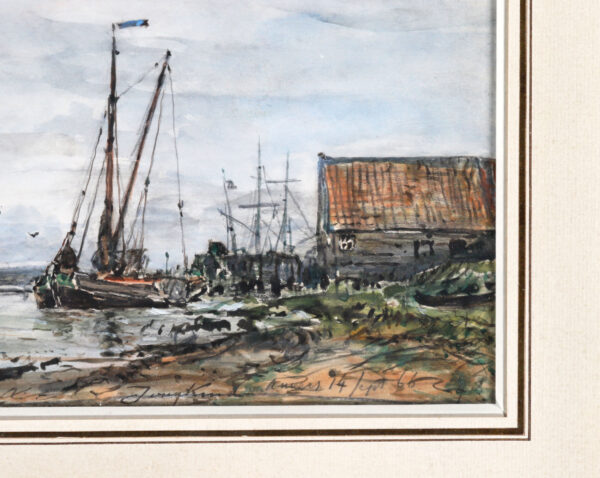
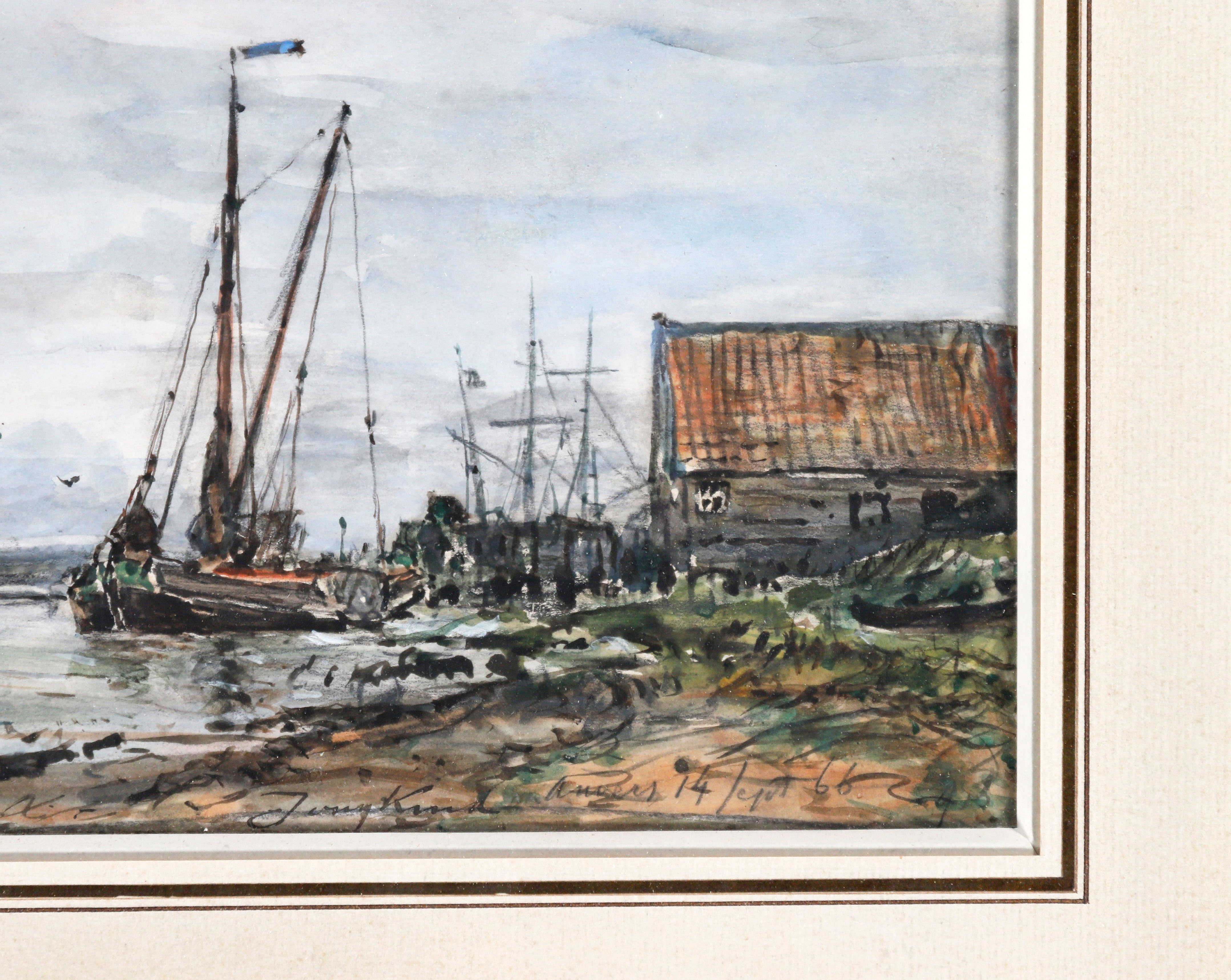
Signed and dated lower right ‘Jongkind | Anvers 14 sept 1866’
"*" indicates required fields
Notes
In 1866, during a highly productive journey through Belgium and the Netherlands, Johan Barthold Jongkind spent a defining period working along the River Scheldt (L’Escaut) in Antwerp. This trip resulted in some of his most luminous masterpieces and arguably his absolute peak as a pre-Impressionist master.
Jongkind’s time in Antwerp beautifully showcases his dedication to en plein air observation. Instead of staying on the banks, he spent hours sitting directly in a small boat floating on the Scheldt, drawing and painting.
By positioning himself physically on the water, he achieved an incredibly low horizon line in his compositions. This vantage point allowed the shimmering water and the massive, moisture-heavy twilight skies to completely dominate the visual field, bringing the viewer directly into the moving rhythm of the tides.
Jongkind utilized graphite, gouache, and his signature fluid watercolour sweeps in this artwork to pin down the rapidly changing, damp light of the maritime expanse. This work reveals an exceptional level of confidence. He used quick, calligraphic, and transparent layers of wash to let the white paper itself glow through, perfectly mimicking the natural glare of water under a setting sun.
About the Artist
Johan Barthold Jongkind (1819–1891) was a towering Dutch painter and printmaker whose radical approach to light, atmosphere, and loose brushwork made him a vital pioneer of French Impressionism. Though he struggled with mental illness and addiction throughout his life, his artistic innovations forever altered the course of modern landscape painting.
Jongkind served as the crucial evolutionary bridge between traditional 17th-century Dutch landscape painting and 19th-century French Impressionism. The “Father” of Modern Landscapes: Édouard Manet famously described Jongkind as the “father of the modern landscape school.” Mentoring Claude Monet: Jongkind was the primary mentor to a young Claude Monet. Monet later remarked that Jongkind took over the “definitive education” of his eye, adding, “It is to him that I owe the final education of my eye.”
Jongkind’s true revolutionary genius was most visible in his watercolours (aquarels). While many artists of his era used watercolours for strict topographical mapping, Jongkind used the medium to capture the shifting soul of the atmosphere.
It was not until Jongkind was 18 years old that he was finally able to go to The Hague on a scholarship, to study under Andreas Schelfhout (1787-1870). With a grant from the future King William III in 1846, he next moved to Paris. There, the realistic approach to nature, expressed by Constable, the Barbizon School, and his teacher Eugène Isabey, suited Jongkind perfectly. After the death of his beloved mother in August of 1-854, a period of deep depression ensued. In November 1855, he left Paris abruptly for Rotterdam, for the next five years just remaining in Holland. His friend and art dealer ‘Père’ Martin kept him going by occasionally selling the canvases he continued sending to Paris.
Such was his influence among his French colleagues that they voluntarily organised an auction, consisting entirely of their own works, to collect enough financial support for Jongkind to get him to return to Paris.
And, after his five-year Dutch interval, he did finally settle in France in 1860, and became acquainted with Josephine Fesser. She became his pupil, and shared her family life with him till his death in 1891. Early impressionists such as Monet and Sisley were much indebted to Jongkind’s characteristic fervour, not least his watercolour-technique with which he excelled in luminous expressiveness. Jongkind is therefore sometimes seen as the father of impressionism. Jongkind, who was almost six and a half feet tall, had the habit of wearing a top hat, which of course added to his formidable appearance.
Jongkind rarely finished his oil paintings outdoors. Instead, his highly spontaneous aquarels served as a direct visual memory bank. He took these fresh, vibrant watercolor sketches back to his studio to serve as the structural and emotional blueprint for his larger oil canvases.
In 1860, he met Joséphine Fesser, a Dutch-born drawing teacher living in France. She became his lifelong companion, muse, and protector. Joséphine stabilized his chaotic life, managed his finances, and helped him sustain his artistic output during his darker years.
Jongkind spent his final years in peaceful obscurity in southeastern France. He passed away in 1891 in Saint-Égrève and is buried in La Côte-Saint-André, far from the bustling Dutch canals and Norman beaches that he immortalized.
Provenance
- Robert Noortman Gallery, London (see label attached verso);
- Private collection United Kingdom;
- Douwes Fine Art, London, 1987 (see label attached verso);
- Private collection United Kingdom;
- Thence by descent, private collection, Australia.
- Kunsthandel Ivo Bouwman, Amsterdam
- Private collection, The Netherlands
Expertise
This work will be included in the Catalogue raisonné of J.B. Jongkind, in preparation at the Comité Jongkind Paris – La Haye, number G00948.