
Jan van Goyen
(Leiden 1596 - 1656 The Hague)
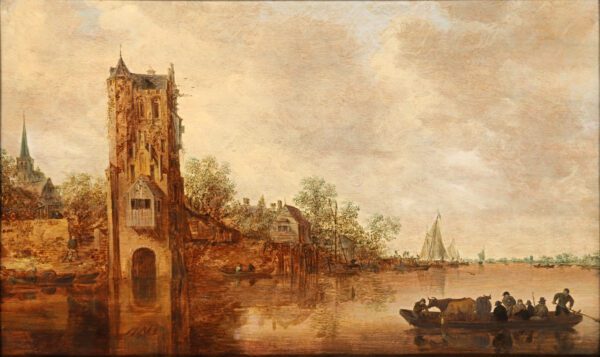
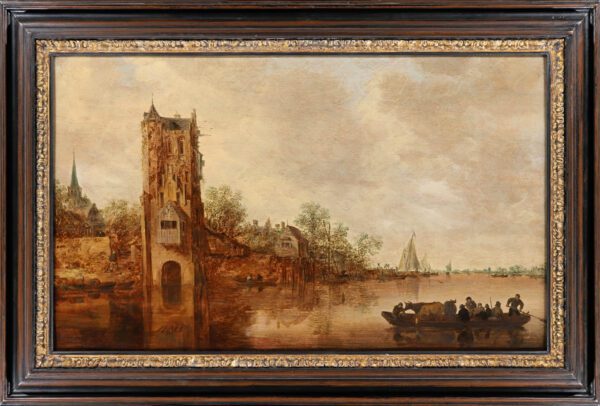
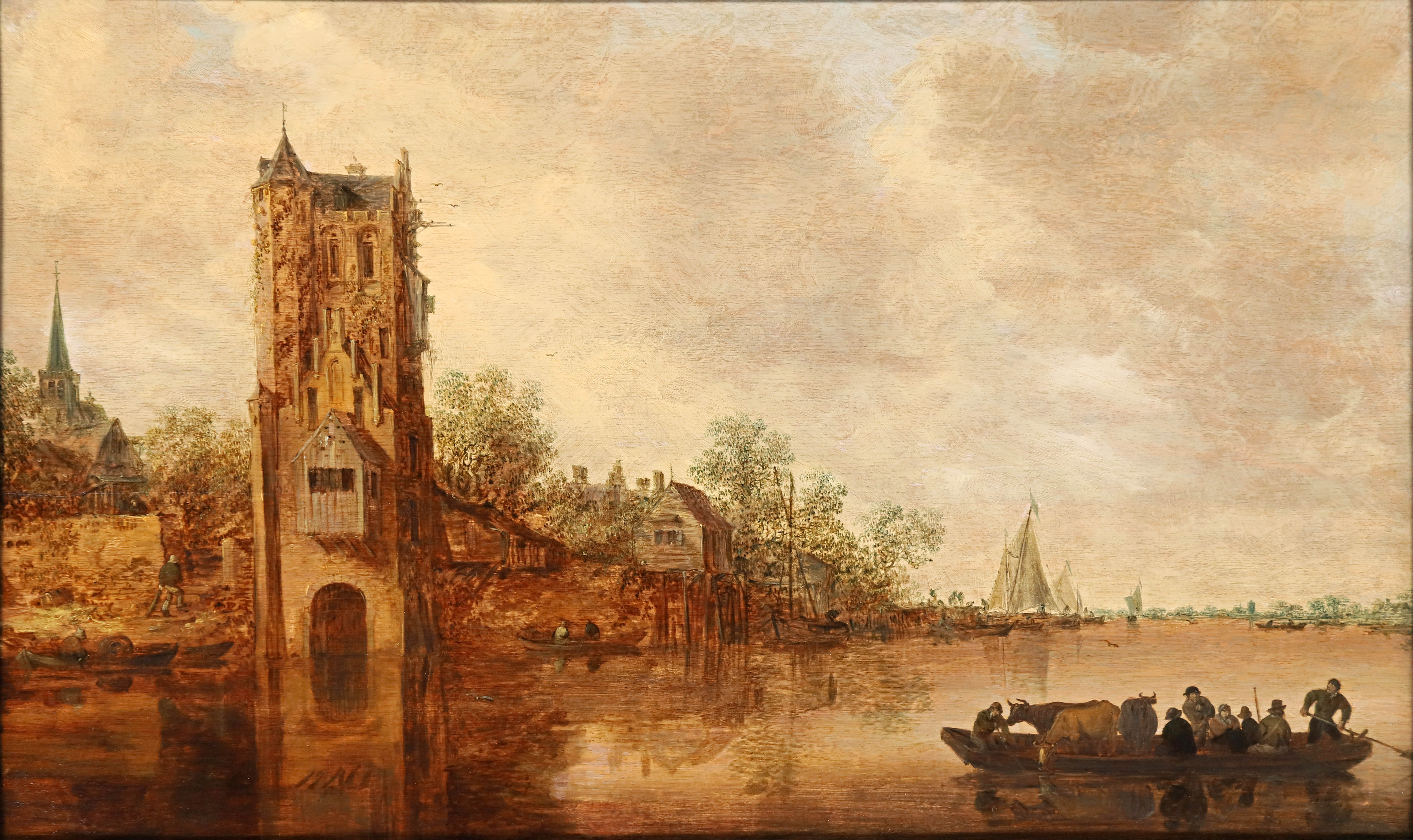
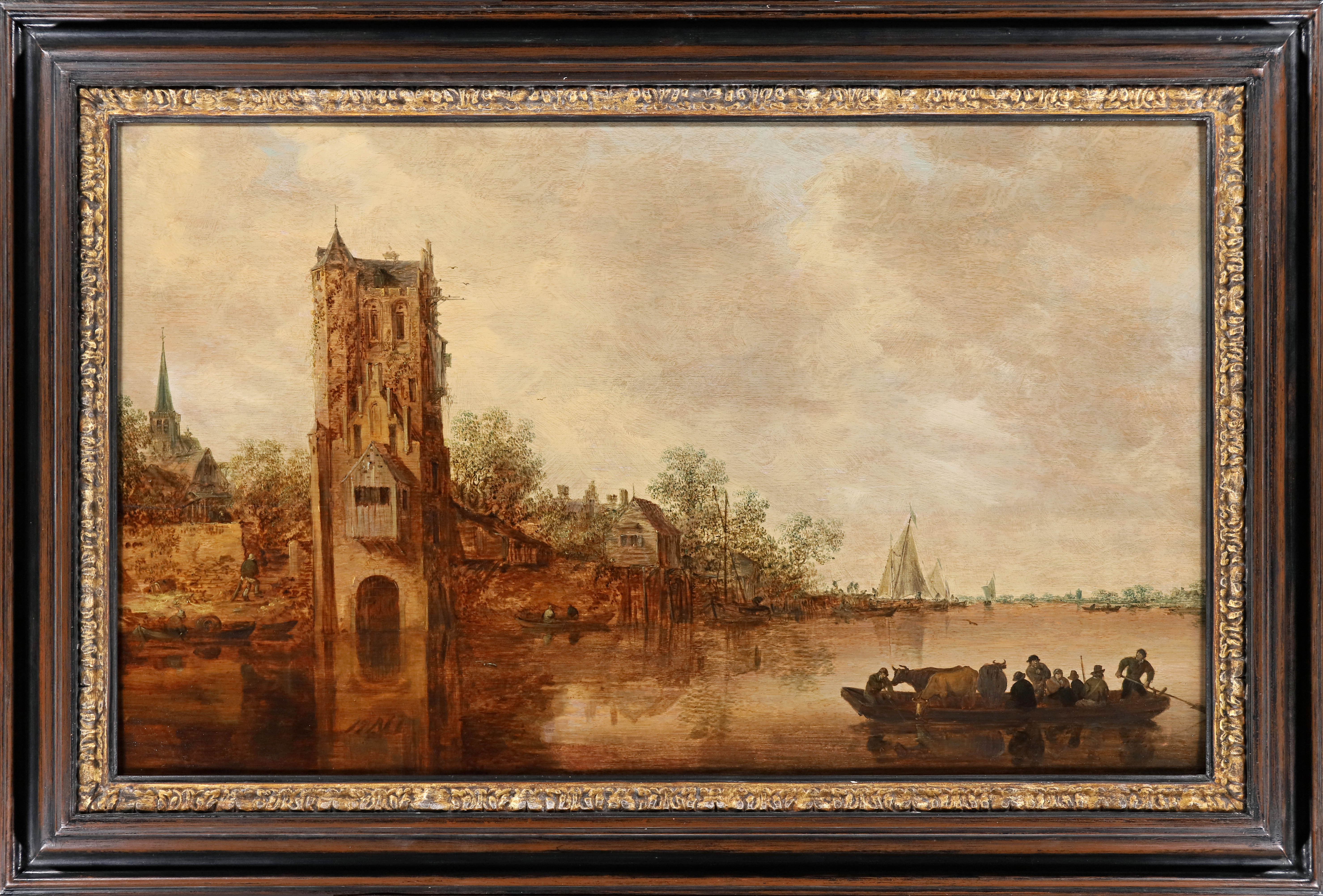
“The Pelkus Gate or ‘Pellekussenpoort’ near Utrecht”, 1645
Oil on panel: 65 x 90 cm
Signed and dated ‘V Goyen 1645’ on the boat lower right
"*" indicates required fields
Notes
This painting by Van Goyen depicts the Pelkus Gate near Utrecht. It is one of about a dozen paintings by Van Goyen that depicted the Pelkus gate, a freestanding tower on the river Vecht that disappeared by the 18th century. Van Goyen completed about a dozen paintings depicting some form of the Pelkus gate. Each of the paintings’ surroundings and structures vary greatly, suggesting that they were invented by van Goyen.
The Pellecussenpoort was a gatehouse near the Dutch city of Utrecht. In the 17th century, Jan van Goyen repeatedly used the Pellekussen Gate as a subject in his paintings. Others who depicted the structure included Abraham Rademaker, Salomon van Ruysdael, Herman Saftleven and Louis Philippus Serrurier. The building took its name from the medieval Pellecussen family, which had great influence in Utrecht.
In the Disaster Year (1672), French troops destroyed the Pellecussen Gate. The remaining ruins were almost completely demolished in 1717. Remaining parts of the tower were later repurposed into the Pellecussen Bridge that is still in use today.
the Artist
Born on January 13, 1596, Jan Josephsz van Goyen began training as an artist in his native city of Leiden at the early age of ten. The series of teachers with whom he studied included, according to Orlers’ near-contemporary account, Isaac van Swanenburgh (c. 1537–1614). Orlers also says that Van Goyen spent a year in France before going to Haarlem, where he is known to have been a student of Esaias van de Velde I (Dutch, 1587 – 1630) in 1617. His early works closely resemble those of Van de Velde.
By 1618 Van Goyen had returned to Leiden, where that same year he married Annetje Willemsdr van Raelst. His name occurs frequently in Leiden documents between 1625 and 1632. In 1625 he bought a house on the Sint Peterskerkstraat, which he sold in 1629 to the marine painter Jan Porcellis (c. 1584–1632). Probably in the summer of 1632 he moved to The Hague, becoming a citizen two years later. Although he also worked in Haarlem in 1634, at the house of Salomon van Ruysdael’s brother Isaack (1599–1677), he is thereafter recorded only in The Hague.
He bought a house there on the Wagenstraat in 1635 and built another the following year on the Dunne Bierkade, where Paulus Potter (Dutch, 1625 – 1654) is known to have lived from 1649 to 1652. Although a prolific and successful painter, Van Goyen engaged throughout his life in various business ventures, usually unsuccessfully; these included art dealing, auction sales, and speculation in real estate and tulip bulbs.
During the 1630s, Van Goyen, along with the Haarlem artists Pieter Molijn (Dutch, 1595 – 1661) and Salomon van Ruysdael (Dutch, c. 1602 – 1670), developed a new approach to the representation of landscape that focused on local subjects and utilized a tonal palette, initiating what has come to be recognized as the golden age of Dutch landscape painting. Van Goyen was a highly respected figure in the artistic community of The Hague. In 1638 and 1640 he was chosen to be hoofdman of the painters’ guild, and received further official recognition in 1651, when he was commissioned to paint a panoramic view of the city for the burgomaster’s room in the Town Hall. In 1649 two of his daughters were married to artists, Margaretha to Jan Steen (Dutch, 1625/1626 – 1679) and Maria to the still-life painter Jacques de Claeuw (c. 1620–1670 or after).
Provenance
- Douwes Fine Art, Amsterdam
- Private collection, The Netherlands
Literature:
Dr. H. U. Beck, “ Jan v. Goyen”, II, p. 343, no. 762, ill. Augsburg 1991