
Jan van Goyen
(Leiden 1596 - 1656 The Hague)
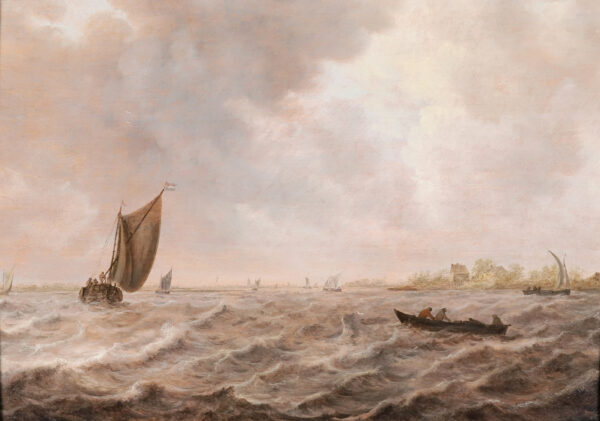
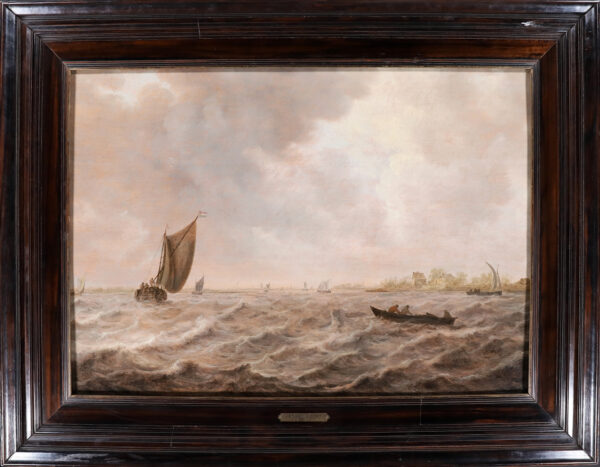
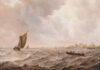
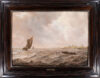
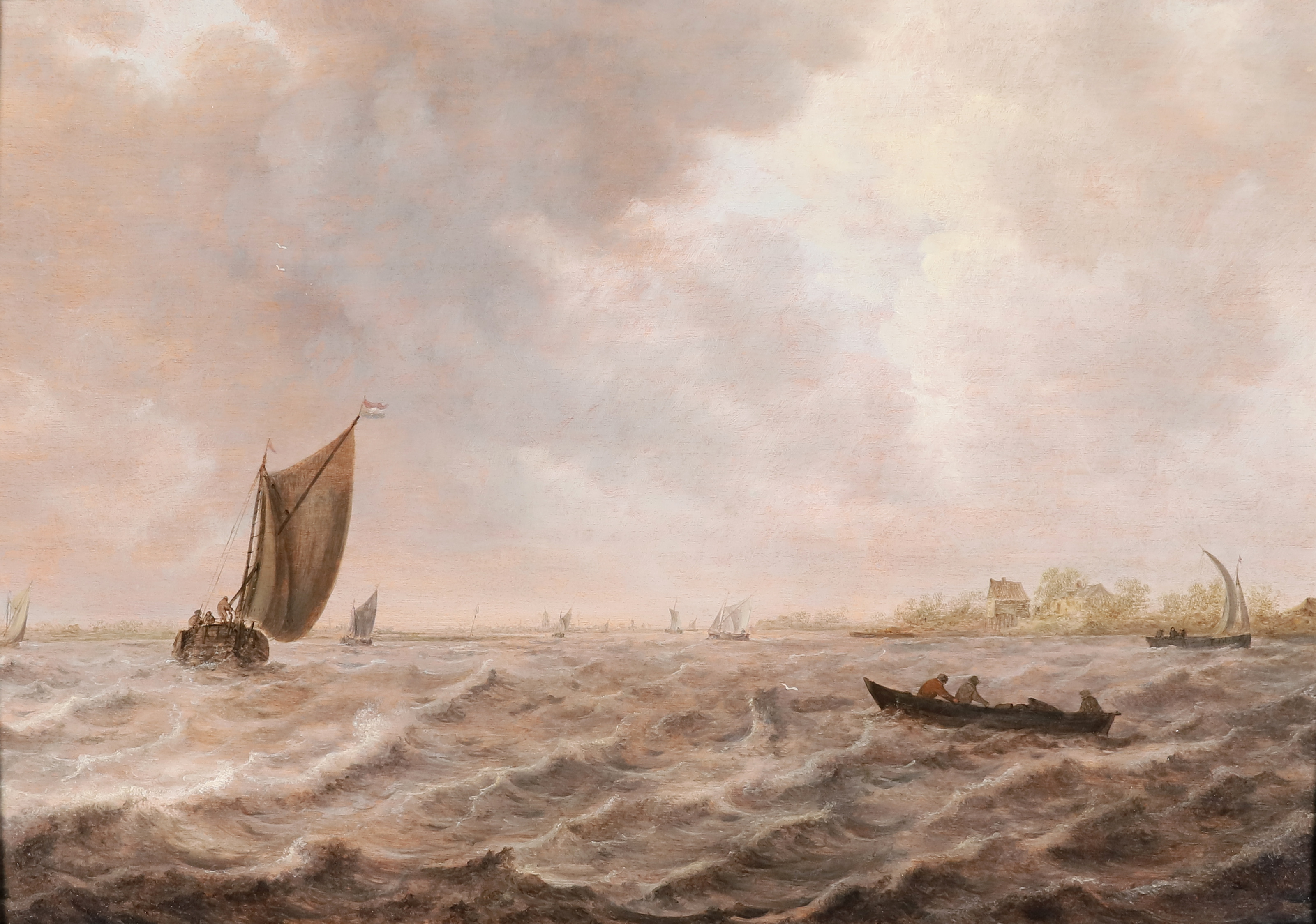
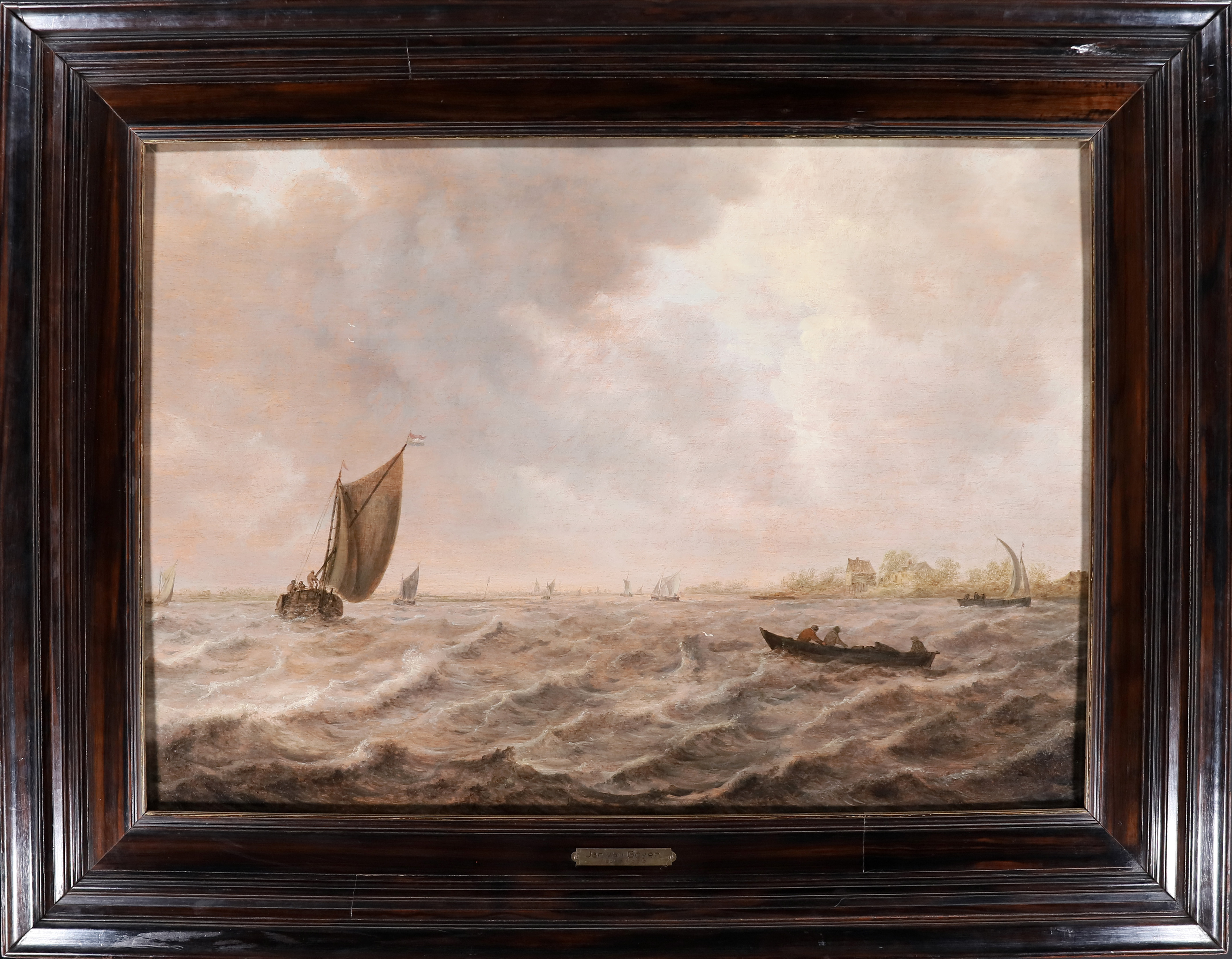
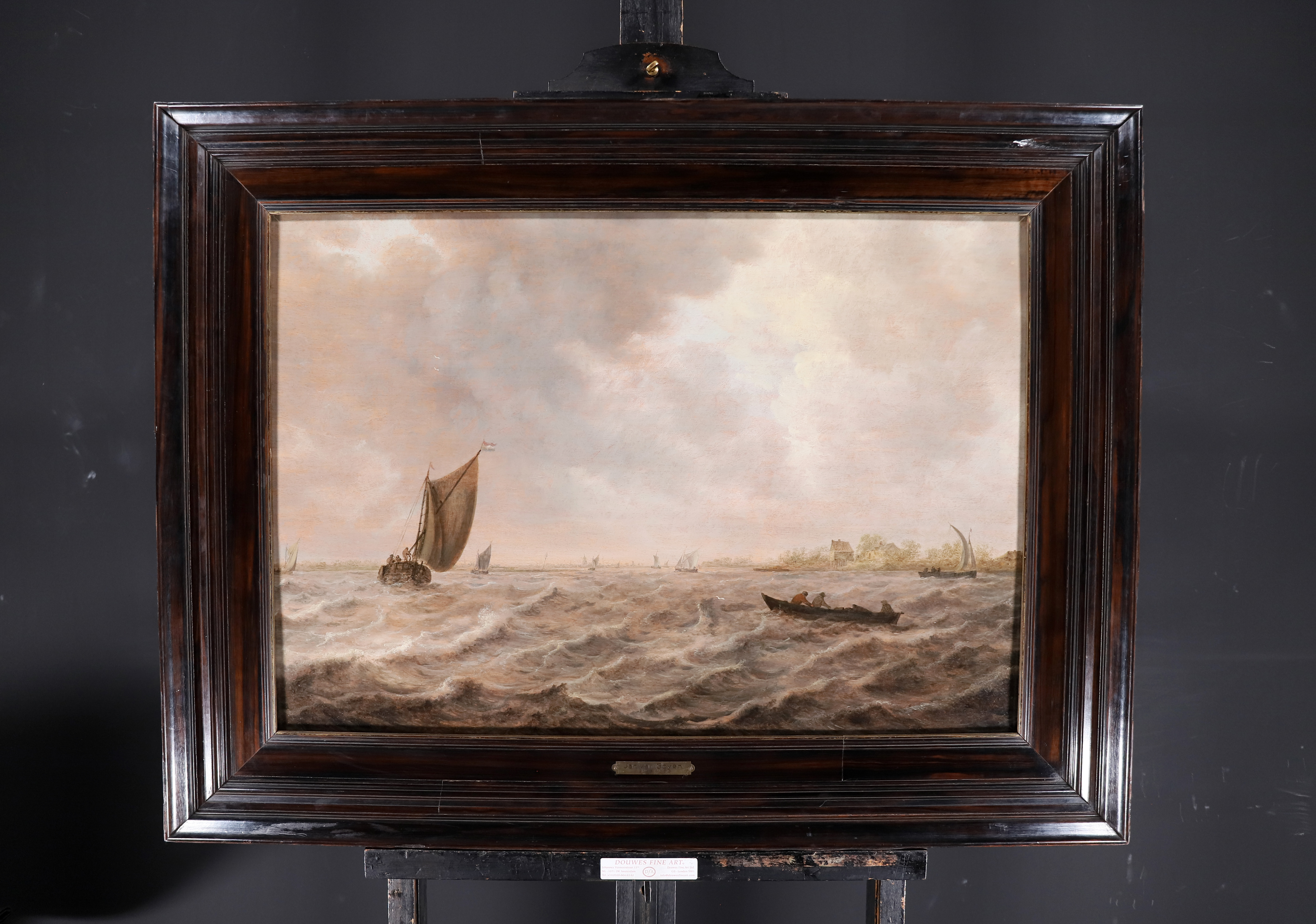
“A Single-Master and a Rowing Boat on an inland water”, 1650
Oil on panel: 57 x 80 cm;
Signed and dated (faintly) ‘JVGoyen 1650’ on the rowing boat at bottom right
"*" indicates required fields
Notes
The foreground of this painting is completely taken up by a stretch of water. The viewer’s vantage point is carefully calculated, leading the eye directly to the turbulent waves and immediately indicating the weather. Sailing conditions are perfect. The boat on the left has her sail braced to port in order not to catch too much wind (see fig. 18-1). The men in the boat on the right are having a much harder time of it, rowing into the wind. The heavy clouds are compatible with the choppy water and cast shadows onto it. The wind conditions are such that any breaks in the clouds will be short-lived. The delicate green of the right-hand shoreline suggests a spring day.
The open water on both sides of the picture seems to suggest that we are looking at the open sea, an impression that is reinforced by the relatively small number of vessels and the large spaces between the motifs. There is vast distance in the picture, but the location remains anonymous. However, the artist himself supplies conclusive evidence that this is a river scene with his bilateral arrangement of motifs. The two main subjects – the sailing boat and the rowing boat – stand out through their muted brown colouring and their shapes. Positioned in the middle ground, they are nearest both to the viewer and to the centre of the picture, which is spacious and open. The troughs between the waves lead the eye to the furthest point of the picture, which lies in the middle of the horizon.
Jan van Goyen took great care over the composition. Every single motif has its purpose. The two main ones introduce the weather conditions and the bilateral arrangement. The direction of the banks on both sides of the river ‘accompany’ the sailing boats on a gentle diagonal into the distance. The riverbanks, though, are not lined up at right angles. The sailing boats at the edges of the picture define the distance to the respective banks, the right-hand one, with its buildings and vegetation, clearly being closer to the viewer (see fig. 18-2). Strips of land near the horizon show the river narrowing. A vaguely indicated seamark and the more distant sailing boats highlight this narrow part of the river, which then widens again.
Provenance
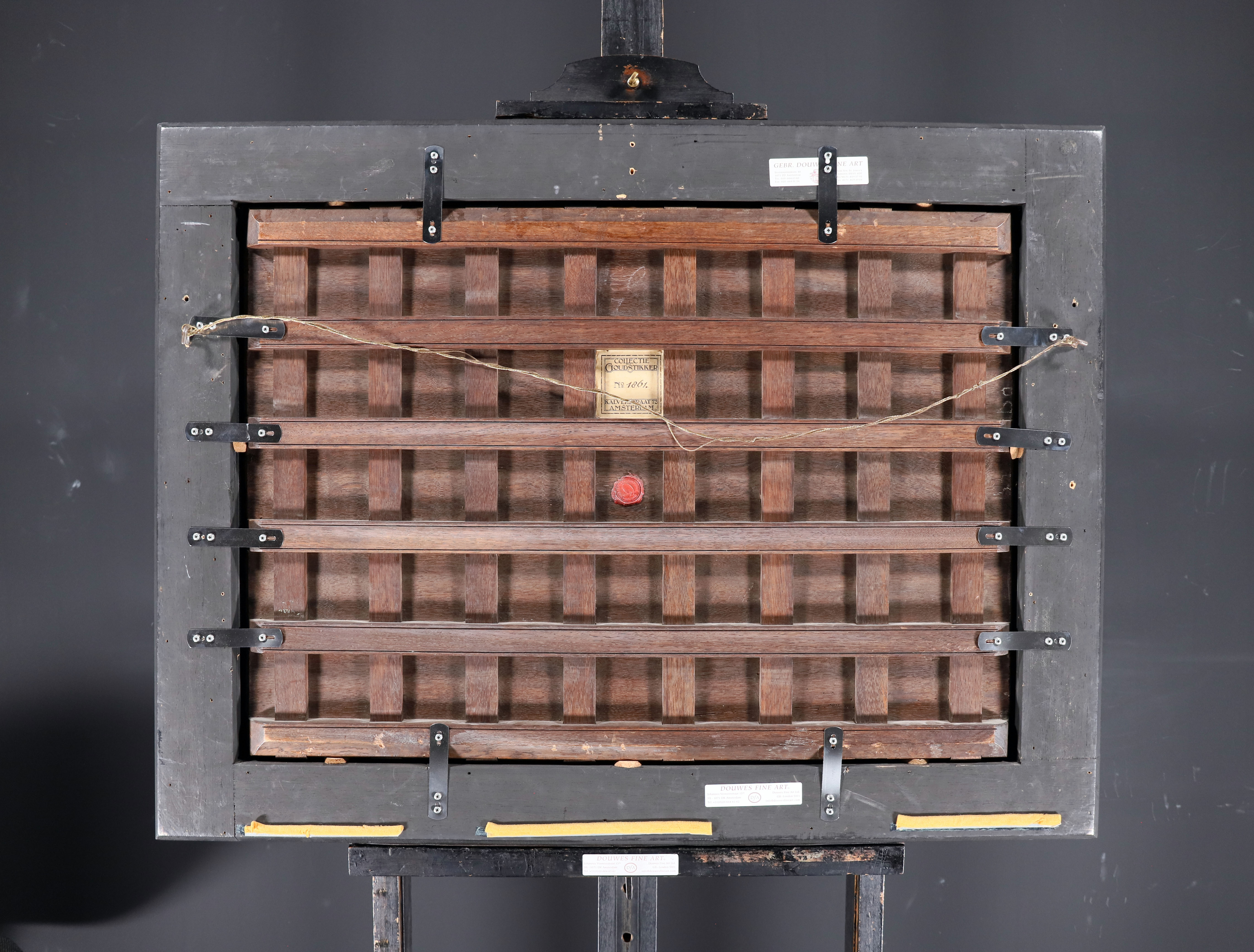
- Jacques Goudstikker Gallery, Amsterdam, 1927
- Collection Dr Julius Reiner (1886-1942), Amsterdam, 1930s
- His sale at Muller, Amsterdam, 1950, lot 801
- Kunstzalen Kees Hermsen Gallery, 1950
- Collection of Gijsbert Willem van Aardenne (1888-1983), Dordrecht, 1957
- Thence by descent
- Sotheby’s, Amsterdam, 1997, lot 71
- Douwes Fine Art, Amsterdam/London, 1997-1999
- Inder Rieden Collection, since 1999
Literature
- Gerlinde de Beer, “The Golden Age of Dutch Marine Painting – The Inder Rieden Collection”, edited by Charles Dumas, Primavera Pers, Leiden 2019, Catalogue II, no. 18, page 400-402.
- Charles Dumas, Gerlinde de Beer, “In de ban van de zee – De Gouden Eeuw van de Nederlandse marineschilderkunst”, De Inder Rieden Collectie, Museum Bredius, 2019, Wilco, Amersfoort, The Netherlands, no. 59, with colour ill.
- U. Beck 1987, p. 239, no. 814, ill.
- U. Beck 1972/73, Vol. II, p. 365, no. 814
- Laurens Bol 1973, p. 130, fig. 134
Exhibition
- Charles Dumas, Gerlinde de Beer, “In de ban van de zee – De Gouden Eeuw van de Nederlandse marineschilderkunst”, De Inder Rieden Collectie, Museum Bredius, 2019, Wilco, Amersfoort, The Netherlands, no. 59, with colour ill.
- Rotterdam 1938, no. 76, fig. 97
- Amsterdam 1927, no. 61
- Rotterdam 1927, no. 29, ill