
Jan van de Cappelle
(1626 - Amsterdam - 1679)
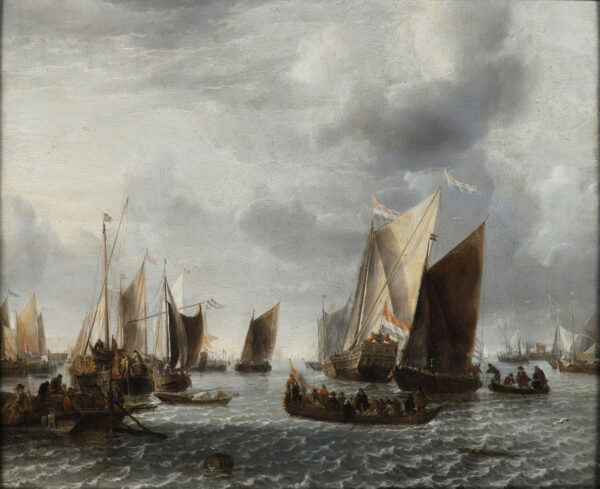
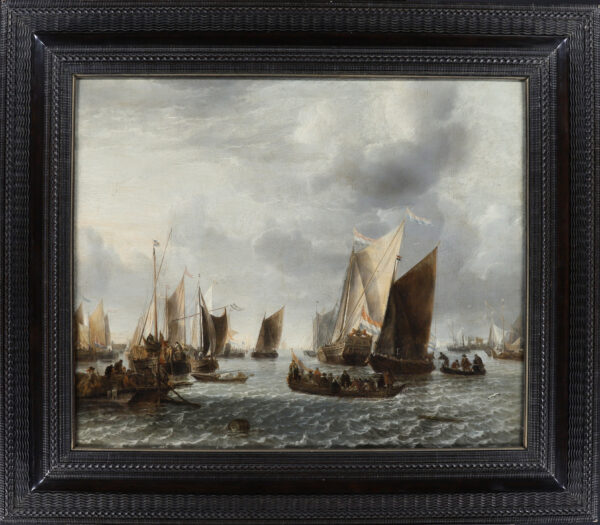
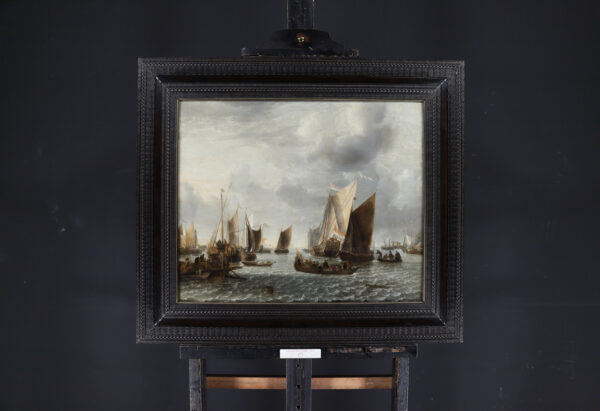
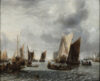
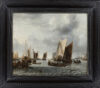
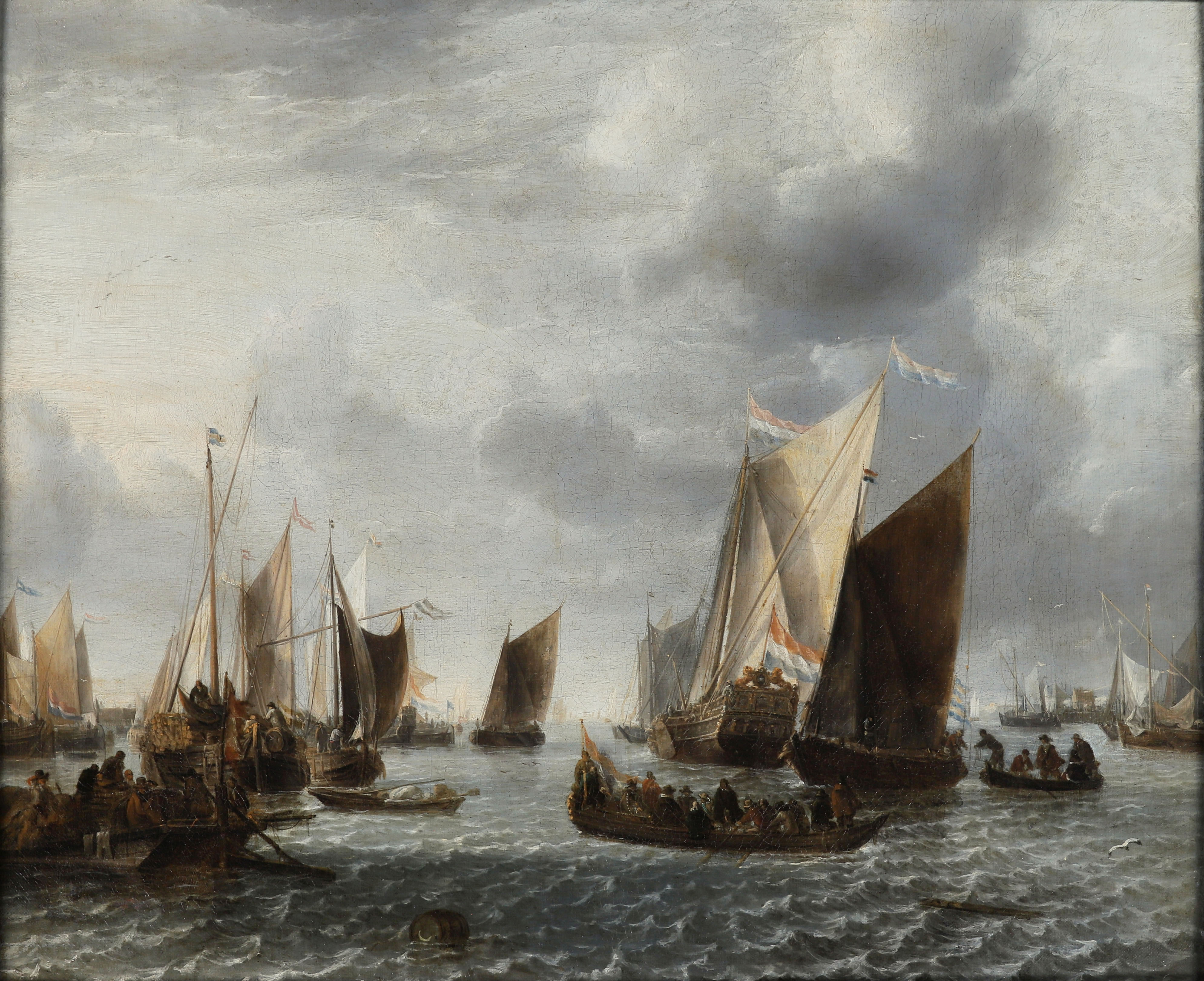
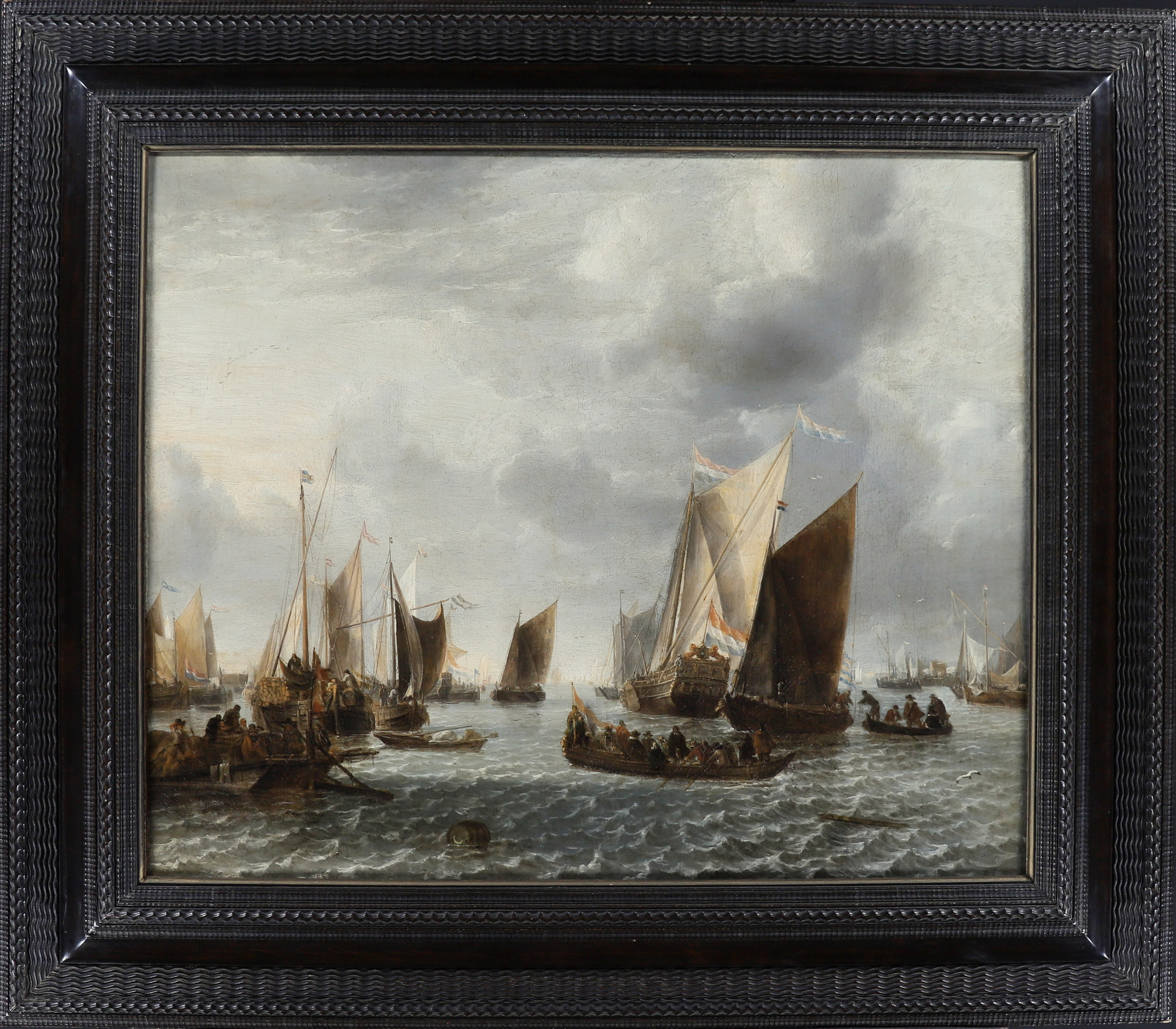
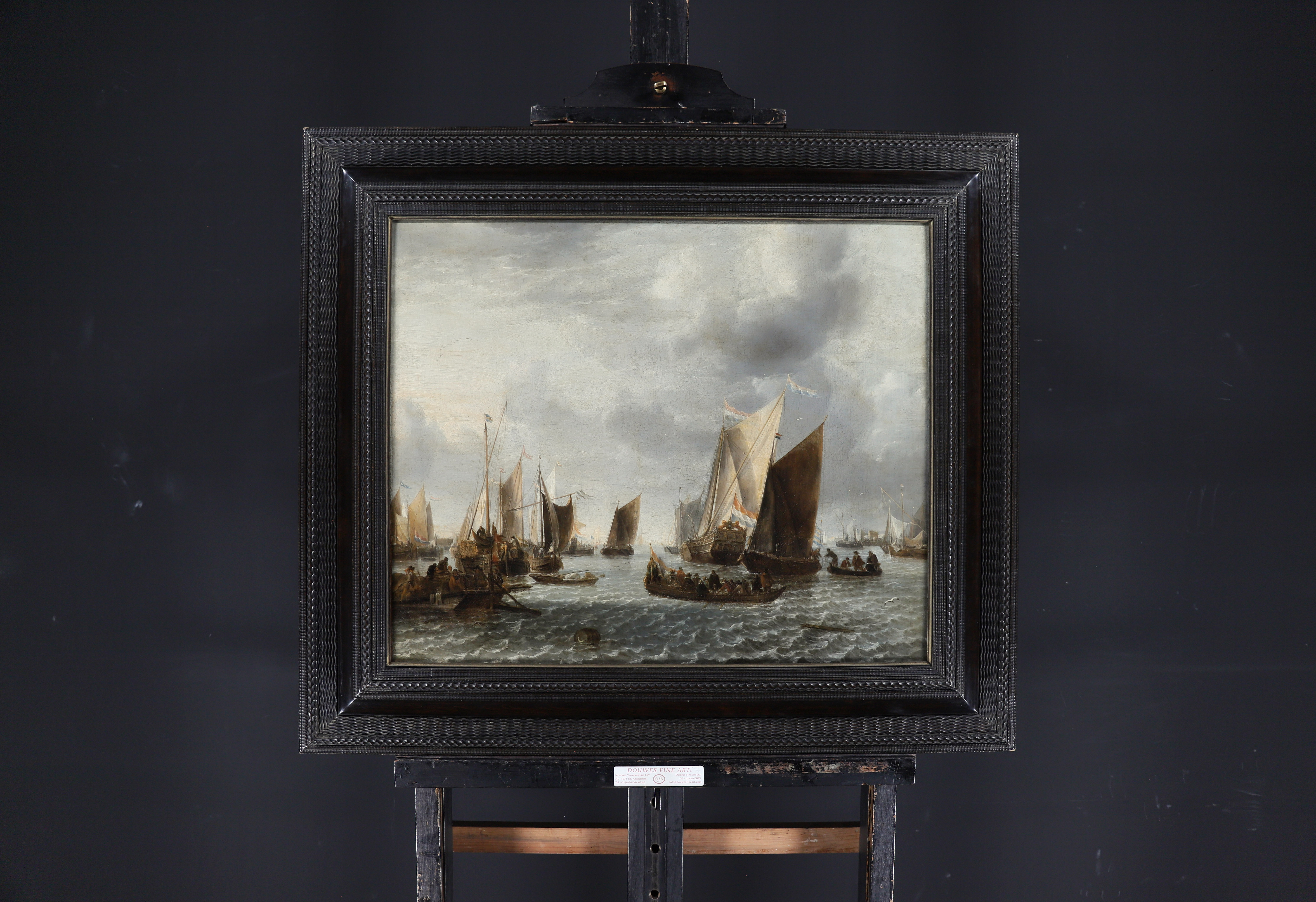
“A Disembarkation on a River”, c. 1655
Oil on canvas: 50 x 60 cm;
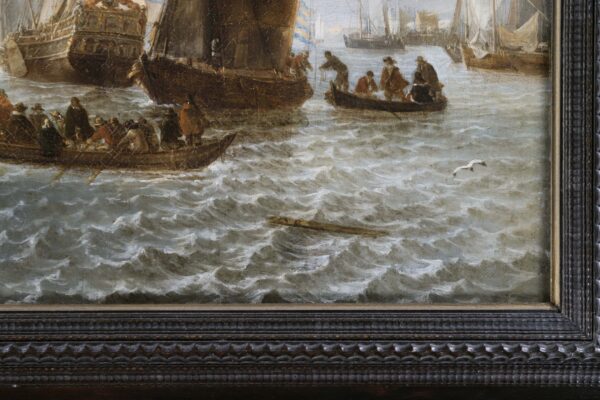
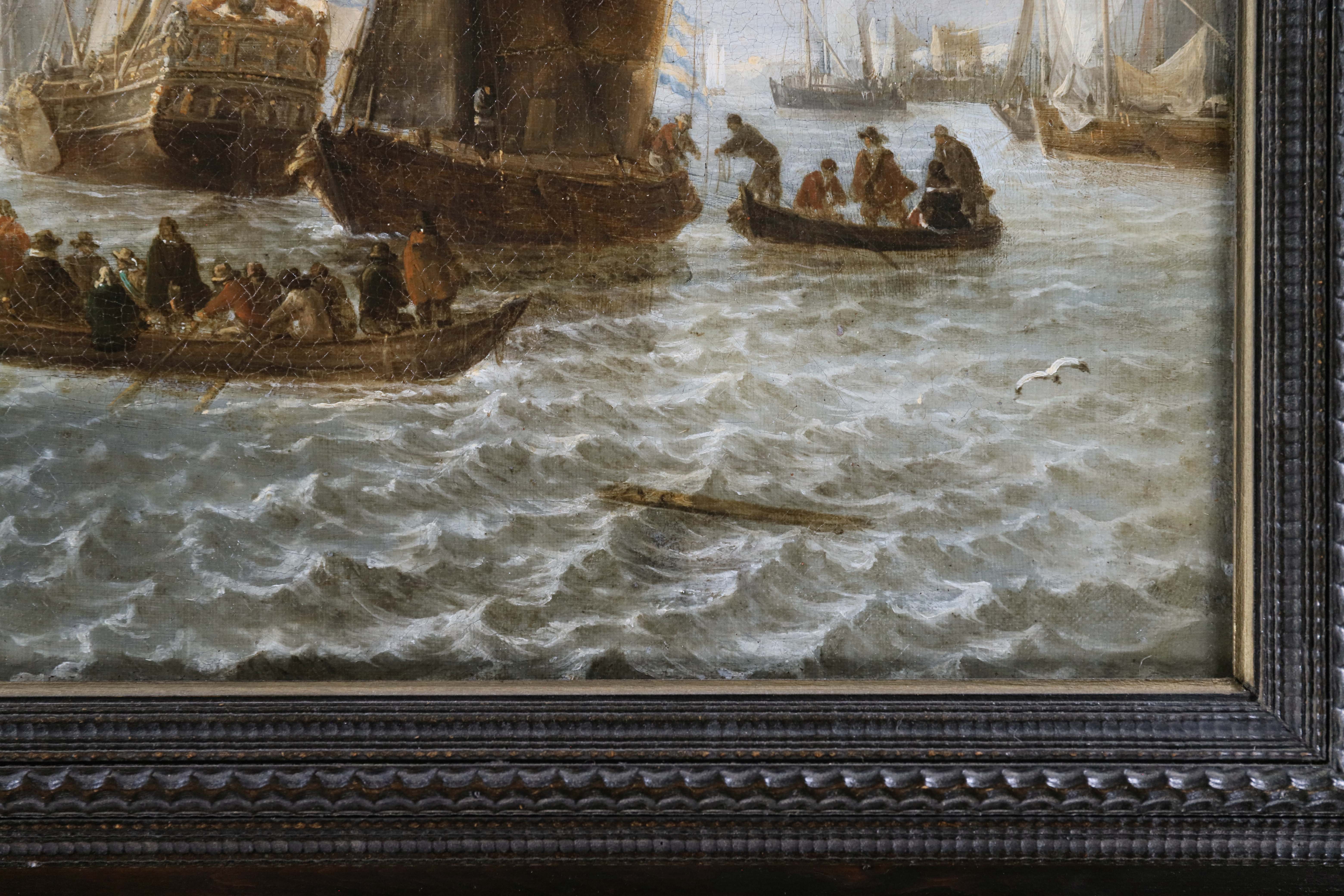
Monogrammed ‘IVC’ on driftwood to the right.
"*" indicates required fields
Notes
Van de Cappelle was a Dutch Golden Age painter of seascapes and winter landscapes, also notable as an industrialist and art collector. He is now considered an outstanding marine painter of 17th century Holland.
He lived all his life in Amsterdam, and as well as working as an artist spent much, or most, of his time helping to manage his father Franchoy’s large dyeworks, which specialized in the expensive dye carmine, and which he eventually inherited in 1674. Presumably because of this dual career, there are fewer than 150 surviving paintings, a relatively small number for the industrious painters of the Dutch Golden Age. His marine paintings usually show estuary or river scenes rather than the open sea, and the water is always very calm, allowing it to act as a mirror reflecting the cloud formations above; this effect was Cappelle’s speciality.
The focus of this painting is a disembarkation, marking the end of a sailing trip: the disembarking passengers are heading for the nearby riverbank. A fully-occupied rowing boat makes its way to the right, along the border between shaded foreground and bright middle distance. The clothing of the passengers at the back of the boat reveals them to be men of high rank. The man at the rear particularly stands out thanks to his lavish attire, including a collar with a golden pendant. A group of vessels lies beyond the rowing yacht, including the most important ship in the painting – a statenjacht (States yacht). This was an elaborately decorated yacht used for official duties. In this picture, the three large national flags, as well as the shield flanked by two lions on the tafferel of the yacht, are indications of its official role. The States yacht lies a short distance behind and above the rowing boat, which has collected the distinguished passengers from the ship. The sunlight highlights the splendid frame and carvings of the States yacht. The heavy form of the Kaag ship, which lies in the shadow between the rowing boat and the States yacht, seems to intrude into this space. The three motifs slightly overlap. At the stern of the Kaag, here shown in three-quarter port bow view, a sailor grasps a mooring rope, about to take a pair of bourgeois passengers on board from a small rowing boat. Of the two vessels behind the States yacht only the nearer is identifiable: its characteristic stem shows it to be another Kaag.
Provenance
- Collection of Comte Henry Jules Charles Emmanuel Greffulhe (1848-1932), Paris
- Kleinberger Gallery, Paris, 1925
- Collection of Max Geldner (1878-1958)
- Thence by descent
- Douwes Fine Art, Amsterdam/London, 1993
- Inder Rieden Collection, since 1993
Literature:
- Gerlinde de Beer, “The Golden Age of Dutch Marine Painting – The Inder Rieden Collection”, edited by Charles Dumas, Primavera Pers, Leiden 2019, Catalogue II, no. 38, page 618-626.
- Charles Dumas, Gerlinde de Beer, “In de ban van de zee – De Gouden Eeuw van de Nederlandse marineschilderkunst”, De Inder Rieden Collectie, Museum Bredius, 2019, Wilco, Amersfoort, The Netherlands, no. 33, with colour ill.
Exhibition:
Charles Dumas, Gerlinde de Beer, “In de ban van de zee – De Gouden Eeuw van de Nederlandse marineschilderkunst”, De Inder Rieden Collectie, Museum Bredius, 2019, Wilco, Amersfoort, The Netherlands, no. 33, with colour ill.