
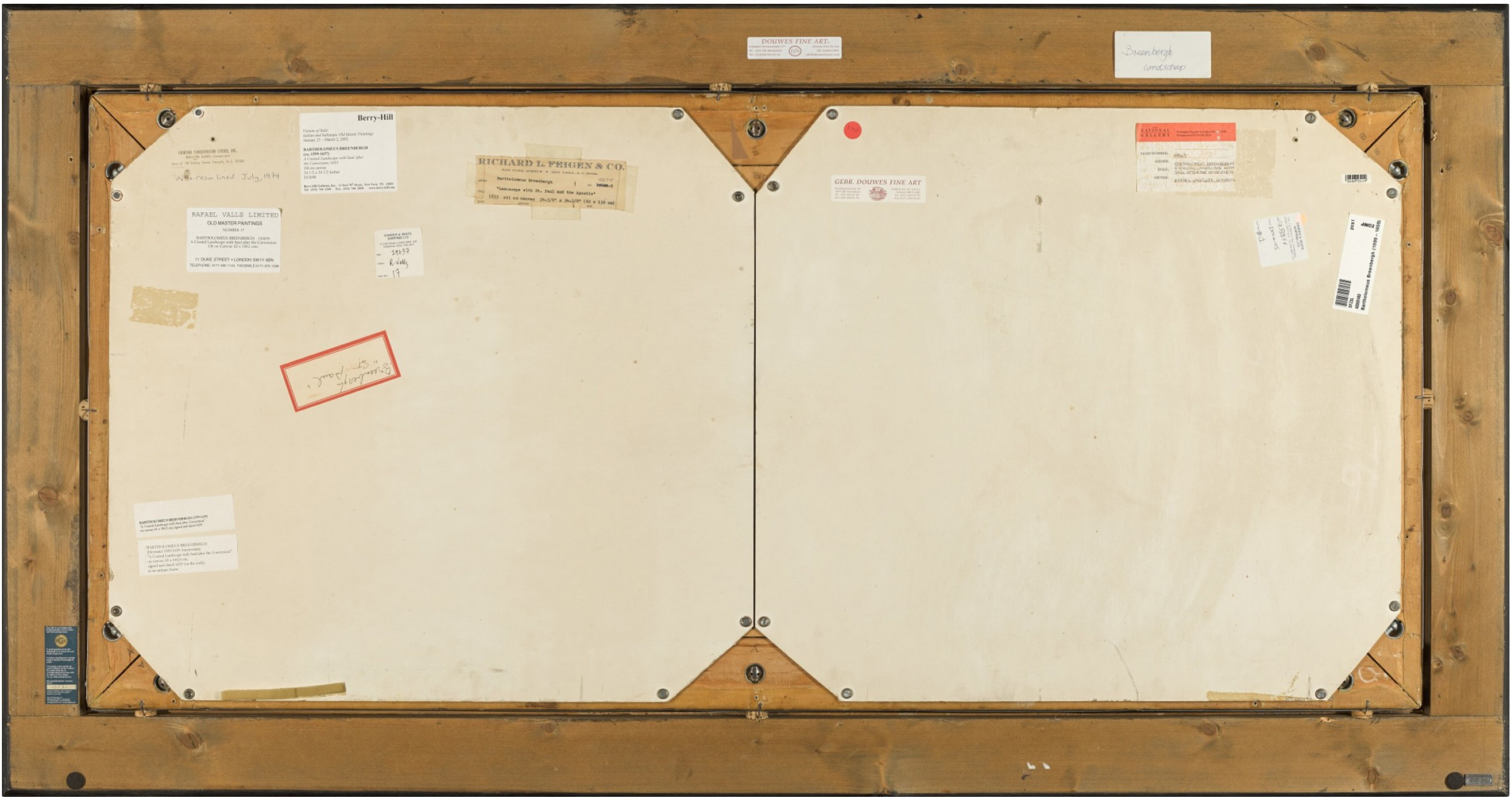
Bartholomeus Breenbergh
(Deventer 1599 - 1659 Amsterdam)
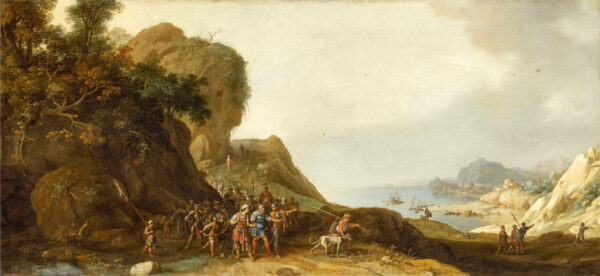
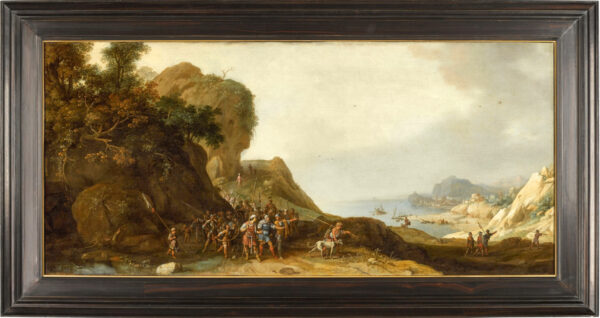
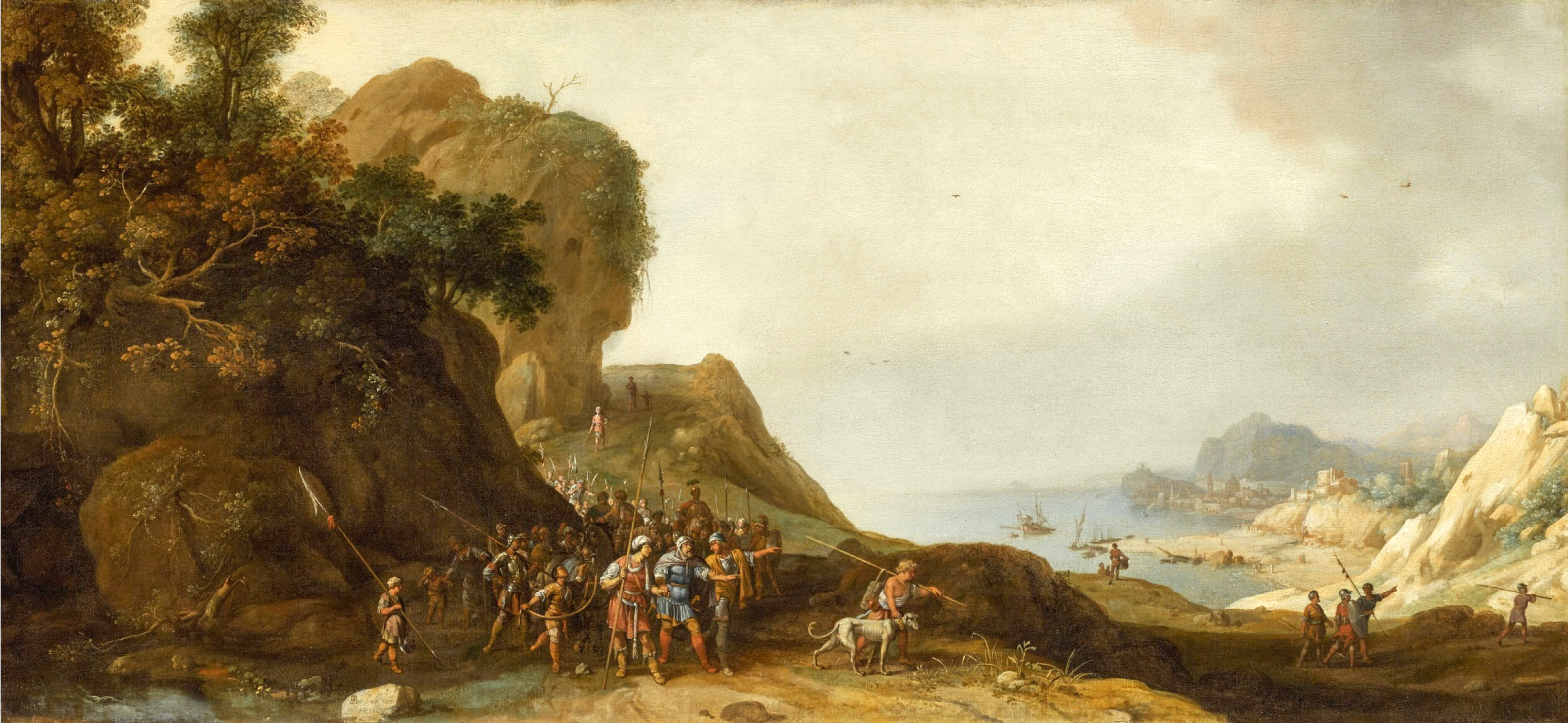
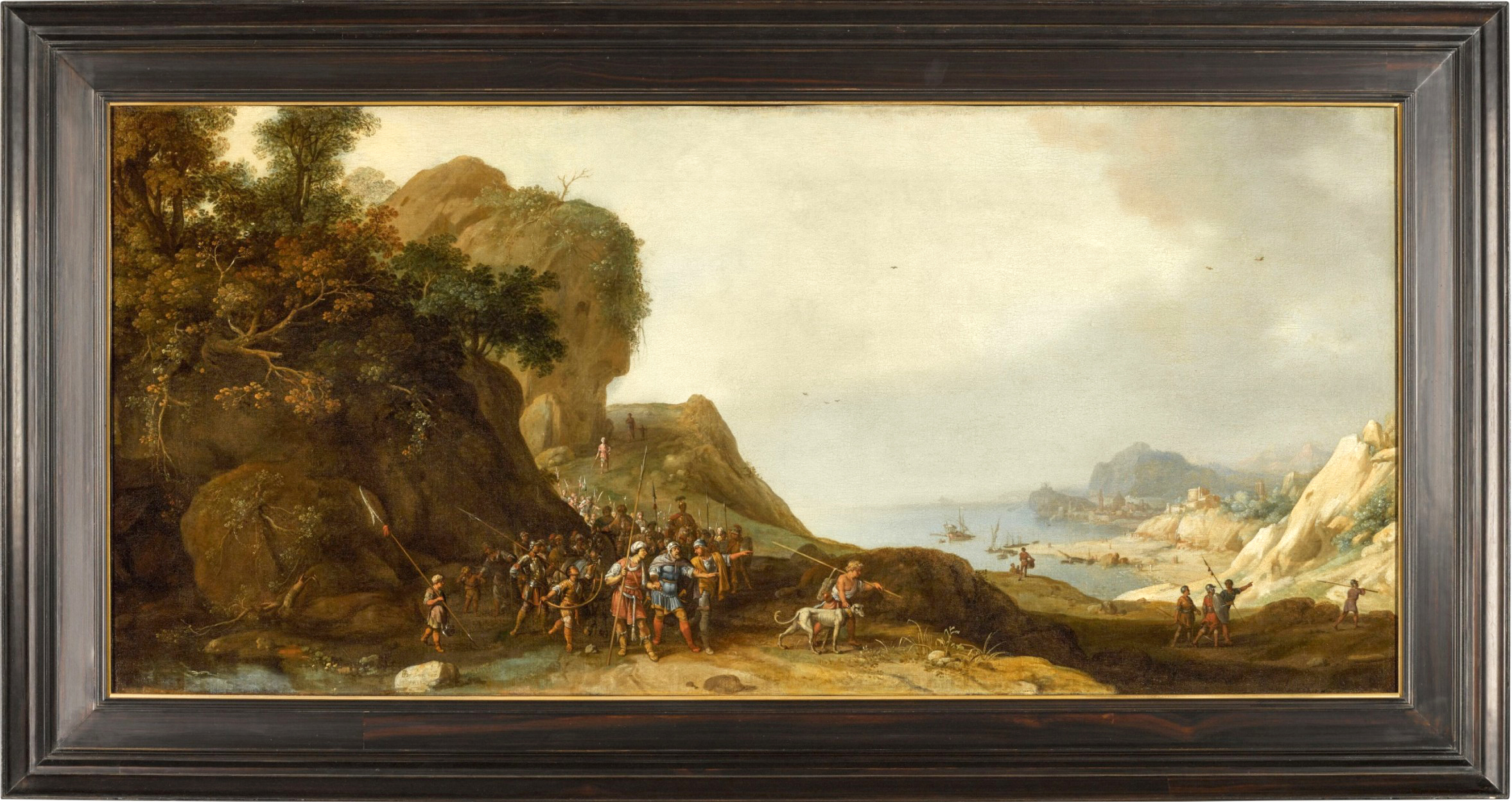
“A Coastal Landscape with Saul after the Conversion”, 1633
Oil on canvas: 65 x 140,5 cm;
signed and dated 1633 (on the rock);
"*" indicates required fields
Notes
Bartholomeus Breenbergh (1598-1657) was one of the most versatile and engaging of Dutch 17th century artists. Initially finding success as a painter of Italianate landscapes, he later transgressed the unwritten rule that his Dutch contemporaries followed, confining oneself to a single genre.
After serving an apprenticeship in the Netherlands, Breenbergh moved to Italy in 1619, where he established a reputation as a masterly landscape draughtsman and as a painter of pastoral scenes. Together with Cornelis van Poelenburgh (1594/5-1667), who was in Rome between 1617 and 1627, he was among the founding members of the ‘Schildersbent’ (transl.: ‘association of painters’ or ‘Bentvueghels’ (‘birds of a feather’) – an association of Northern artists residing in Rome, which was founded in 1623. Upon his return to Amsterdam in about 1629, he introduced important historical subjects into his classical landscapes, and became a painter of monumental historical pictures in the manner of the precursors of Rembrandt.
The present painting was done in 1633, the same year Breenbergh married his wife, who came from a family of merchants. It was executed after the artist’s return to Amsterdam from Rome in about 1629. It represents the work of a mature artist at the pinnacle of his ability.
In contrast to the pure landscapes and genre scenes of the artist’s earlier Rome period, this painting is characteristic of Breenbergh’s Dutch landscapes in its incorporation of a religious narrative scene.
Marcel Roethlisberger cites this painting as ‘a masterpiece’ and possibly his finest large scale painting. Its large scale indicates an important commission. The composition relies heavily on the revolutionary engraving of the Conversion by Lucas van Leyden completed in 1509.
The subject matter of his paintings, executed after his return from Italy, tended to be imbued with greater religious significance, in contrast to the purely genre and landscape paintings that be completed whilst in Italy.
On the subject:
As told in Acts 9, Saul, the persecutor of Christians, on his way to Damascus, was blinded and converted by a divine apparition. Pursuing his way in this state for three days with his companions, he was to be baptized in the city.
The impact of the conversion and the lapse of time involved are given an extraordinary visual expression by the progression of the landscape, which carries something of the effect of a convex mirror image.
The viewer is led to participate in the long journey of the figures by following the winding road which descends from the rocks and leads over a large curve to the bird’s-eye view on the right with the distant city of Damascus.
The depiction of this stage in the narrative is rare. This painting and its prototype, Lucas van Leyden’s innovatory engraving ‘The Conversion of St. Paul’ of 1509 are significant exceptions. From the engraving, the artist adopted the compositional features of the grouping of the three principal figures and the outcrop of rock behind them
The composition echoes similarly elongated frescoes from Tassi and his circle in Rome;
Roethlisberger describes this painting as the most monumental of the artist’s elongated, panoramic views, and suggests that its large format indicates that it was painted on commission.
Provenance
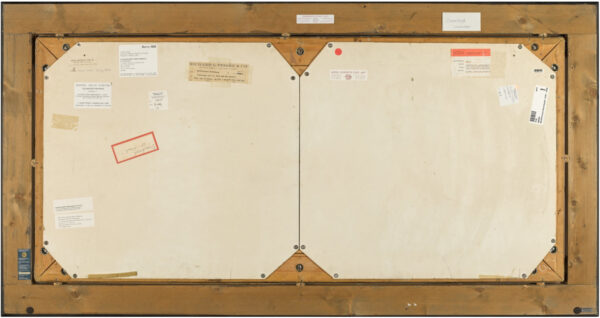
- Richard Feigen & Co, New York, 1974;
- private collection, The Hague;
- Mr and Mrs Dr. Richard W. Levy, New Orleans.
- Christie’s London, 1999.
- Private collection, Switzerland
- Hampel, Munich
- Douwes Fine Art, Amsterdam
Literature
- G. Roethlisberger, Bartholomus Breenbergh: The Paintings, New York 1981, p. 65, no. 154, reproduced pl. 154;
- R. Waddington, ”Bartholomeus Breenburgh: The Paintings’, by Marcel Roethlisberger’, in The Burlington Magazine,vol. CXXIII, no. 940, July 1981, p. 427;
- J. Duparc and L.L. Graif, Italian Recollections: Dutch Painters of the Golden Age, exh. cat., Montreal 1990, pp. 96–97, no. 22, reproduced in colour;
- B. Harwood, Inspired by Italy: Dutch landscape painting 1600–1700, exh. cat., London 2002, p. 88, no. 9, reproduced in colour p. 89;
- Verdi, Bartholomus Breenbergh (1598–1657): Joseph distributing corn in Egypt, exh. cat., Birmingham 2004, p. 38, no. 5, reproduced in colour p. 39, fig. 22.
Exhibitions
- Montreal, Museum of Fine Arts, ‘Italian Recollections: Dutch Painters of the Golden Age’, 1990, with a cat. by F. Duparc & L. Graif, no.22, illustrated;
- New York, Richard L.Feigen & Co., ‘Bartholomeus Breenbergh’, 1991, with cat. by M. Roethlisberger, cat. no. 10, p.28, illustrated;
- Jerusalem, The Israel Museum, ‘Landscape of the Bible’, 2000-2001 (as the only privately owned painting);
- Dulwich, United Kingdom, Dulwich Picture Gallery, ‘Dutch Italianates’, 2002;
- Birmingham, United Kingdom, The Barber Institute of Fine Arts, ‘Bartholeomeus Breenbergh (1598 – 1657)’, Oct. 2004 – Jan. 2005, subsequently in The Hague,
Bredius Museum, Feb. – May 2005, no. 5, p. 8, illustrated on p. 39.