
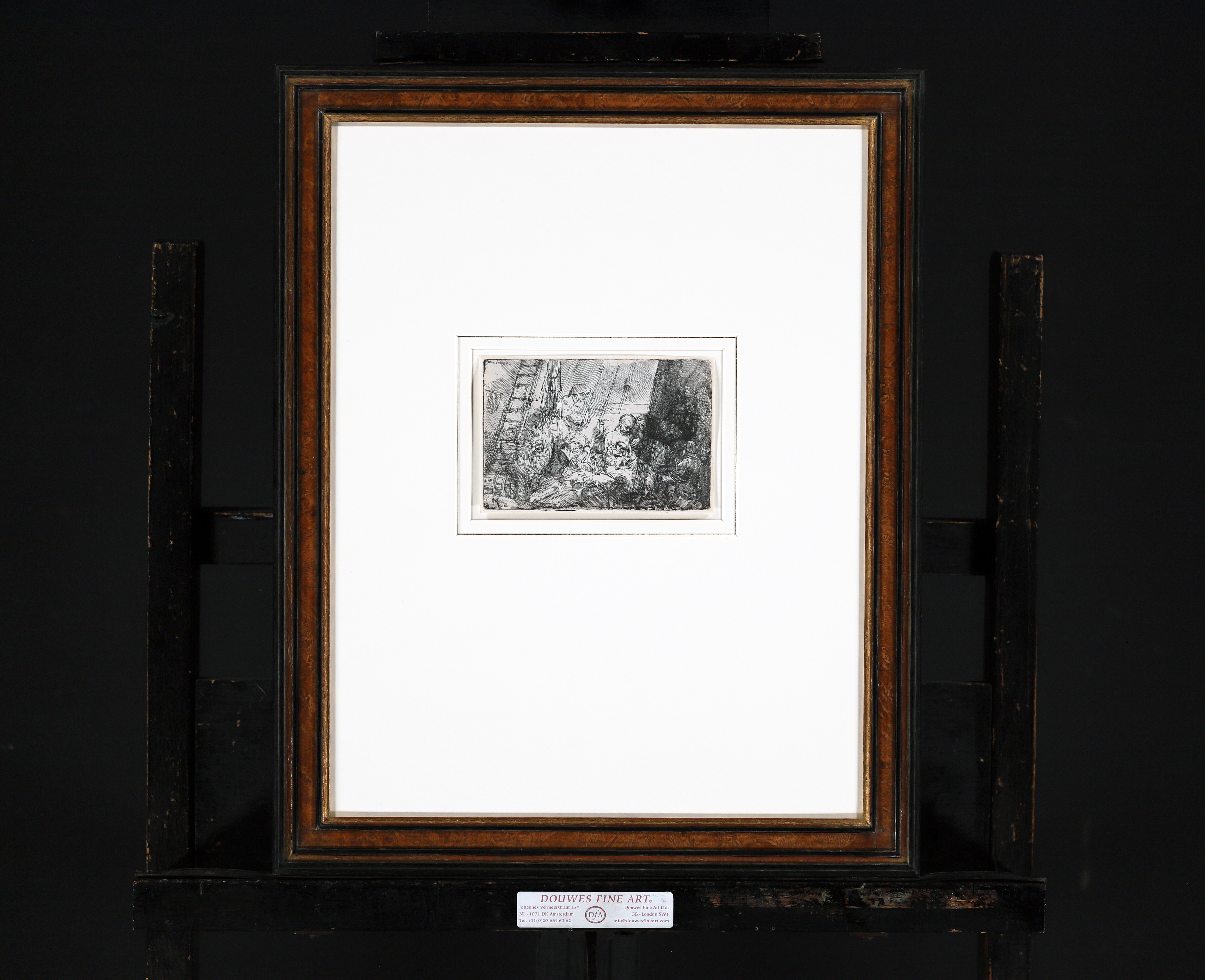
Rembrandt Harmensz. van Rijn
(Leiden 1606-1669 Amsterdam)
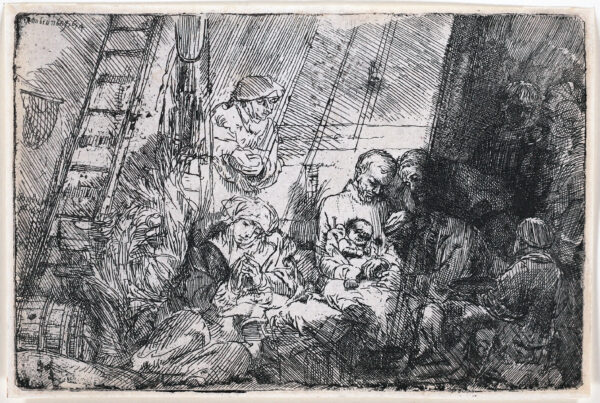
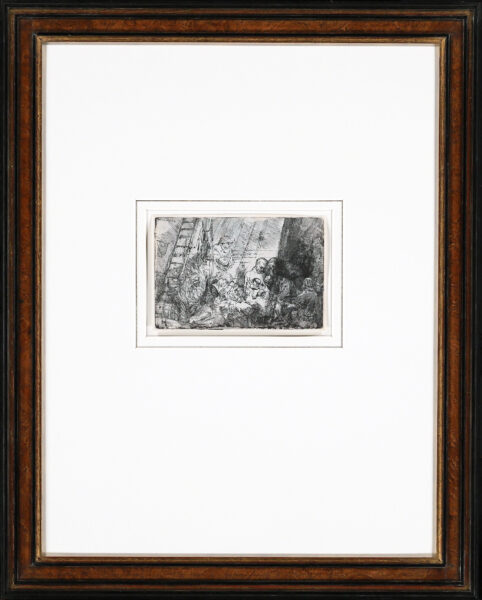
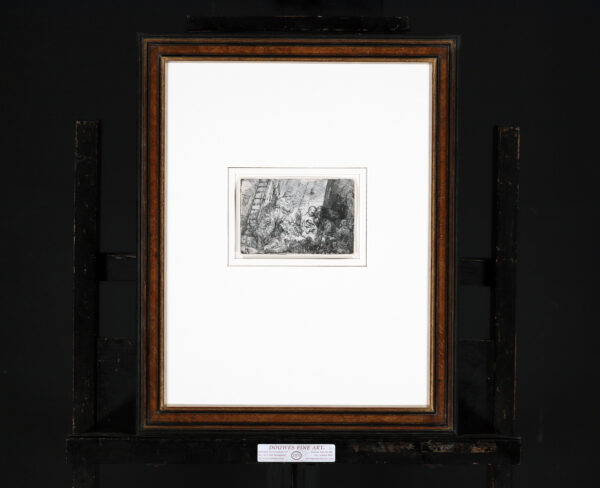
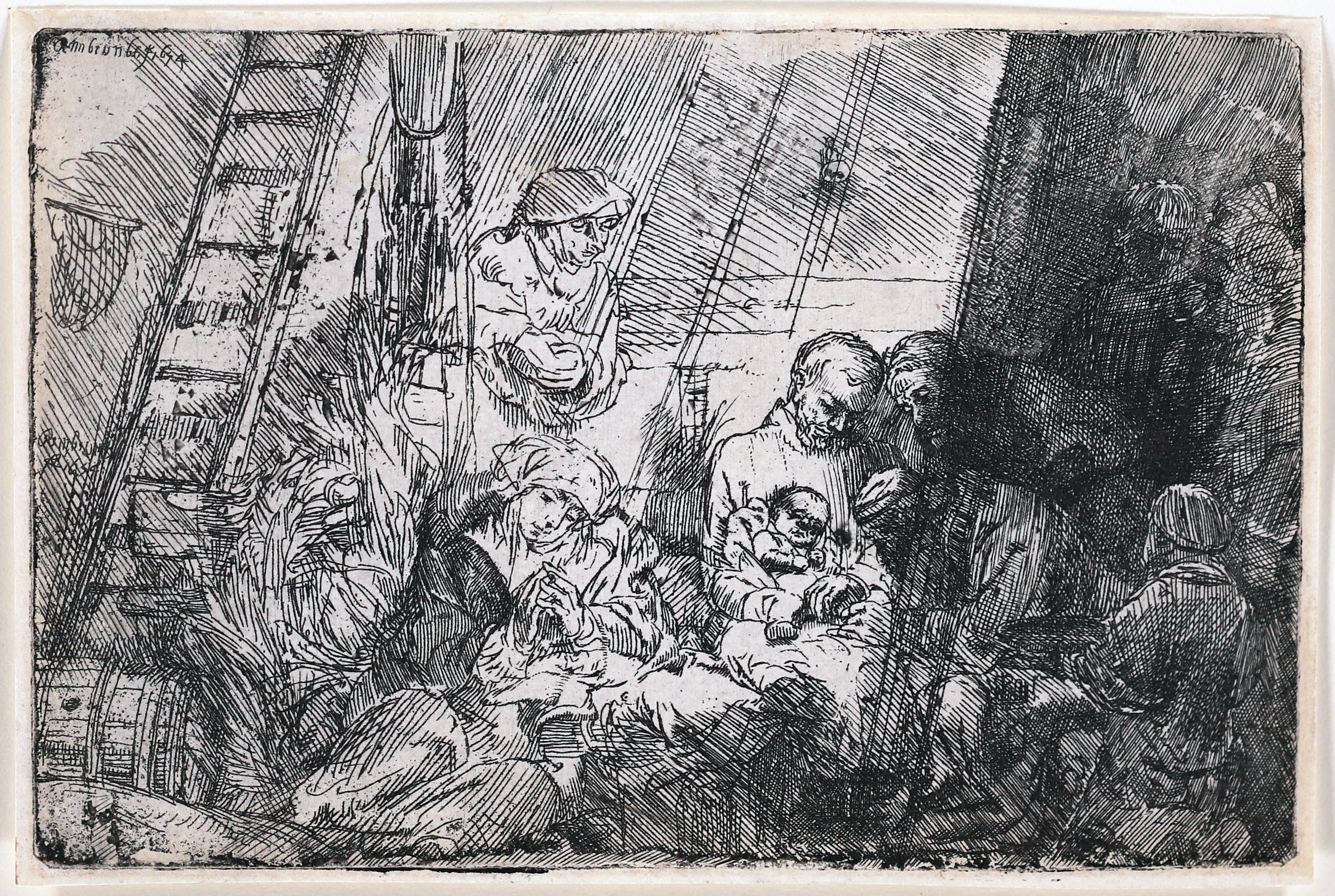
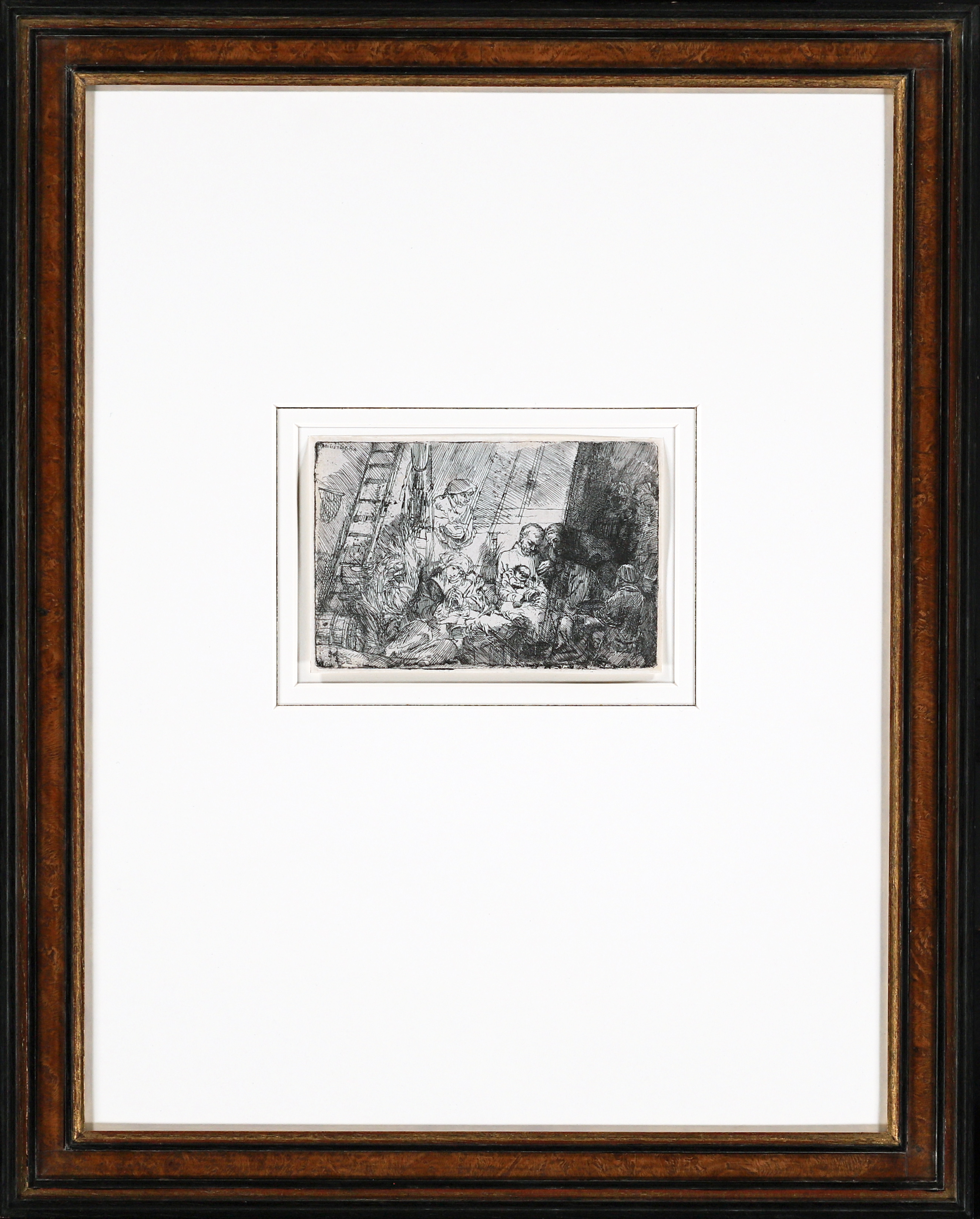
“The Circumcision in the Stable”, 1654
Etching; 9,5 x 14,4 cm, with small margins
signed and dated upper left: ‘Rembrandt. f. 1654’ (d reversed)
as well as centre left: ‘Rembrandt | f 1654’
"*" indicates required fields
Notes
During his lifetime, Rembrandt’s extraordinary skills as a printmaker were the main source of his international fame. Unlike his oil paintings, prints travelled light and were relatively cheap. For this reason, they soon became very popular with collectors not only within, but also beyond the borders of the Netherlands.
This etching depicts the scene in a stable with Joseph holding the new born Jesus with Mary seated on the left, with a figure standing behind her. They are bathed in light. On the right is a group of people in the shadows, there is one man leaning over the child ready to perform the circumcision.
“The Circumcision in the Stable” is a masterful, intimate New Testament etching by Rembrandt van Rijn. Created during a prolific period of religious printmaking, the work stands out for its unique, localized staging of a foundational biblical milestone.
The Gospel of Luke does not explicitly name the location of Christ’s circumcision. While Renaissance art historically staged the ritual inside an ornate temple, Rembrandt deliberately moves the setting to the humble nativity stable in Bethlehem.
The print frames Mary seated on the left holding the infant Jesus. Joseph stands close behind her, while a mohel leans carefully over the child to perform the covenant ceremony. A group of onlookers fades into the low, cavernous shadows of the background barn.
Rembrandt uses deep cross-hatching to plunge the edges of the stable into absolute darkness, while a dramatic beam of celestial light slices downward. This focus pierces the central figures, highlighting the profound emotional weight and sacredness of the quiet event.
Rembrandt modified the copperplate across five progressive “states”. Early lifetime impressions like this etching in the second state boast exceptionally crisp linework, heavy “inky relief,”.
Literature
Bartsch 47; The New Hollstein Dutch 280: Second state of V ;
Nowell-Usticke: C2, Plate in existence at the Rijksmuseum.
Provenance
Private collection, USA;
Private collection, The Netherlands;