
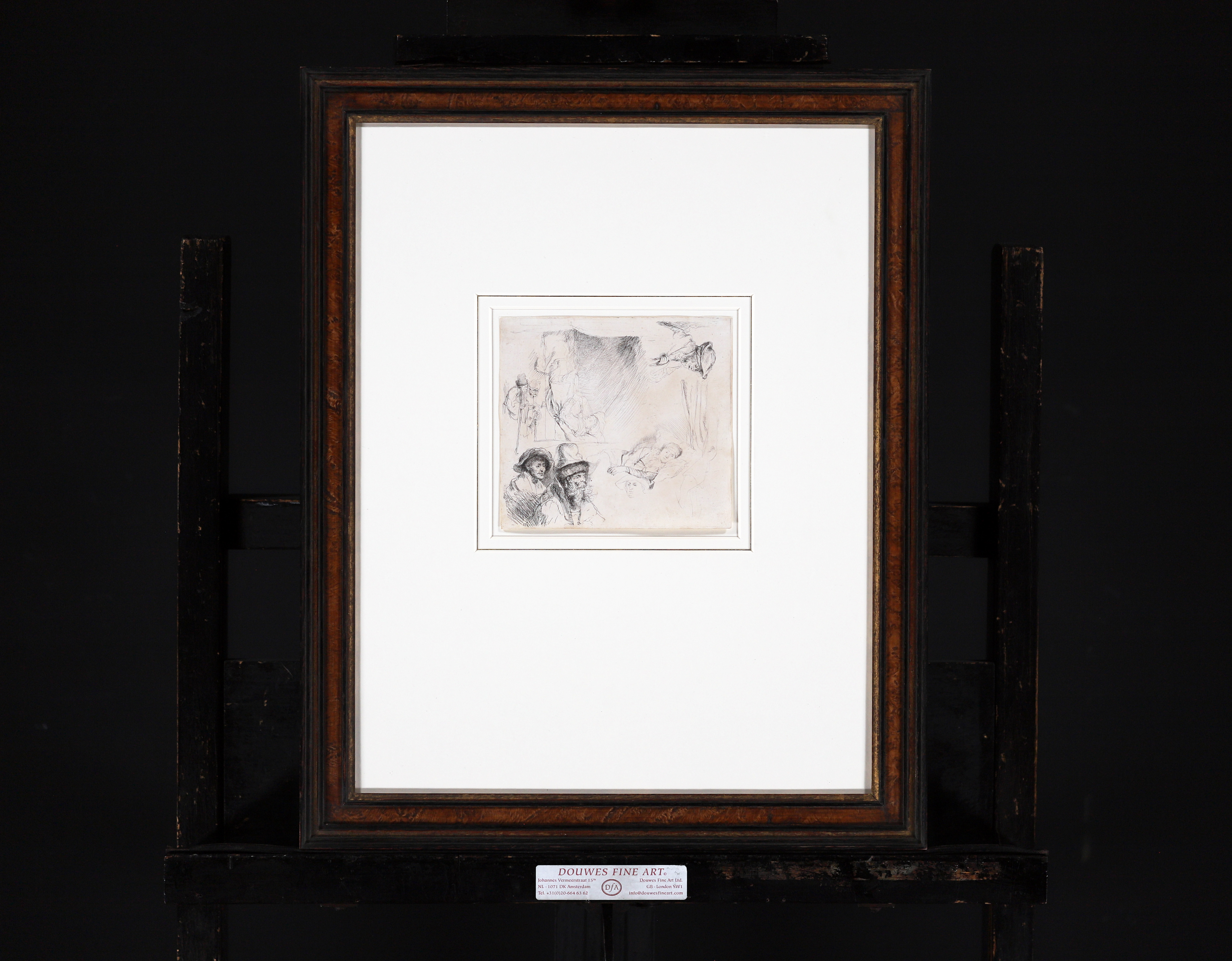
Rembrandt Harmensz. van Rijn
(Leiden 1606-1669 Amsterdam)
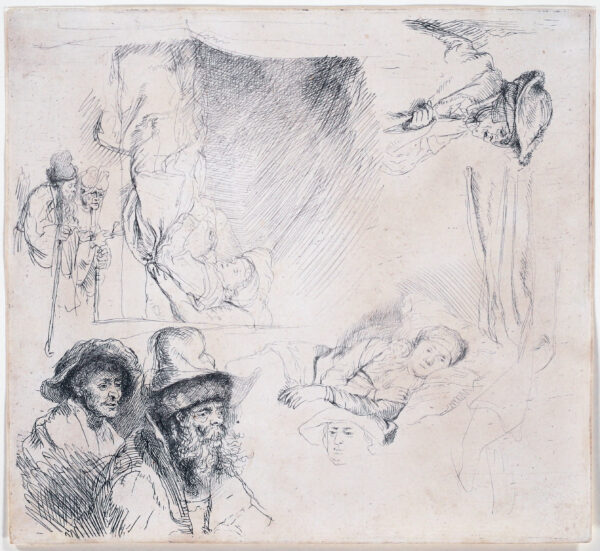
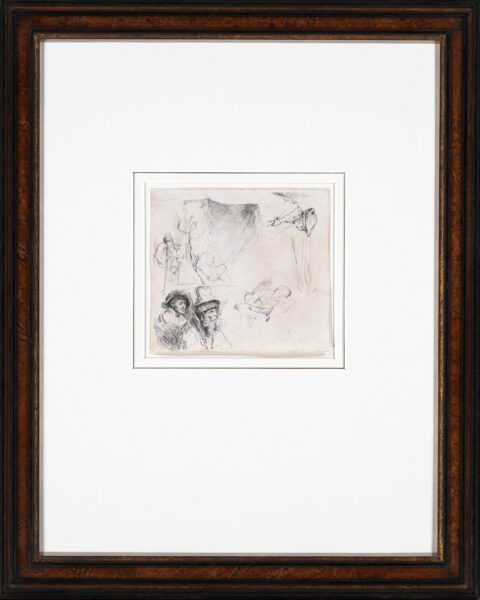
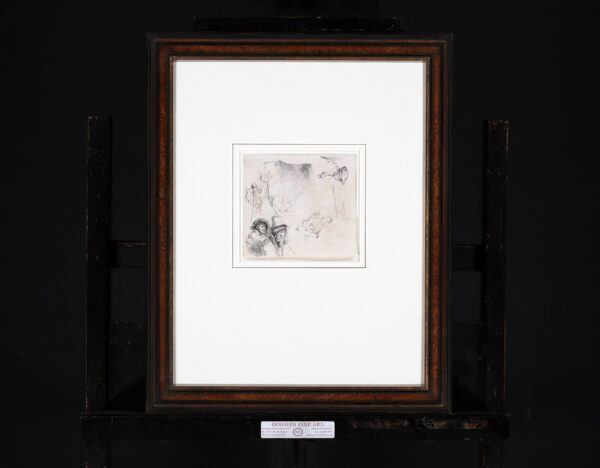
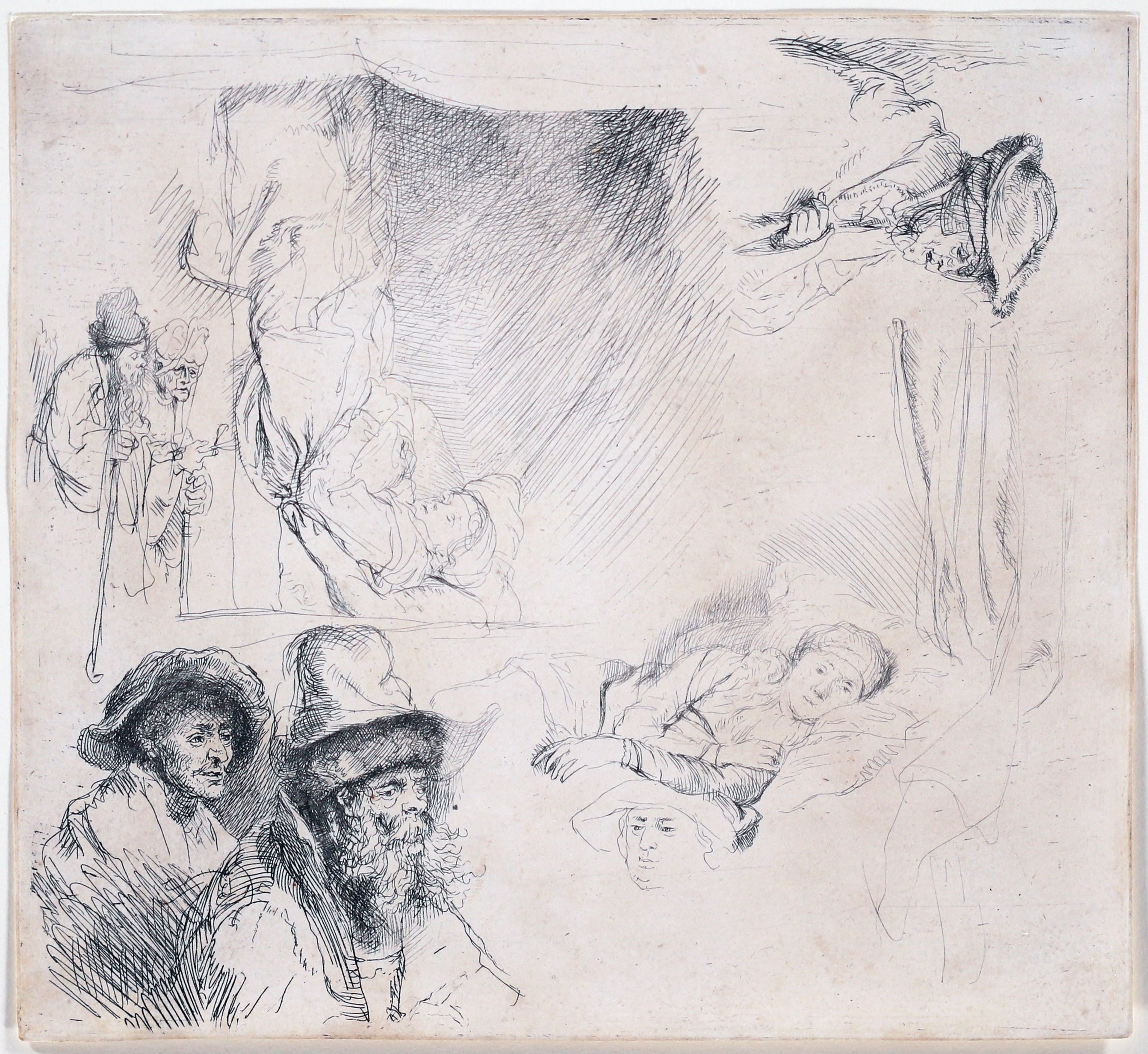
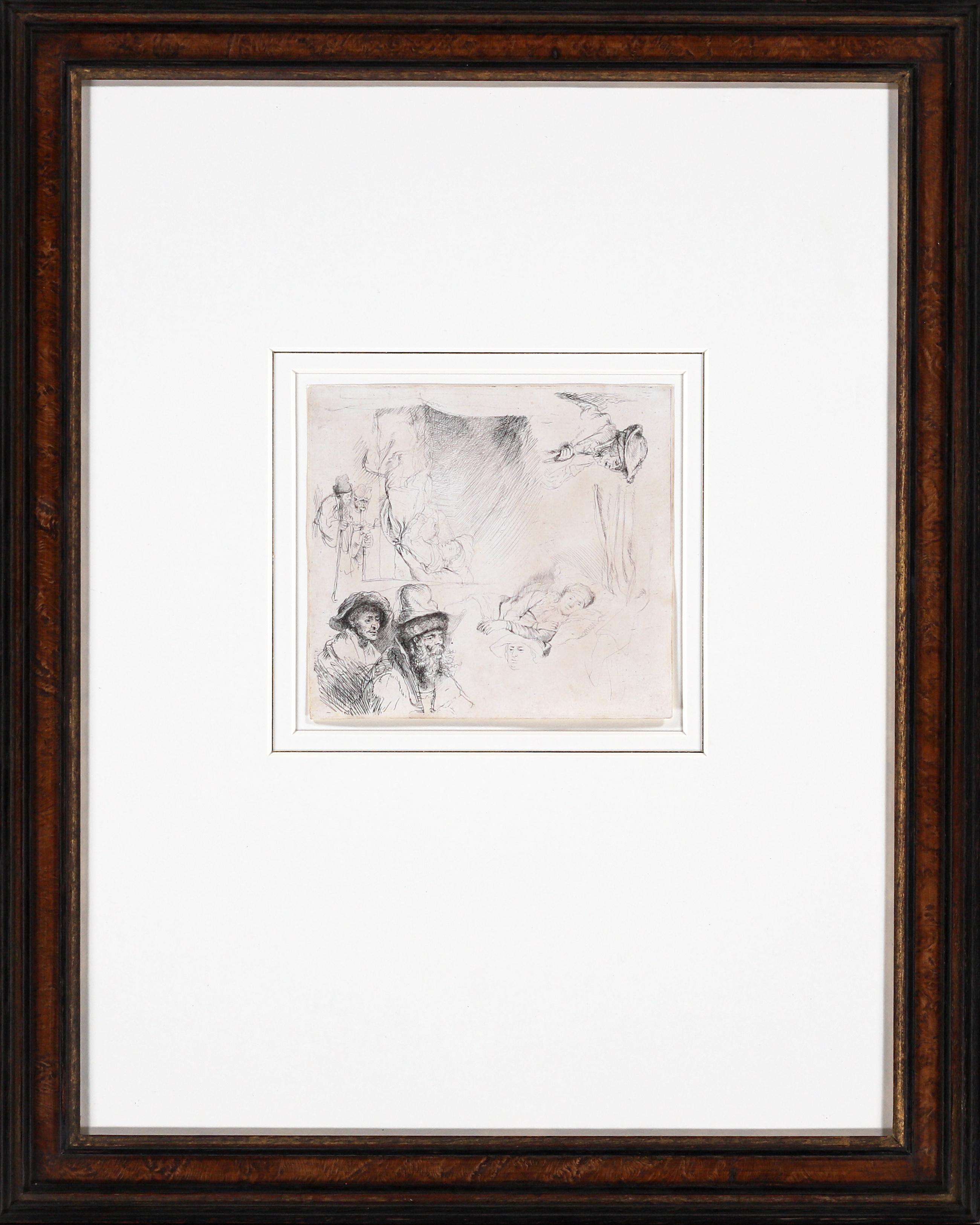
“Sheet of Studies, with a woman lying ill in bed”, c. 1639
etching on laid paper: 14 x 15,2 cm
"*" indicates required fields
Notes
A fine early impression from the delicately etched plate. Graded RR+ by Nowell-Usticke as “a rare, delicate plate”. There are no late impressions. With a fine margin around the platemark.
This is one of Rembrandt van Rijn’s most intimate and celebrated etchings. Formatted exactly like a casual page torn straight out of an artist’s personal sketchbook, it gives viewers a rare glimpse into Rembrandt’s raw, unedited creative process and his deep domestic anxieties. The woman lying in bed is Saskia van Uylenburgh. This assumption is based on pen drawings that show Rembrandt’s wife lying in bed as a sick woman (cf. asst. Cat. London/Amsterdam 2000 (Rembrandt), pp. 181 ff.) – Very rare in this early Impression.
The sheet features a woman depicted twice. In one instance she is shown sleeping heavily; in the other, she is propped up by pillows, staring out listlessly and pale. Art historians broadly agree that this woman is Rembrandt’s beloved wife, Saskia van Uylenburgh.
Around 1641, Saskia fell deathly ill, likely suffering from tuberculosis, following the births and tragic losses of three of their children. She passed away shortly after in June 1642 at just 29 years old.
The frequency with which Rembrandt sketched Saskia resting or confined to her sickbed during these months leaves little doubt that the plate served as a personal outlet for his grief and profound concern for her declining health.
The etching is unique because it was “lightly bitten” with acid. It showcases loose, freehand lines rather than the highly finished, dramatic chiaroscuro contrasts found in Rembrandt’s grand religious prints.
True to an experimental practice sheet, Rembrandt rotated the copper plate as he worked, scattering other quick, unconnected studies across the space alongside the poignant images of his wife. These include brief sketches of other anonymous models and faces
During his lifetime, Rembrandt’s extraordinary skills as a printmaker were the main source of his international fame. Unlike his oil paintings, prints travelled light and were relatively cheap. For this reason, they soon became very popular with collectors not only within but also beyond the borders of the Netherlands.
Literature
Bartsch 369; The New Hollstein no. 177: only state
Plate not in existence – with Nowell-Usticke (1967):
RR+ – a rare, delicate plate
Provenance
- Pierre Remy, (2nd half of the 18th century), Paris, with the collector’s handwritten note on the reverse as well as dated “1749” (cf. Lugt 2173)
- Private collection, Germany
- Karl & Faber, Munich
- Private collection, The Netherlands