
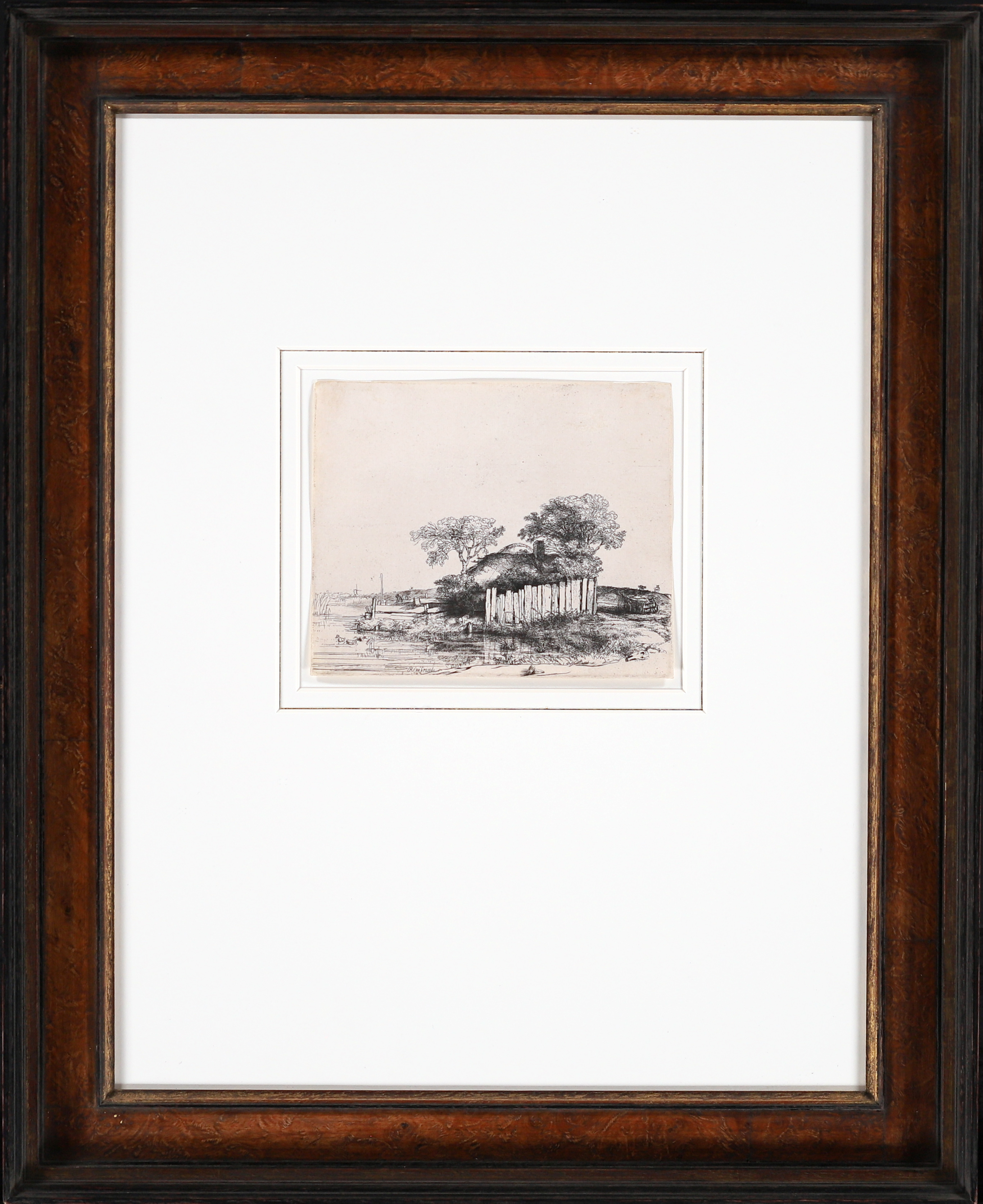
Rembrandt Harmensz. van Rijn
(Leiden 1606-1669 Amsterdam)
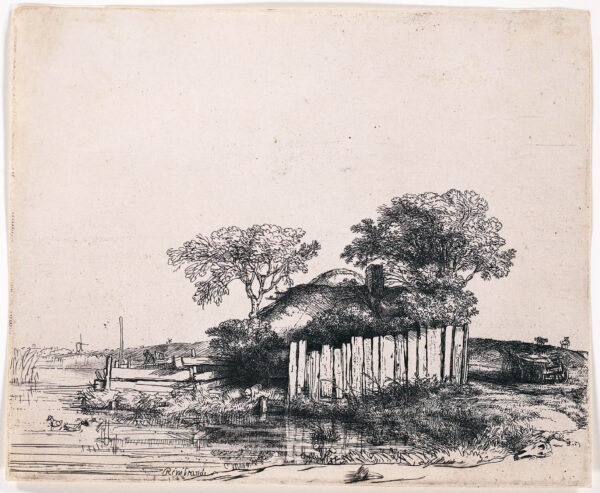
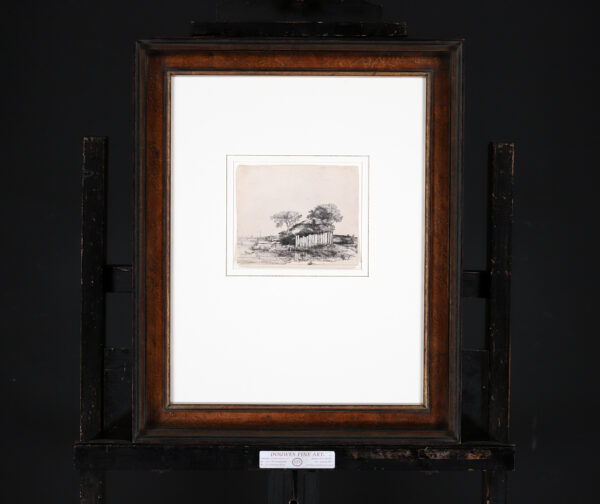
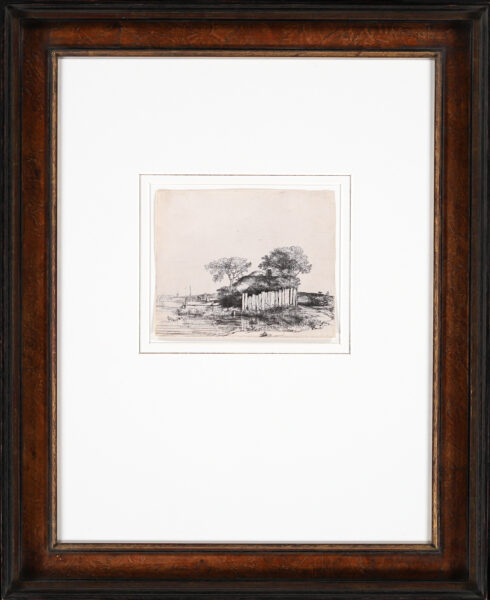
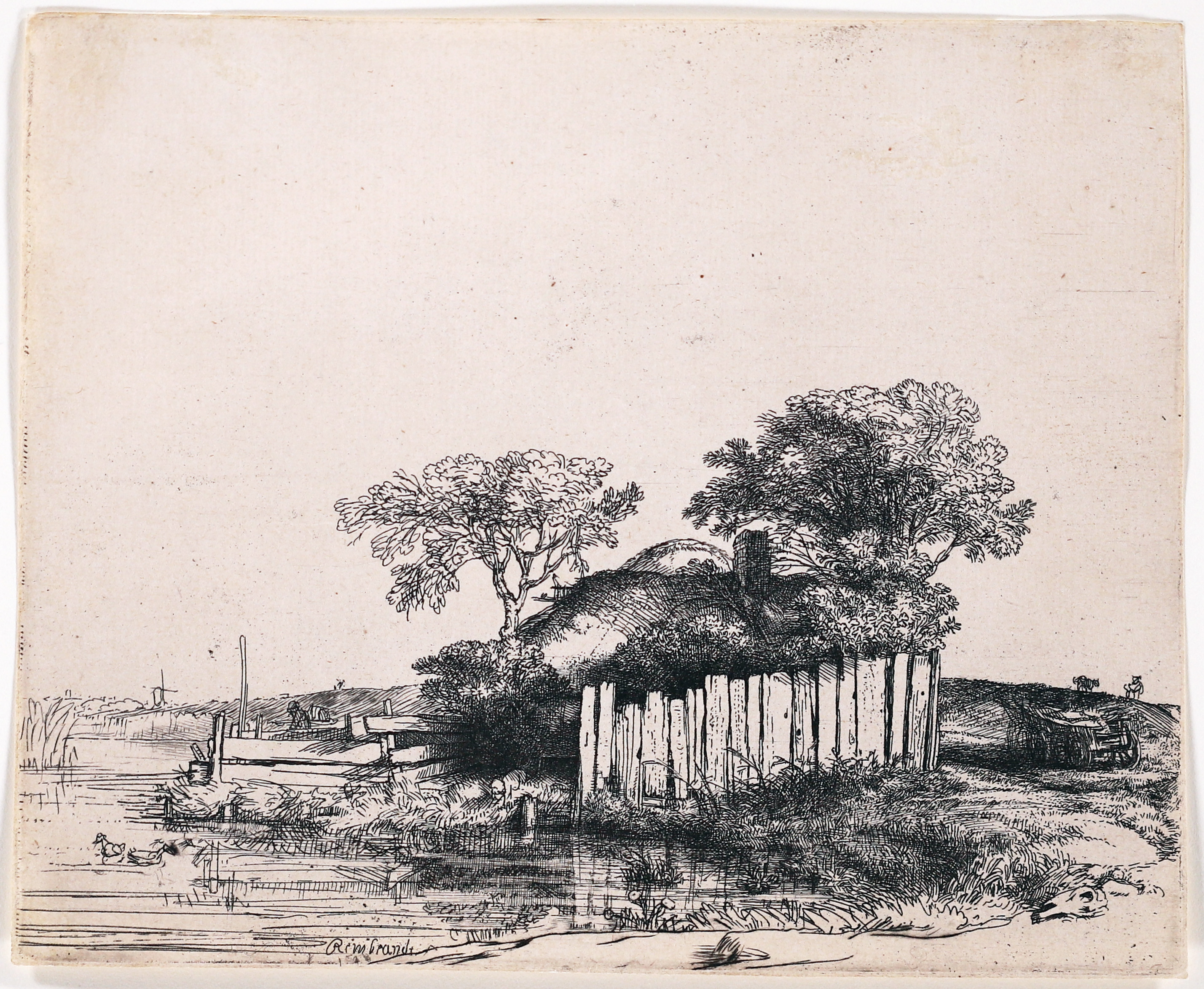
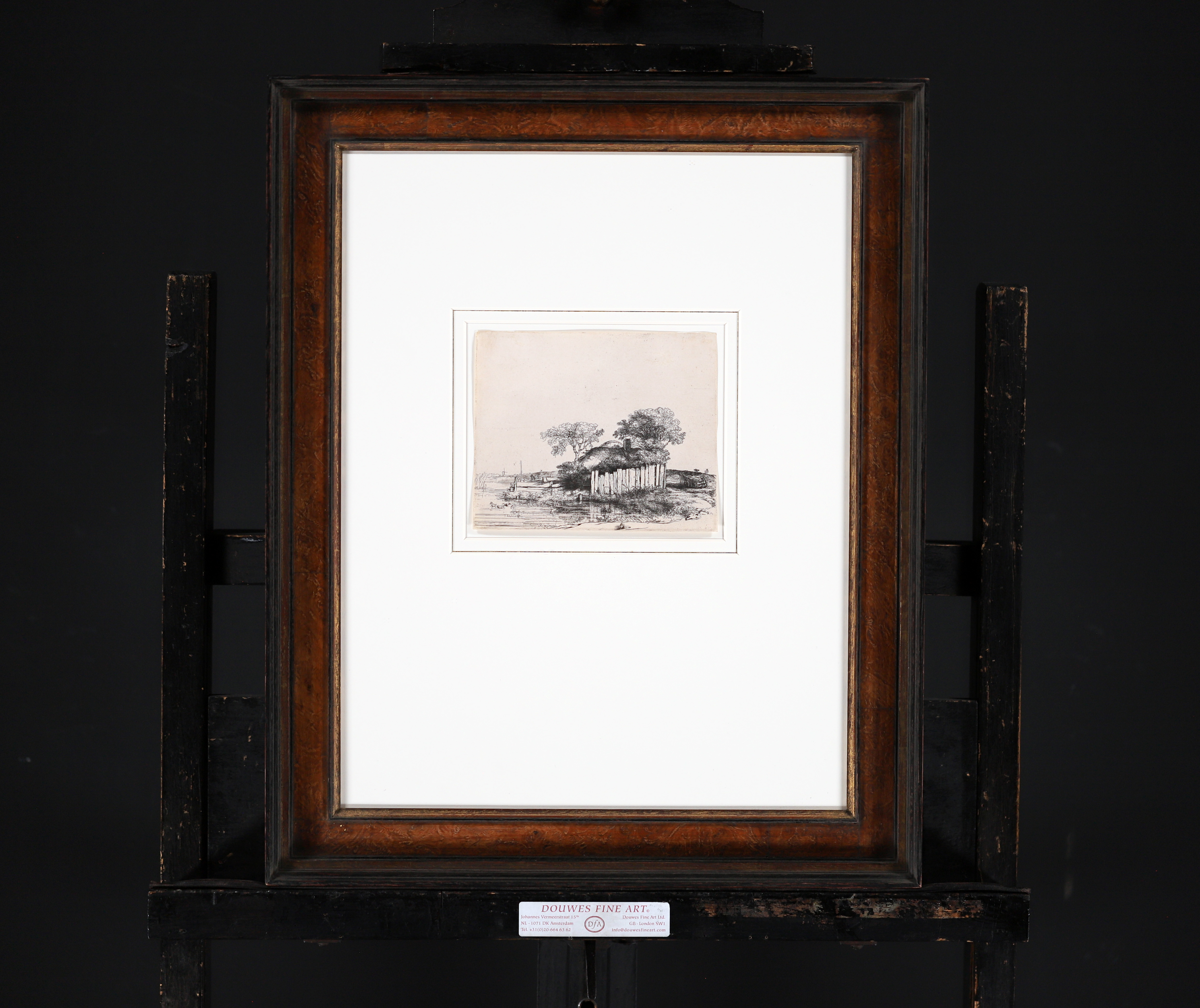
‘Cottage with a White Paling’, 1648
Etching and drypoint:13,1 x 16,2 cm
Signed lower left: Rembrandt f.
watermark Foolscap with Five-pointed Collar (Hinterding K.a.). (1648)
"*" indicates required fields
Notes
As one of the towering figures in the history of art, Rembrandt, a miller’s son from the university town of Leiden, was an artist of unmatched genius. Equally gifted as a painter, printmaker, and draftsman, Rembrandt proved himself to be as skillful at making portraits as he was at creating religious and mythological narratives. His landscapes are just as remarkable as his rare still lifes and subjects detailing everyday life.
Widely recognized as the greatest practitioner of the etching technique in the history of art, Rembrandt created 300 prints that constitute a body of work unparalleled in richness and beauty. During his lifetime, Rembrandt’s extraordinary skills as a printmaker were the main source of his international fame. Unlike his oil paintings, prints travelled light and were relatively cheap. For this reason, they soon became very popular with collectors not only within, but also beyond the borders of the Netherlands.
A very fine, early impression of the third state, with strong burr, particularly visible at the duck’s head. The dyke leading up to the windmill is now shaded, and the date has been added under the signature lower left. With a delicate line detailing the tuft of grass in the foreground and the sky wiped clean, yet retaining subtle traces that create a harmonious contrast against the finely etched network of lines in the landscape, the trees, and the hut.
Prints of this work are rare, as the plate was lost early, and no later impressions exist. In Nowell-Usticke, it is marked with an ‘R’ for ‘rare’ and described as ‘a scarce, highly attractive landscape.’
Literature
Bartsch 232; White/Boon 232:
The New Hollstein Dutch 246 Third state of (III)
Plate not in existence – with Nowell-Usticke (1967): R – a rare plate
Provenance
- Jean-Louis-Henri Le Secq, dit Des Tournelles (1818-1882), Paris, verso with the collector’s stamp (Lugt 1336)
- Private collection, Germany
- Karl & Faber, Munich
- Private collection, The Netherlands