
Adriaen van Salm
(1656 - Rotterdam - 1720)
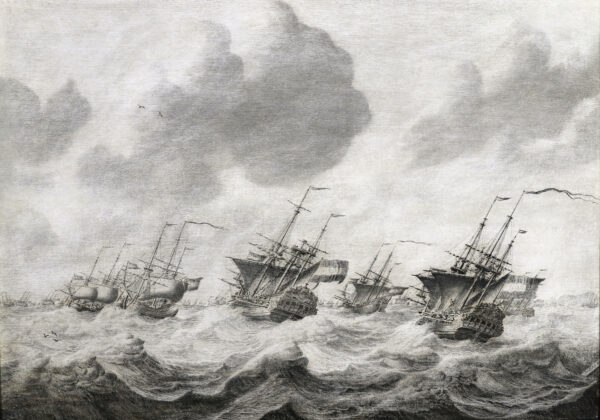
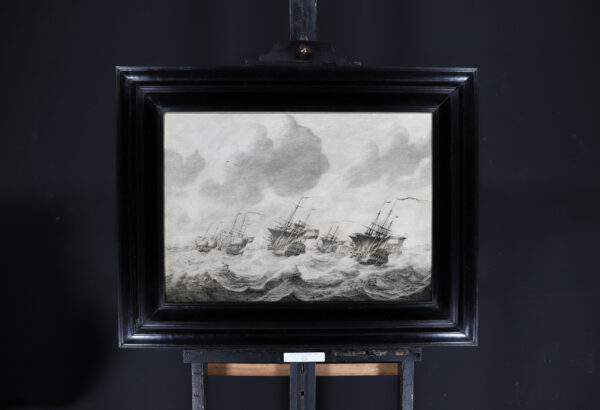
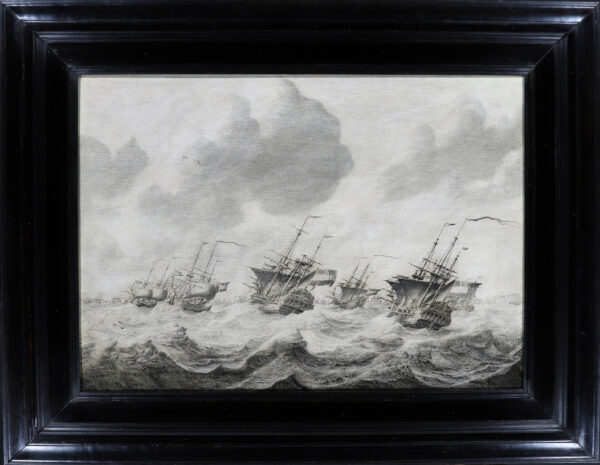
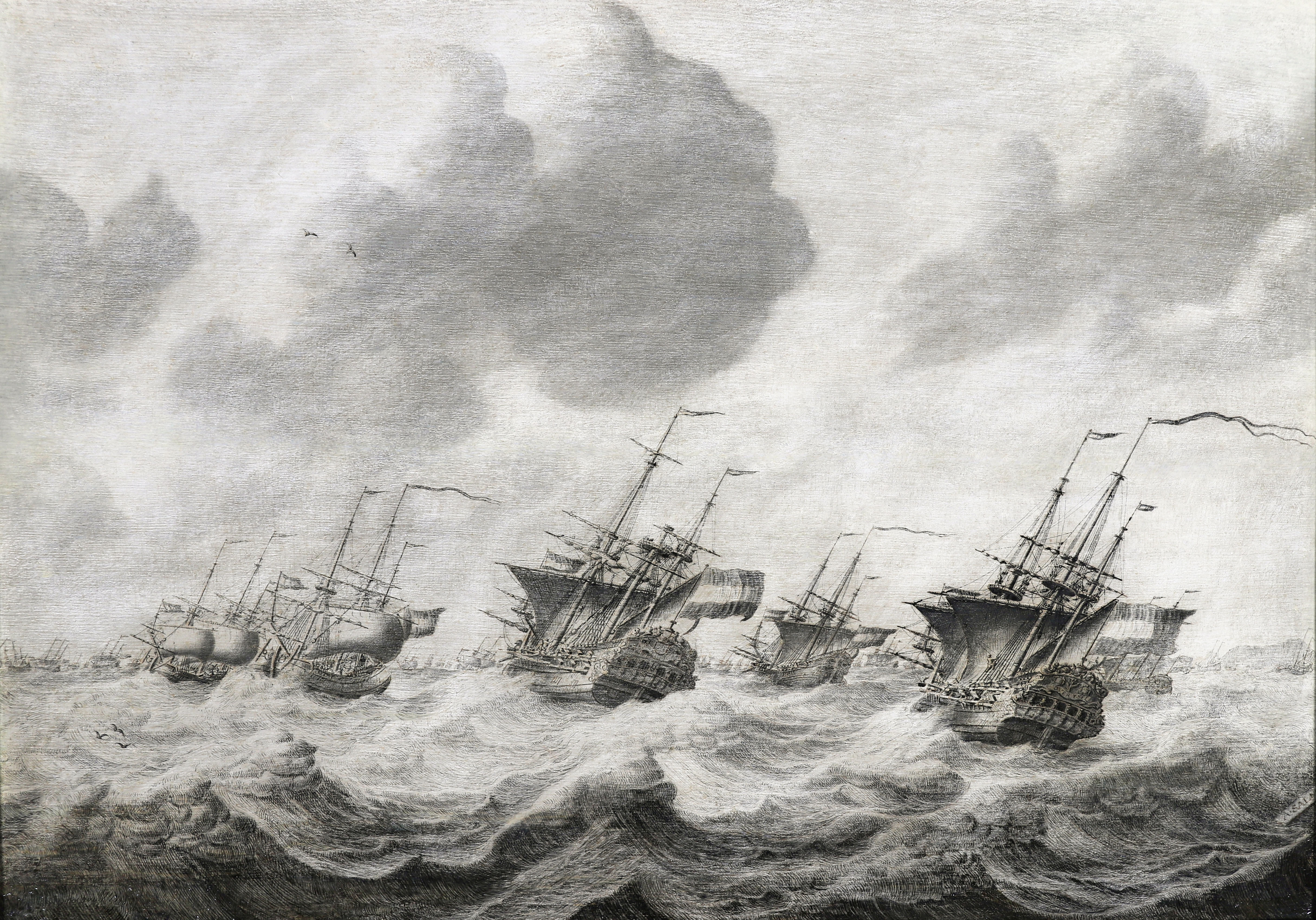
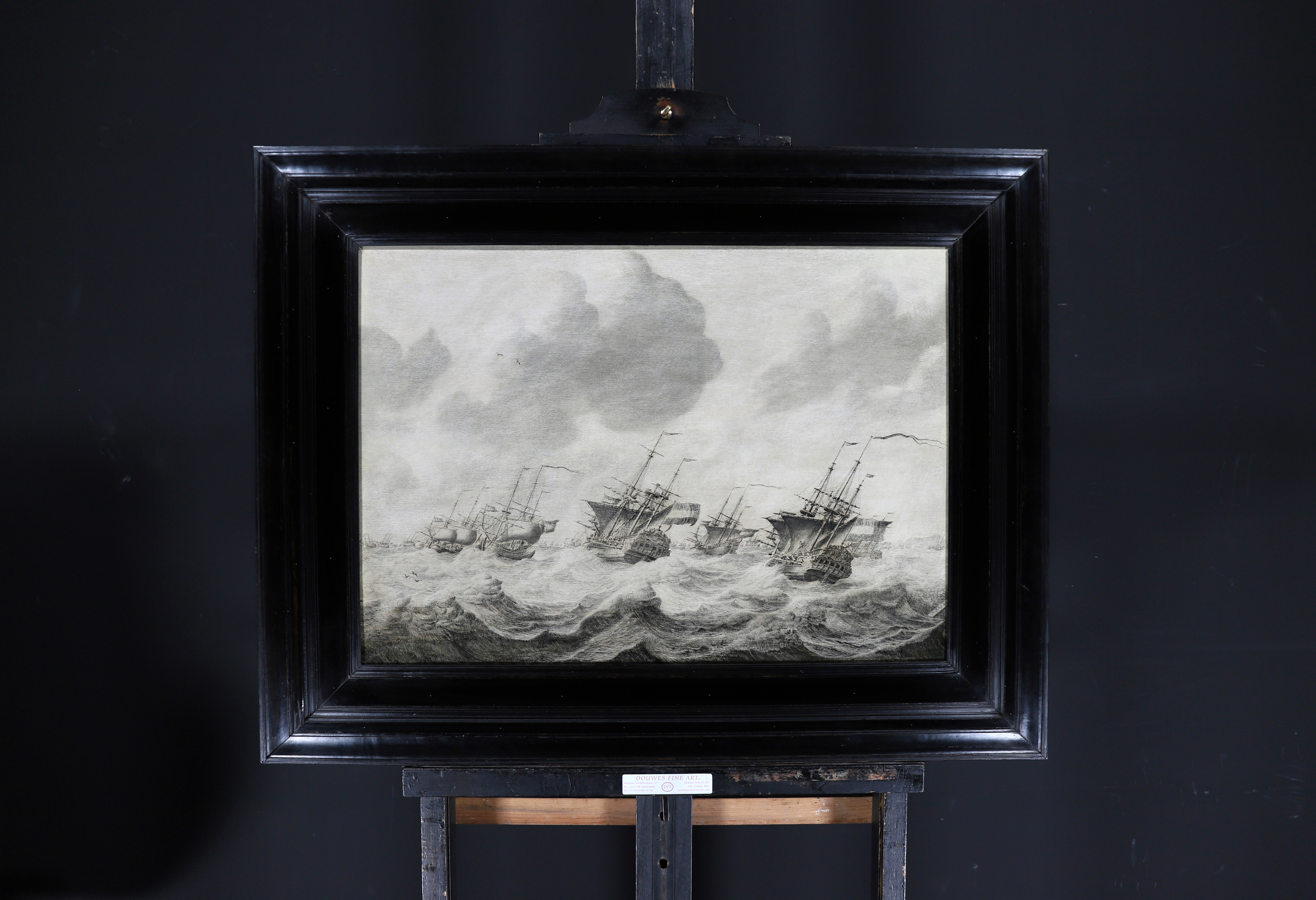
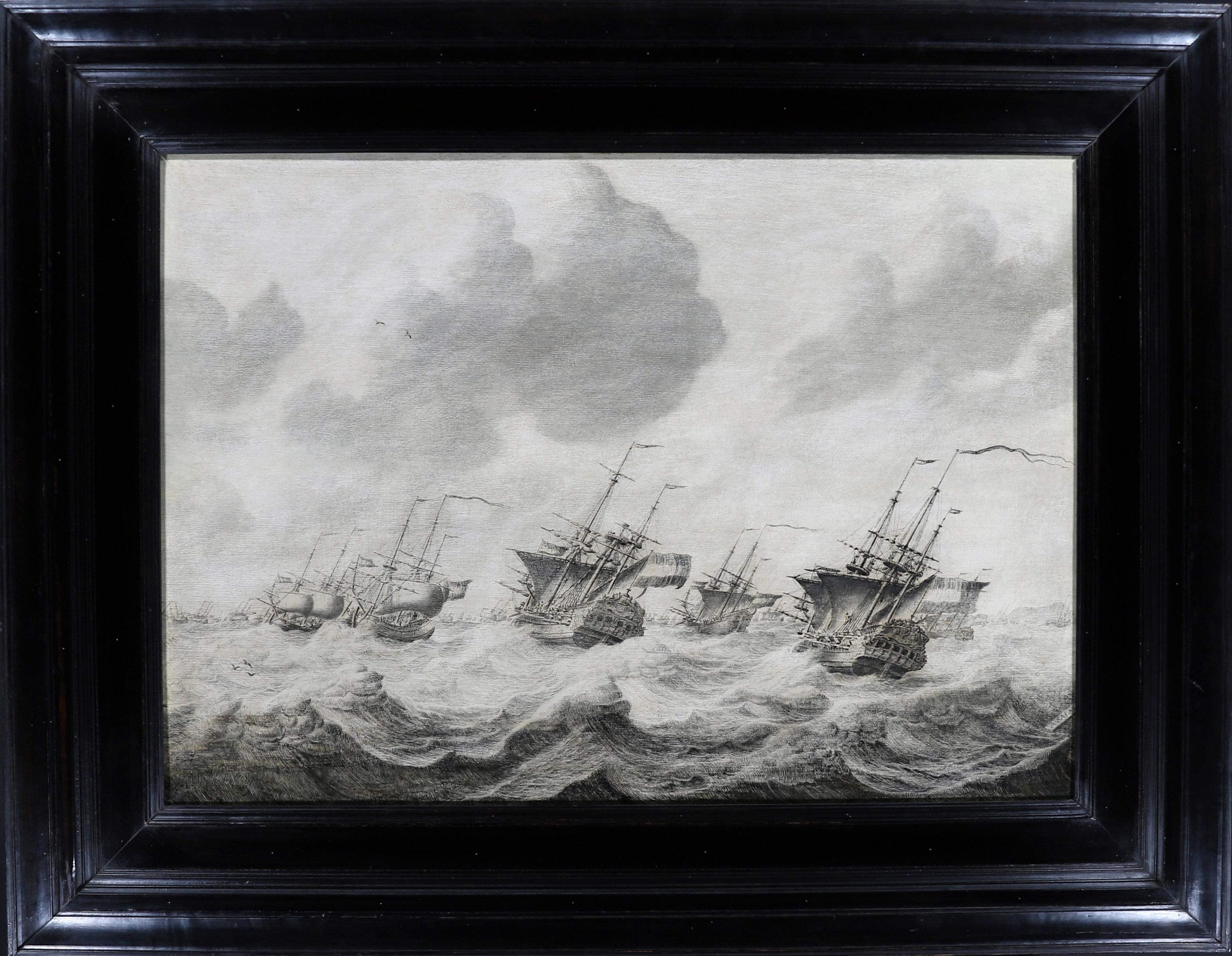
“Shipping along the Overysel (Overijssel) during a storm”
Pen in black and brown on panel: 49 x 68,5 cm;
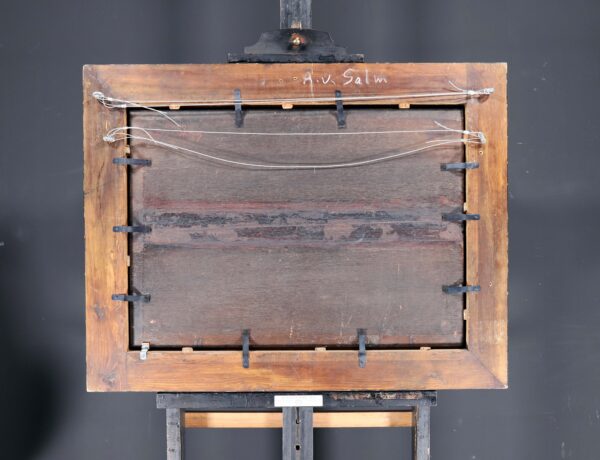
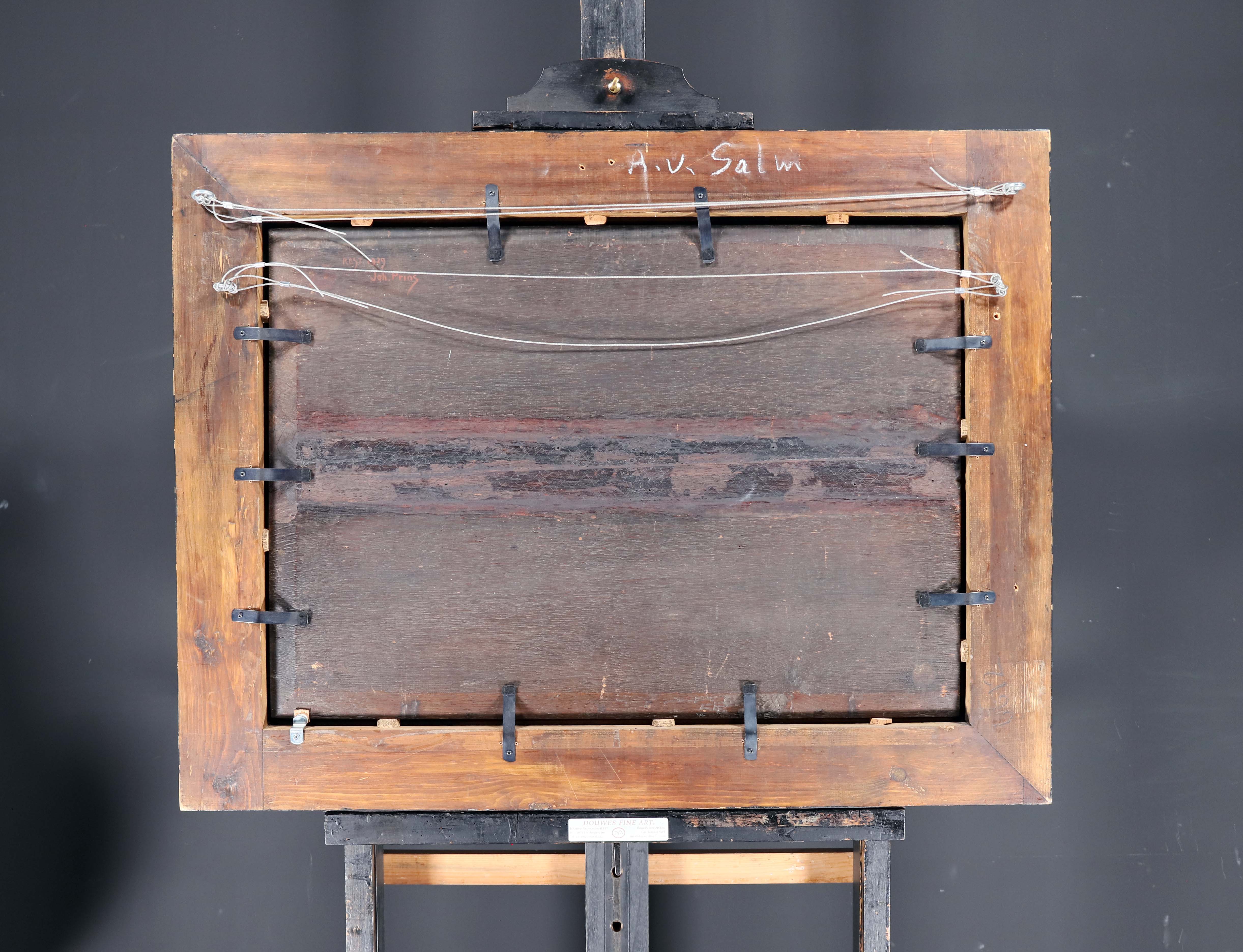
signed ‘A.SALM’ (on spar, lower right)
"*" indicates required fields
Notes
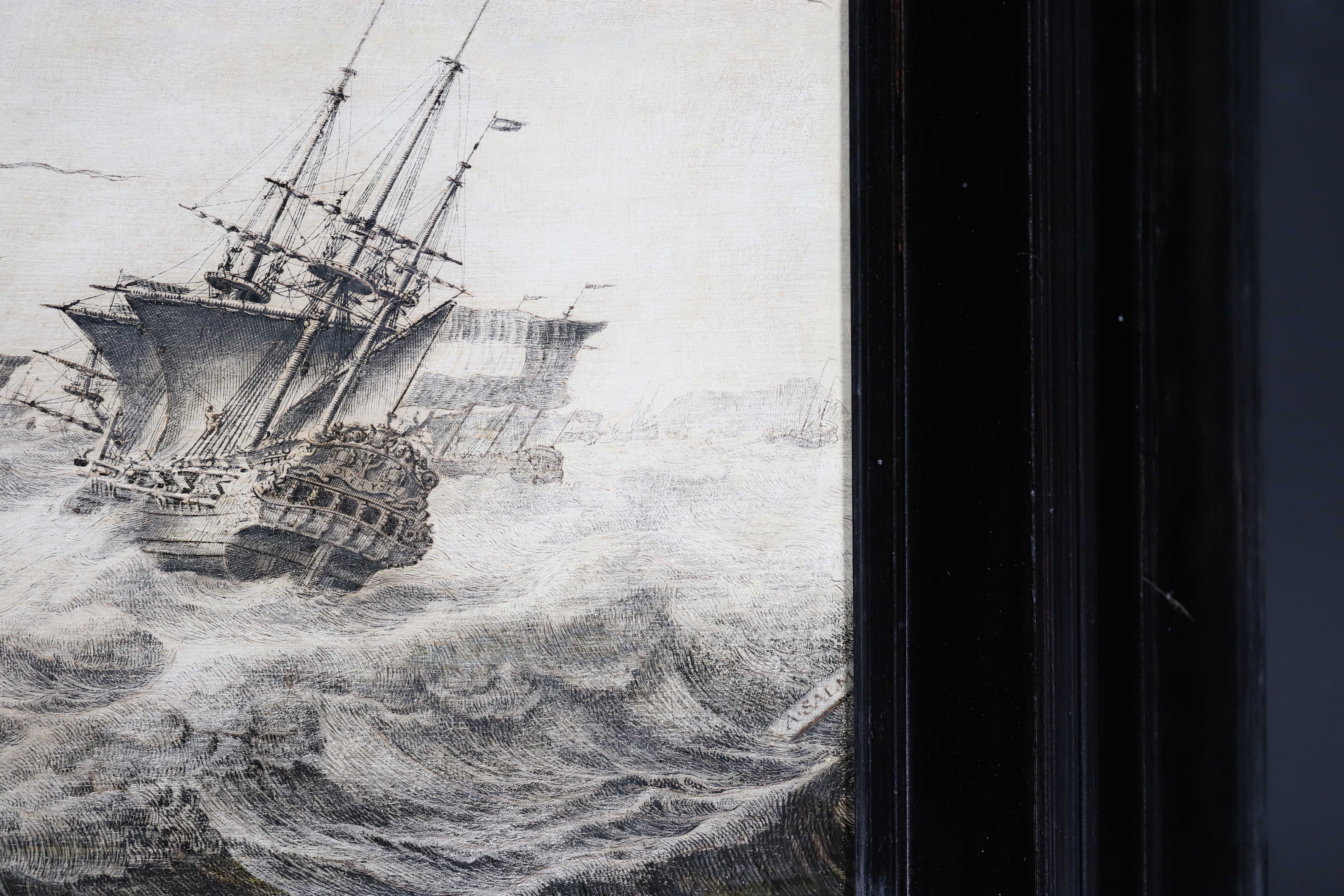
The Overysel or Overijssel, clearly named on her stern and depicted here in a stormy sea, was commissioned by the Amsterdam Admiralty in 1694 and built by Hendrick Jacobsz. Cardinael. Although the smallest type of large men-of-war, a fourth-rate ship with 52 guns, she was said to have been an outstanding warship because of her speed, manoeuvrability and excellent sailing characteristics. Captained by the renowned Matthias Boudaen (1674-1722) (fig. 1) they achieved great success during the War of Spanish Succession (1701-1714), taking part in the capture of Gibraltar in 1704 and Barcelona in 1705.
It is unclear which battle the present work depicts but it is possible that it shows the Overysel in the storm that struck the Dutch fleet shortly after they sailed for Portugal on 21 November 1703, driving them to the Norwegian coast (see: J.C. Mollema, Geschiedenis van Nederland ter zee, Amsterdam, 1941, vol. III, pp. 182-3).
Gerlinde de Beer suggests that the present work dates to circa 1706, along with two other pen paintings by van Salm which also depict the Overysel; one possibly of the Siege of Gibraltar, 1704, formerly in Historisches Museum, Rotterdam and another of the capture of Barcelona, 1705, in Scheepvaartmuseum, Amsterdam (inv.no. A.2766). This is based on the artist’s signature which does not include the prefix ‘van’ or ‘van der’ which he used only after 1717.
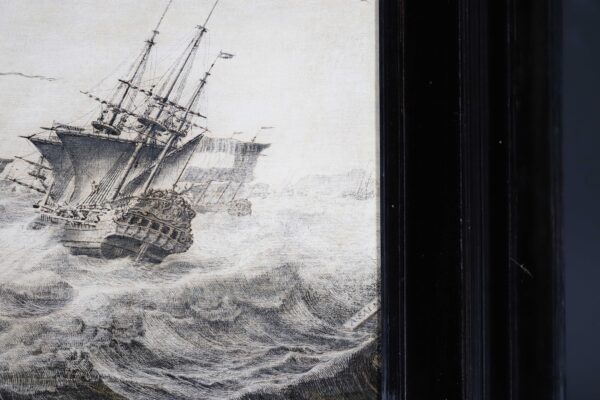
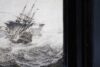
Adriaen van Salm lived most of his life in Delftshaven and was registered as a Master Draughtsman with the Guild of Saint Luke, Delft in 1706. He specialized in the art of penschilderij: drawing in ink with a reed or quill pen on a gesso-prepared panel or canvas, yielding a highly refined image. This technique, traditionally thought to have been invented by Willem van de Velde the Elder in the 1650s, allowed for a high degree of detail to give the appearance of a drawing or engraving. Unlike other pen painters, a distinctive feature of van Salm’s style is removing hatching and scraping it away. This can be clearly seen in the stern of the warship in the present work and has been used by the artist to suggest distance as well as the damp, stormy sea air around the ships, creating a vivid, lively scene that highlights the speed of the Overysel.
A note on the provenance
Willem van der Vorm (1873-1957) was a renowed shipowner and merchant in Rotterdam. He was closely involved with the founding of the Stichting Museum Boymans. His own collection was given to the Museum Boijmans van Beuningen, Rotterdam on long-term loan upon his death.
Provenance
- Collection of Willem van der Worm, Rotterdam (1873-1957)
- The Willem van der Worm Foundation, Rotterdam (inv.no. 89), by 1950 Sale, Glerum, The Hague, 13 November 1995, lot 37
- Private Collection, The Netherlands
- With Hoogsteder and Hoogsteder, The Hague, where purchased in 2009 by Mr and Mrs Anthony Inder Rieden
- Collection of a Family Trust
Exhibited
- Rotterdam, Museum Boymans van Beuningen, long term loan, 1972-1991 (inv. no. VdV 74)
- The Hague, Bredius Museum, 10 December 2019 – 1 March 2020
Literature
- Hannema, Catalogue of the Pictures in the Collection of Willem van der Vorm, Rotterdam, 1950, p. 67, no. 89, pl. 35
- B van Overeem, ‘De schilders A. en R. (van der) Salm’, in Rotterdams Jaarboekje, 1958, vol. 6, p. 250, no. 33
- Hannema, Catalogus van de schilderijen uit de kunstverzameling Stichting Willem van der Vorm. Westersingel, Rotterdam, 1958, p. 36, no. 69
- Hannema, Catalogus van de schilderijen uit de kunstverzameling Stichting Willem van der Vorm. Westersingel, Rotterdam, 1962, p. 51, no 74, fig. 38
- Giltaij, J.H. Kraan, F. Lammertse et al, De verzameling van de Stichting Willem van der Vorm in het Museum Boymans-van Beuningen Rotterdam, Rotterdam, 1994, pp. 272-3
- de Beer, The Golden Age of Dutch Marine Paintings. The Inder Rieden Collection, Leiden, 2019, vol. 3, pp. 1054-1061, cat.no. 67, ill.