
Jan Hendrik Weissenbruch
(1824 - The Hague - 1903)
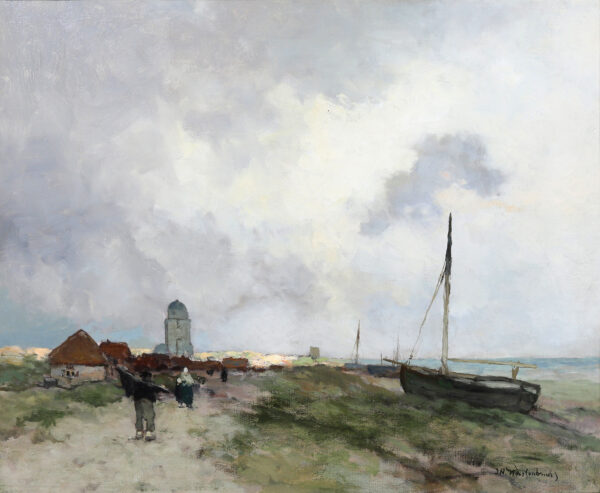
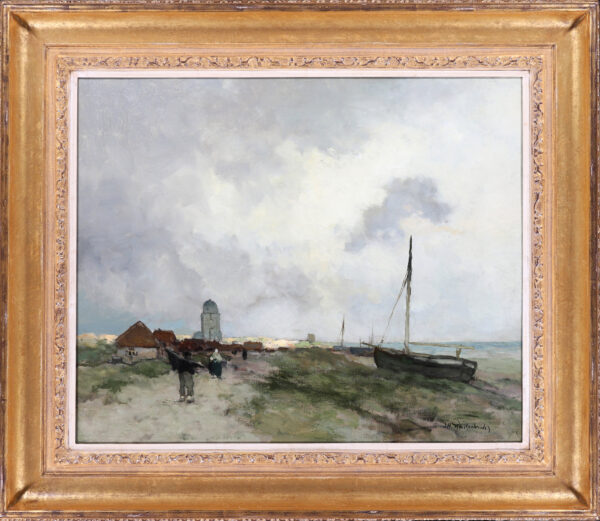
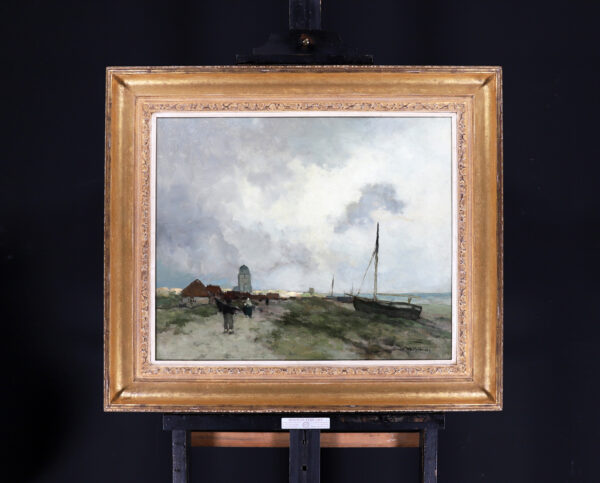
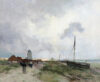
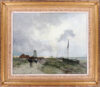
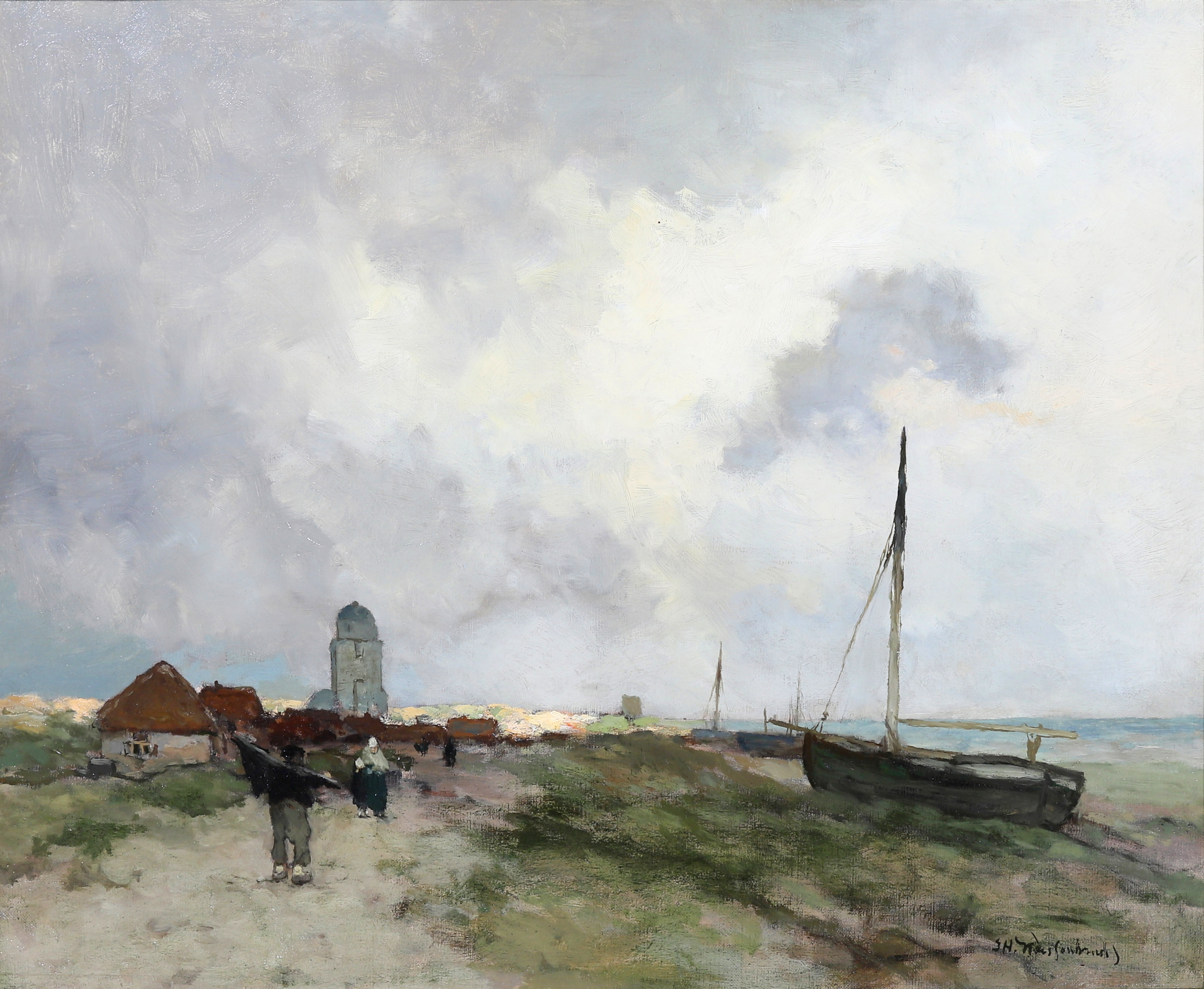
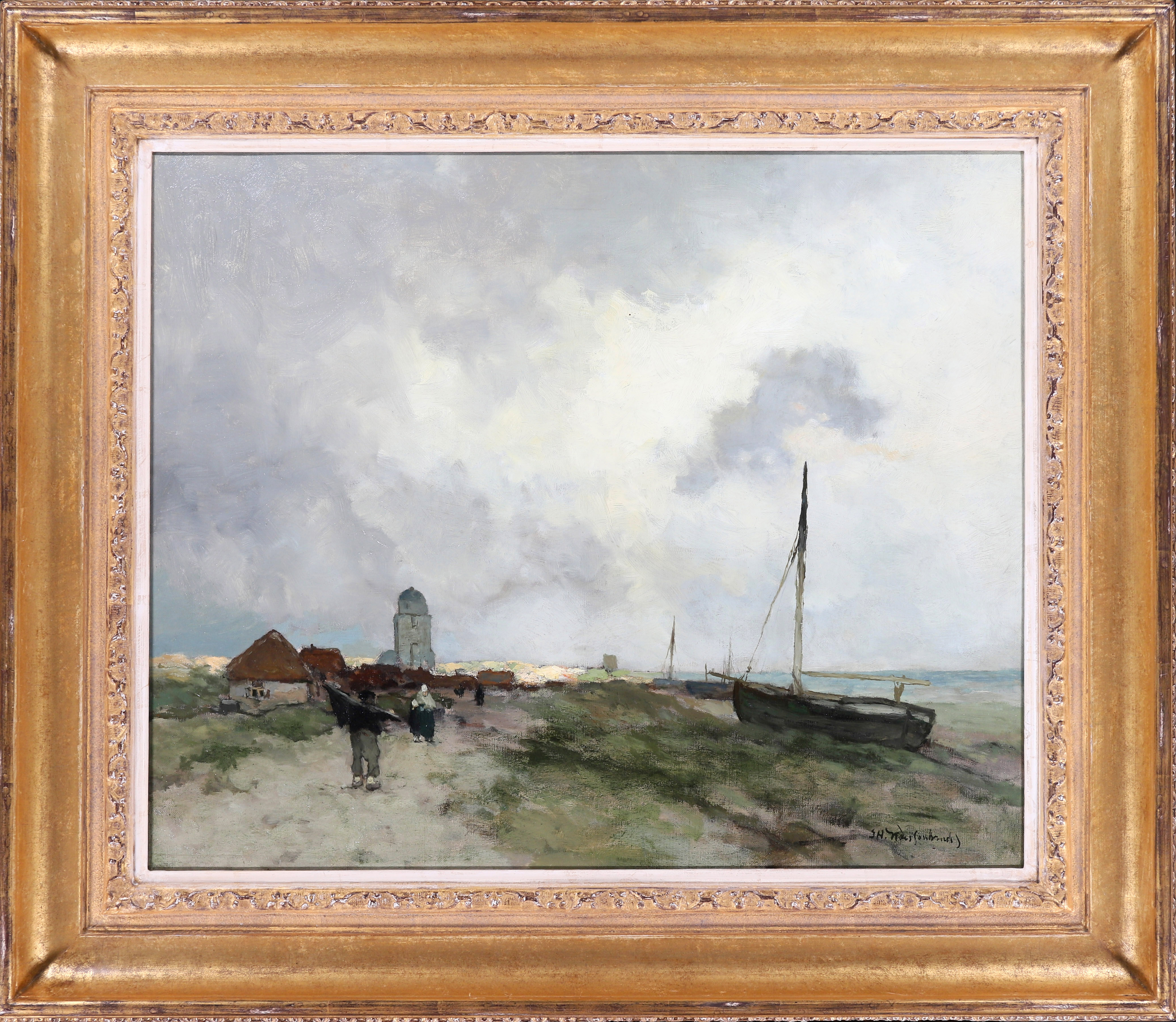
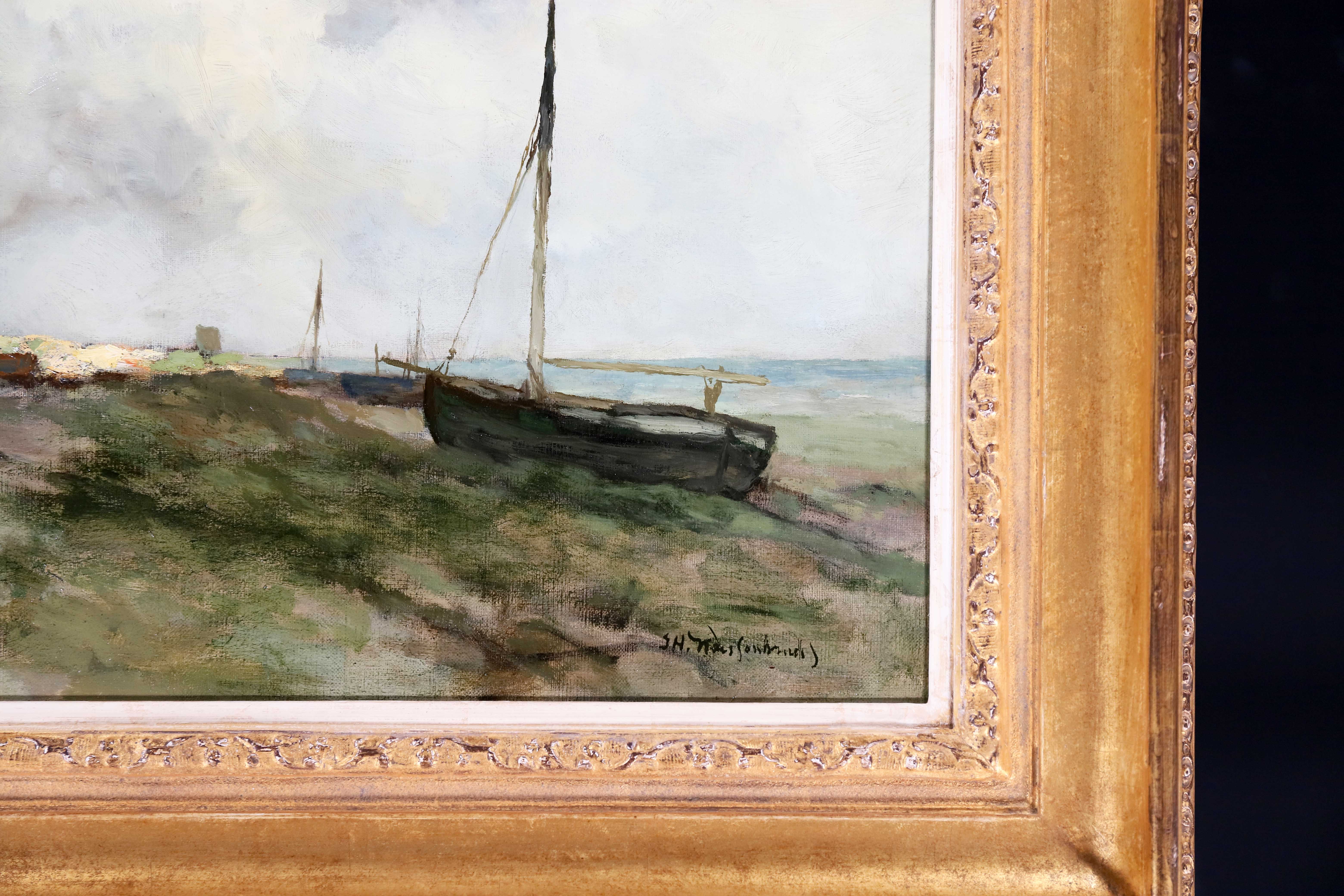
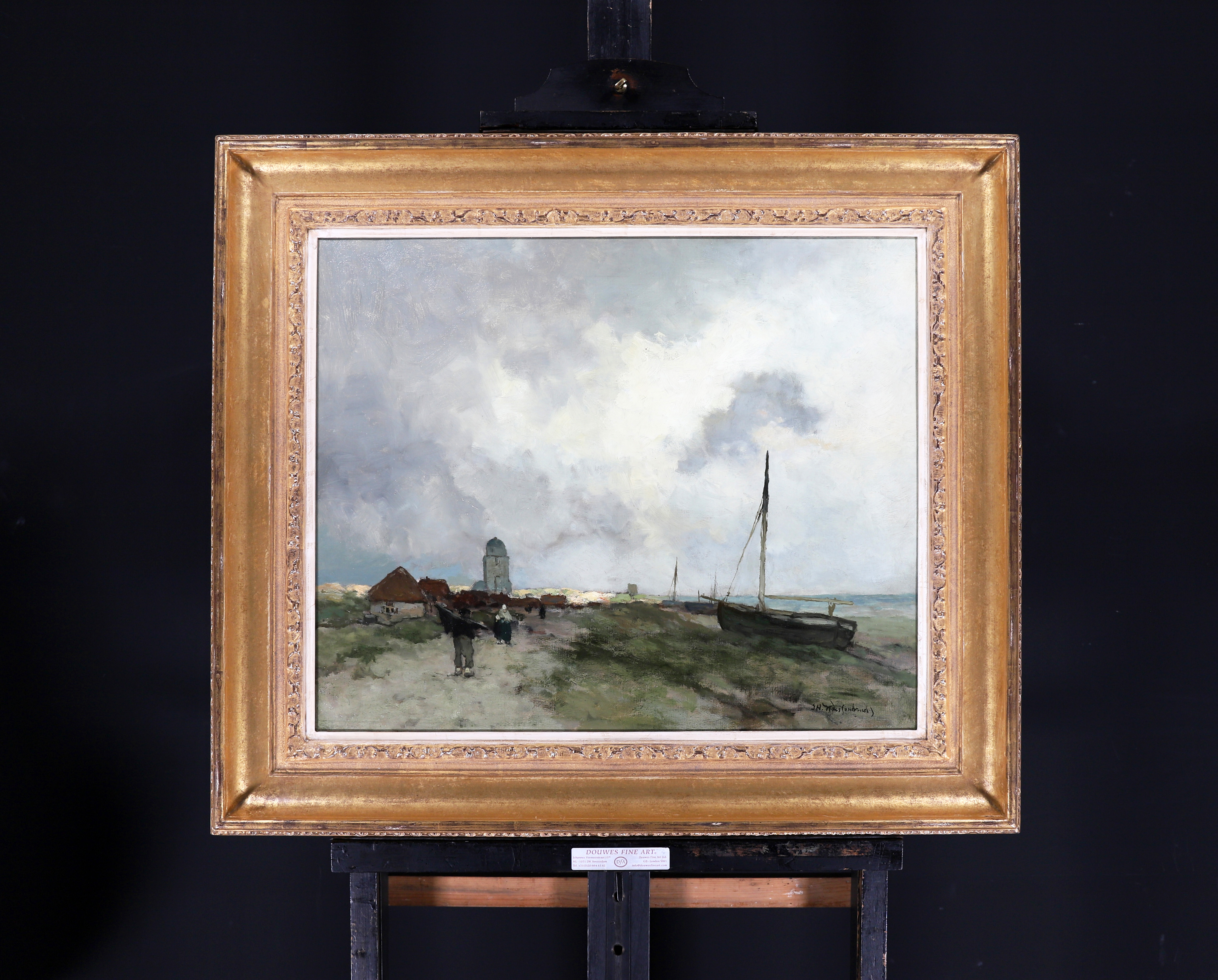
“Fisherfolk in the dunes of Katwijk”, 1873
Oil on canvas: 52 x 63,5 cm;
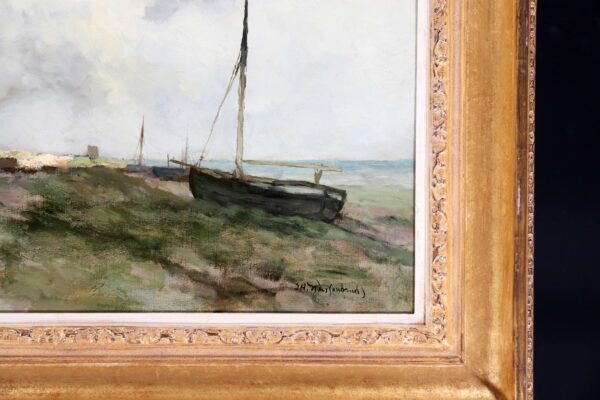
signed ‘J.H. Weissenbruch’ (lower right)
"*" indicates required fields
Notes
The present painting shows a panoramic view of the dunes of Katwijk where Weissenbruch frequently worked along with other artists from an artist colony there. This was a region with weather-beaten houses and fishing boats, with high, wide skies above. Although pious fisher folk approach over a lane by the beach in the center of the vista, this was not the painter’s main objective. The artist was particularly fascinated with the permanently changing skies above the landscape, the corresponding light effects and its tonal qualities. His fascination for impressive skies played an important part in his work: ‘The sky is the main thing in a painting. If your sky is not good, then your painting is no good. The sky controls the whole landscape!’ (see: Hans Janssen, Wim van Sinderen, De Haagse School, Rotterdam, 1997, p. 46). The artist would become famous for it and managed to capture the typical Dutch atmosphere like no other. Weissenbruch was a real outside painter and defied weather and wind to paint in nature. This had become possible because in the mid-nineteenth century paint was available in ready-to-use tubes.
About the Artist
Hendrik Johannes Weissenbruch (or as he later called himself: Jan Hendrik Weissenbruch) was a foundational Dutch landscape painter and one of the most prominent masters of the Hague School. Renowned for his exceptional ability to capture the unique light, damp air, and shifting skies of the Netherlands, he played a crucial role in transitioning Dutch art from idealized Romanticism toward raw, atmospheric Realism.
Born in The Hague into an artistic family, Weissenbruch was surrounded by creativity from an early age; his father was an amateur painter and collector, and several of his cousins were established artists or engravers. He began formal training at age 16 under Johannes Löw and later took evening classes at the Hague Academy of Art under Bartholomeus van Hove.
Though heavily influenced early on by the meticulous Dutch Romantic landscape painter Andreas Schelfhout, Weissenbruch followed the advice of his contemporary Johannes Bosboom to decline direct apprenticeships under him so he could forge his own independent style. He spent hours at the Mauritshuis museum copying historical masters like Jacob van Ruisdael and Johannes Vermeer, whose dramatic sky compositions and treatments of light deeply shaped his vision.
Weissenbruch debuted his work publicly in 1847 at the Exhibition of Living Masters. That same year, he became a co-founder of the Pulchri Studio, an influential artists’ society in The Hague that promoted peer exhibitions and local networking.
By the 1860s and 1870s, he abandoned early academic precision for en plein air (outdoor) painting, traveling directly into the lowlands, polders, and canals around South Holland (particularly Noorden and Nieuwkoop). Here, he focused on broad, loose brushwork to capture fleeting visual moments directly from nature.
Weissenbruch is highly celebrated for advancing the “Gray School”—a subset of the Hague School dedicated to capturing the nuanced, muted color palettes of cloudy Dutch coastal climates. Art historians often cite him as the culmination of the Hague School due to his unparalleled ability to convey space and atmosphere.
His focus on raw observation and emotional connection to the landscape rather than academic perfection directly influenced younger generations of modernists, most notably Vincent van Gogh, who deeply admired Weissenbruch’s work, character, and loose technical mastery. Late in life, Weissenbruch’s travels to Barbizon, France, also linked his signature Dutch style closer to the French Barbizon School.
He became one of the most widely celebrated watercolorists of the 19th century, utilizing the transparency of the medium to perfectly mimic wet Dutch landscapes and reflection on water.
He won a prestigious gold medal at the International Exhibition in Amsterdam (1874) and achieved widespread public and financial success internationally by the late 1880s, gaining strong followings in France and Canada.
Van Gogh Connection
Vincent van Gogh first visited Weissenbruch’s studio at Kazernestraat 112 in The Hague in May 1873, just before leaving for London. Making it possible that he might have seen this actual painting during his visit! The meeting left an indelible mark on the young Van Gogh. In a letter to his brother Theo years later, Vincent recalled that the memory of the studio’s artwork was “still as vivid as that of the man himself.” Vincent affectionately referred to him as “De vrolijke Weiss” (The Merry Weiss) because of his exceptionally warm, high-spirited personality.
During Van Gogh’s prolonged stay in The Hague between 1881 and 1883, their paths crossed frequently as Vincent tried to establish himself as an artist.
When high-profile establishment figures like art dealer Hermanus Tersteeg and Vincent’s cousin-in-law Anton Mauve criticized Van Gogh’s unconventional, coarse drawings, Weissenbruch staunchly defended him. Weissenbruch famously told Mauve: “He draws damn well, I could work from his studies.”
His panoramic landscapes were acquired early on by esteemed institutions like the Teylers Museum (1849), followed by acquisitions from the Kunstmuseum Den Haag and Museum Boijmans Van Beuningen. Today his works can be found in museums across the world including:
Provenance
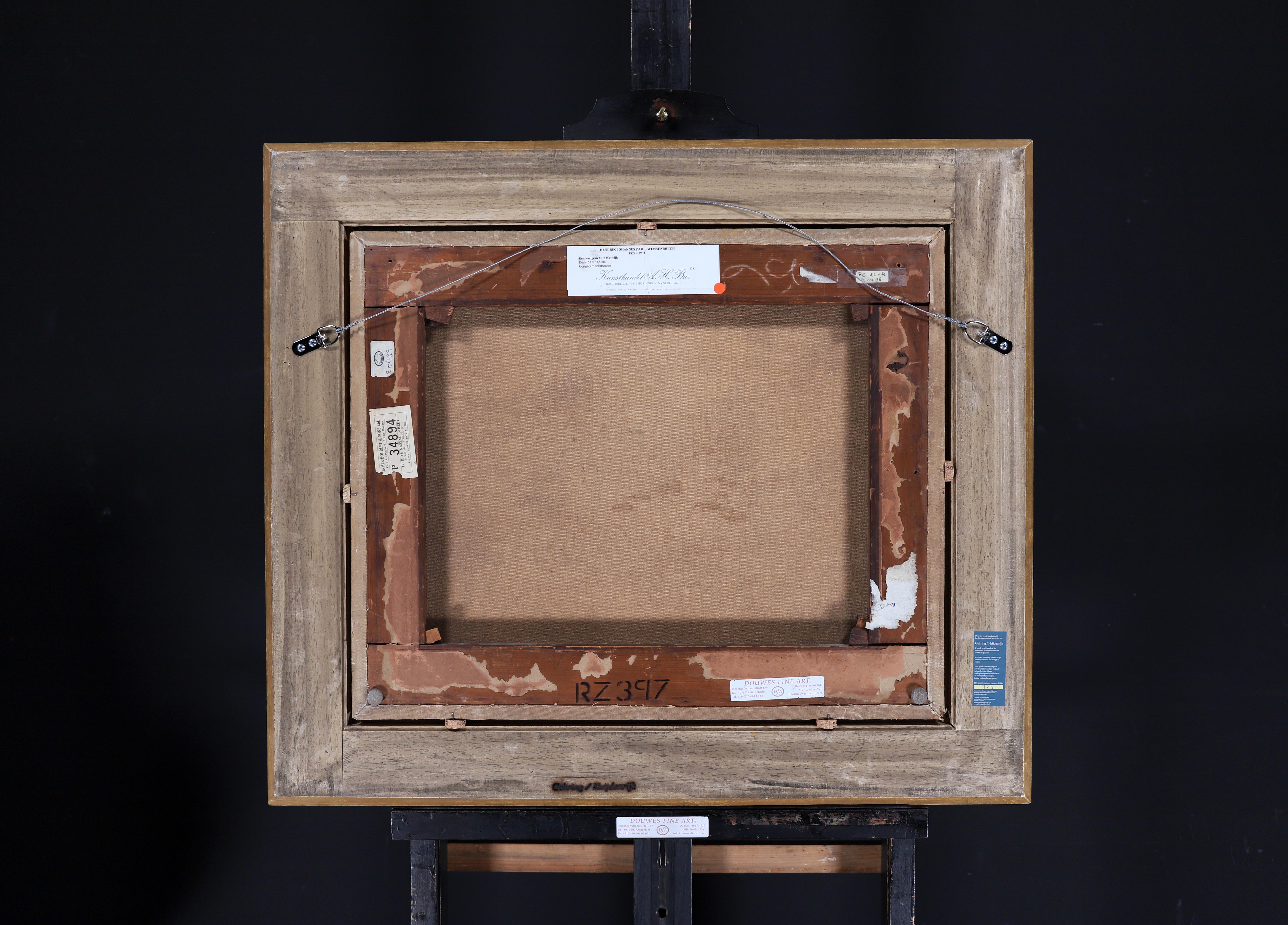
- James Crathern, Montreal
- Thence by descent to his daughter Annie McArthur.
- Thence by descent to her daughter;
- L. Gerald Hansard, Ascot, by descent;
- London, Christie’s, 25 June 1998;
- A.H. Bies BV, Eindhoven, 1998, shown at TEFAF 2002;
- purchased by the former owner, a Dutch private collection, in 2005.