
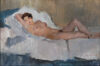
Isaac Israels
(Amsterdam 1865 - 1934 The Hague)
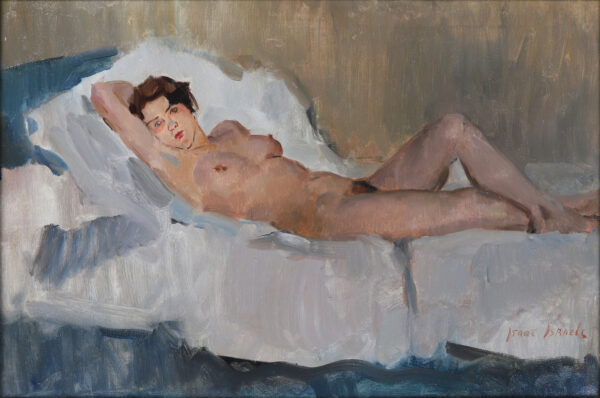
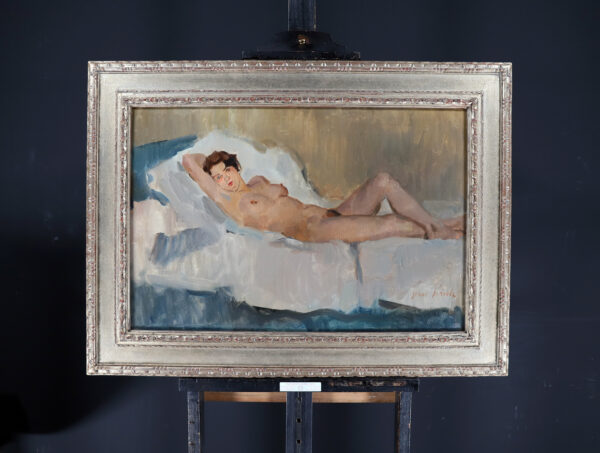
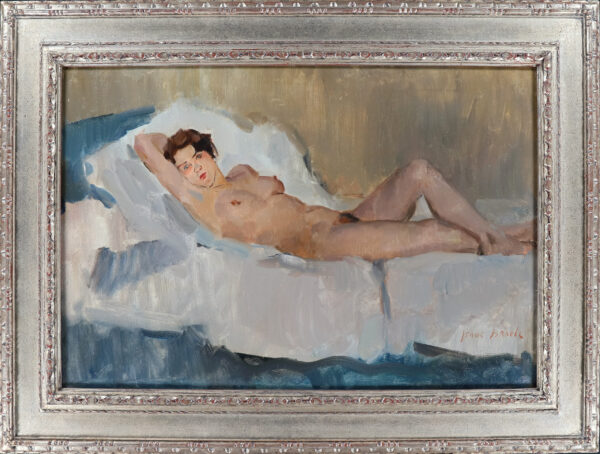
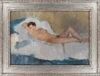
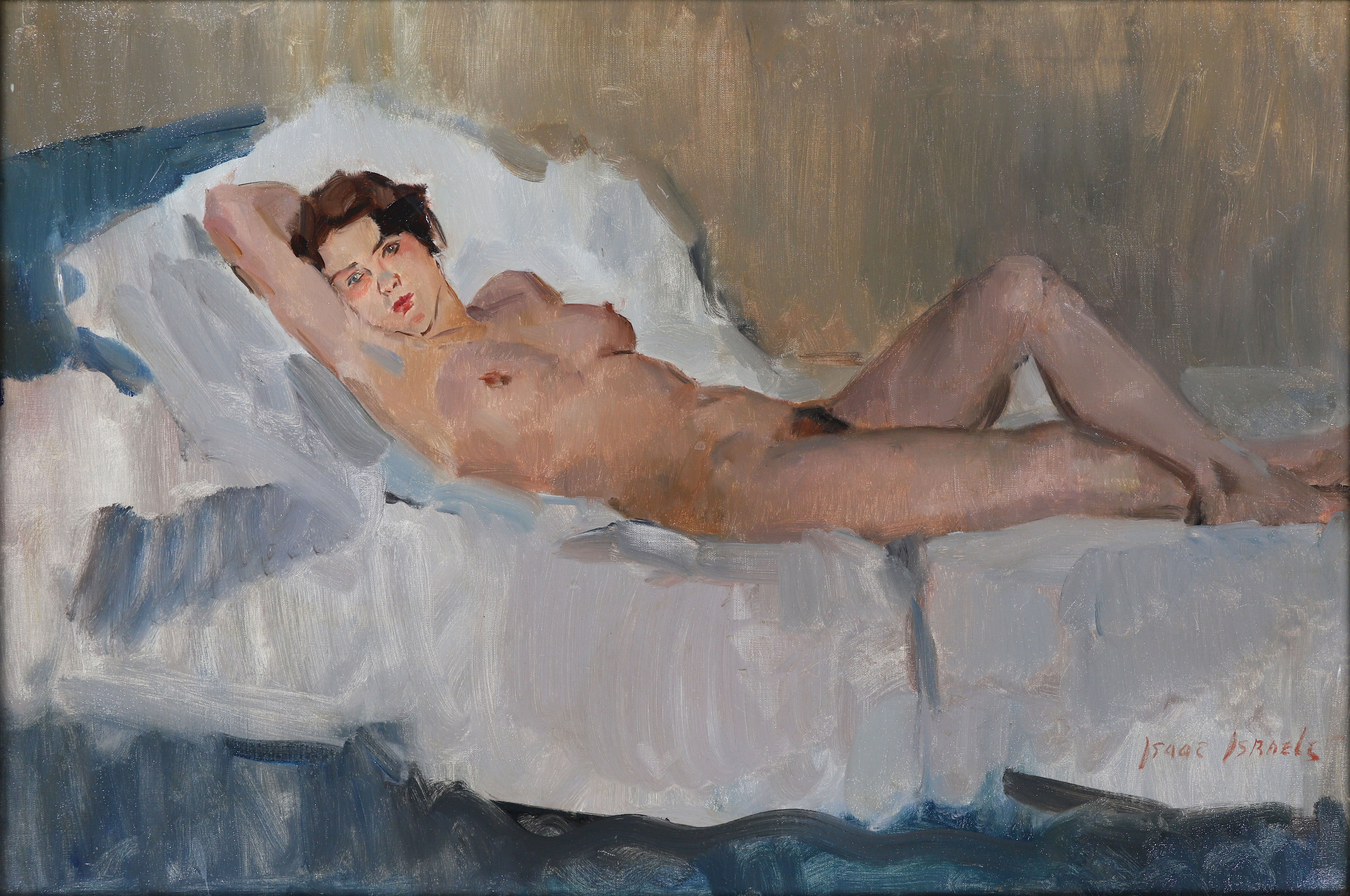
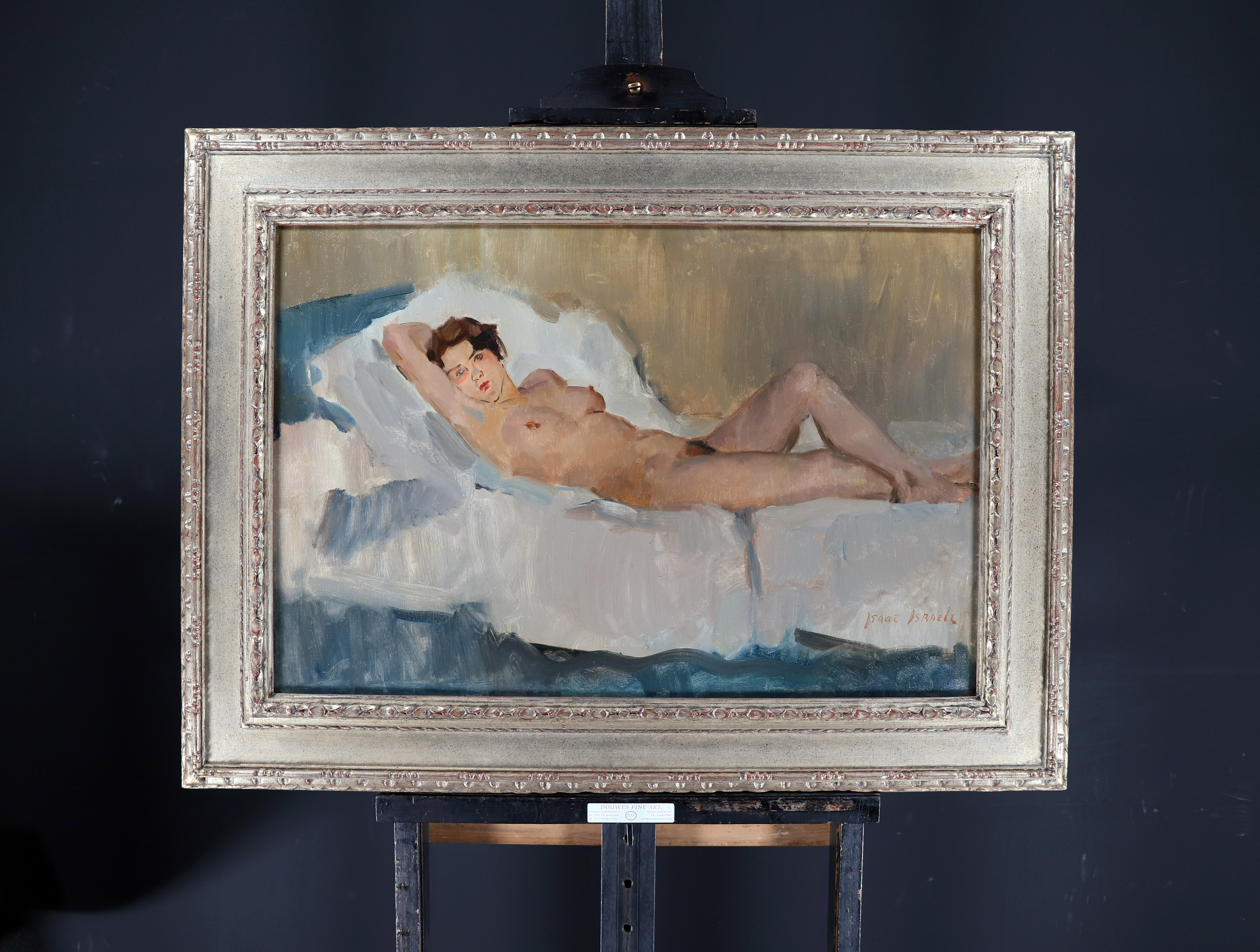
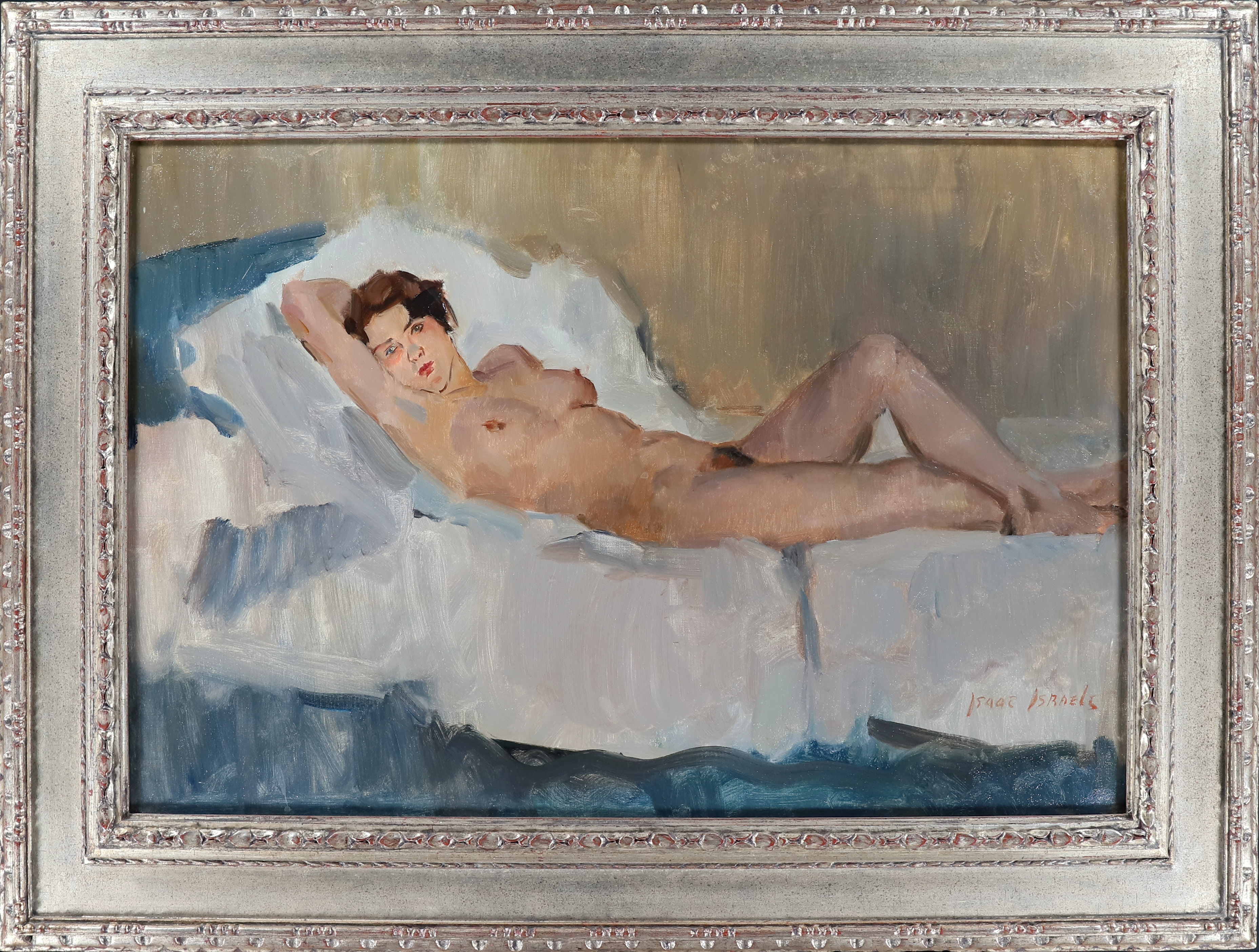
“A reclining nude”
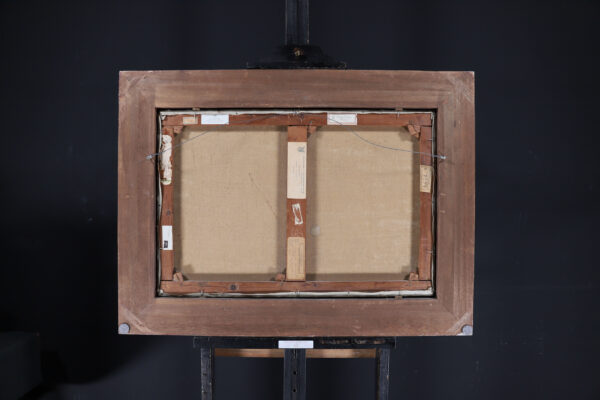
Oil on canvas: 54 x 80 cm
Signed ‘Isaac Israels’ lower right
"*" indicates required fields
Notes
Isaac Israels is recognised to be one of the leading artists of the Dutch Impressionist movement. Born in Amsterdam, he moved with his family to The Hague in 1872. There his father Josef, one of the most prominent representatives of The Hague School, taught him the fundamentals of painting. Isaac was proven to be very talented, he breathed and lived art. In 1877-1880 he briefly studied at the Fine Art Academy in The Hague. In 1881 he made his debut at the Exhibition of Living Masters in The Hague. His unfinished work “Practising the signal” (now in the Mesdag-Van Houten Collection) was purchased by the renowned painter and a friend of his father Hendrik Willem Mesdag.
Isaac’s need to distinguish himself from his father and his search for an authentic style led him to Amsterdam. There, during his enrolment at the National Academy for Fine Arts, Isaac studied with his future best friend and greatest rival George Hendrik Breitner (1857-1923). Both, inspired by the fleeting moments of city life, soon become known as Amsterdam Impressionists.
From the late 1870s Isaac Israels visited the Salon des Artistes in Paris annually with his family. He became familiar with young and innovative Parisian artists such as Toulouse-Lautrec (1864-1902) and Edgar Degas (1834-1917).
Isaac Israëls often spent his summers with his father in the Dutch seaside resort of Scheveningen near The Hague. Guests included Édouard Manet and Max Liebermann. Interested by the changing light of sun and sea, he painted many colourful seaside scenes.
Towards the end of the century, Israëls was introduced by his childhood friend and portrait painter Thérèse Schwartze to the Amsterdam fashion house Hirsch & Cie (nl)at the Leidseplein. Israëls portrayed the whole range of the world of haute couture, from seamstress to wealthy client, gaining access even to the fitting-rooms.
Israëls moved to Paris in 1904, establishing his studio near Montmartre and just yards away from the studio of Henri de Toulouse-Lautrec whom he admired, as he also did Edgar Degas. As in Amsterdam, he painted the Parisian specific motifs: the public parks, cafes, cabarets and bistros, as well as such subjects as fairgrounds and circus acrobats. Likewise he sought out the fashion houses Paquin and Drecoll to continue his studies of the world of fashion.
At the outbreak of the First World War he was living in London, where he found new subjects in horse-riding at Rotten Row and in ballerinas and boxers. He returned to Holland for the duration of the war, living alternately in The Hague, Amsterdam and Scheveningen, where he worked primarily as a portrait painter. Amongst his sitters was Magaretha Gertrud Zelle, better known as Mata Hari, executed as a spy in France in 1917.
Following the war, Israëls visited Paris, Copenhagen, Stockholm and London. He spent the years 1921 to 1922 travelling in India and the Dutch East Indies, sketching and painting the vibrant life of South East Asia. On his return, he settled in The Hague where he remained for the rest of his life, nevertheless making regular trips abroad to London, Italy and the French Riviera.
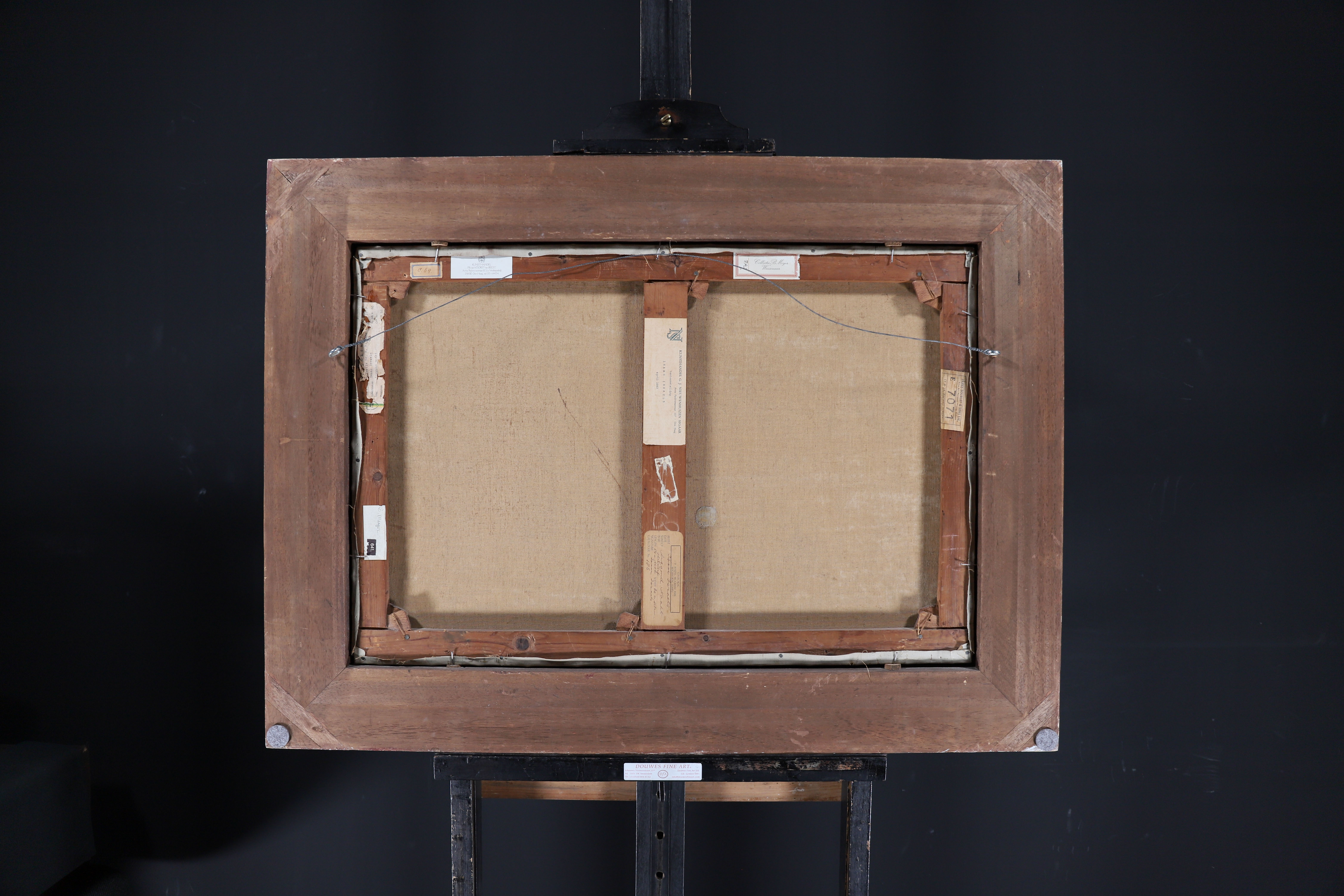
Provenance
- Collection P. Rijkens, Brockham Park, Betchworth, Surrey, by 1960, inv. no. 186.
- With Kunsthandel G.J. Nieuwenhuizen Segaar, The Hague, 1963
- With Kunsthandel P.B. van Voorst van Beest, The Hague
- Collection B. Meijer, Wassenaar, thence by descent
- Private collection, The Netherlands
- Venduehuis, Den Haag
- Private collection, The Netherlands
Exhibited
- The Hague, Gemeentemuseum, 1960, no. 92
- The Hague, Kunsthandel G.J. Nieuwenhuizen Segaar, 1963.
Literature
- ‘’Isaac Israels’, part one, Van Voorst van Beest, page 48