
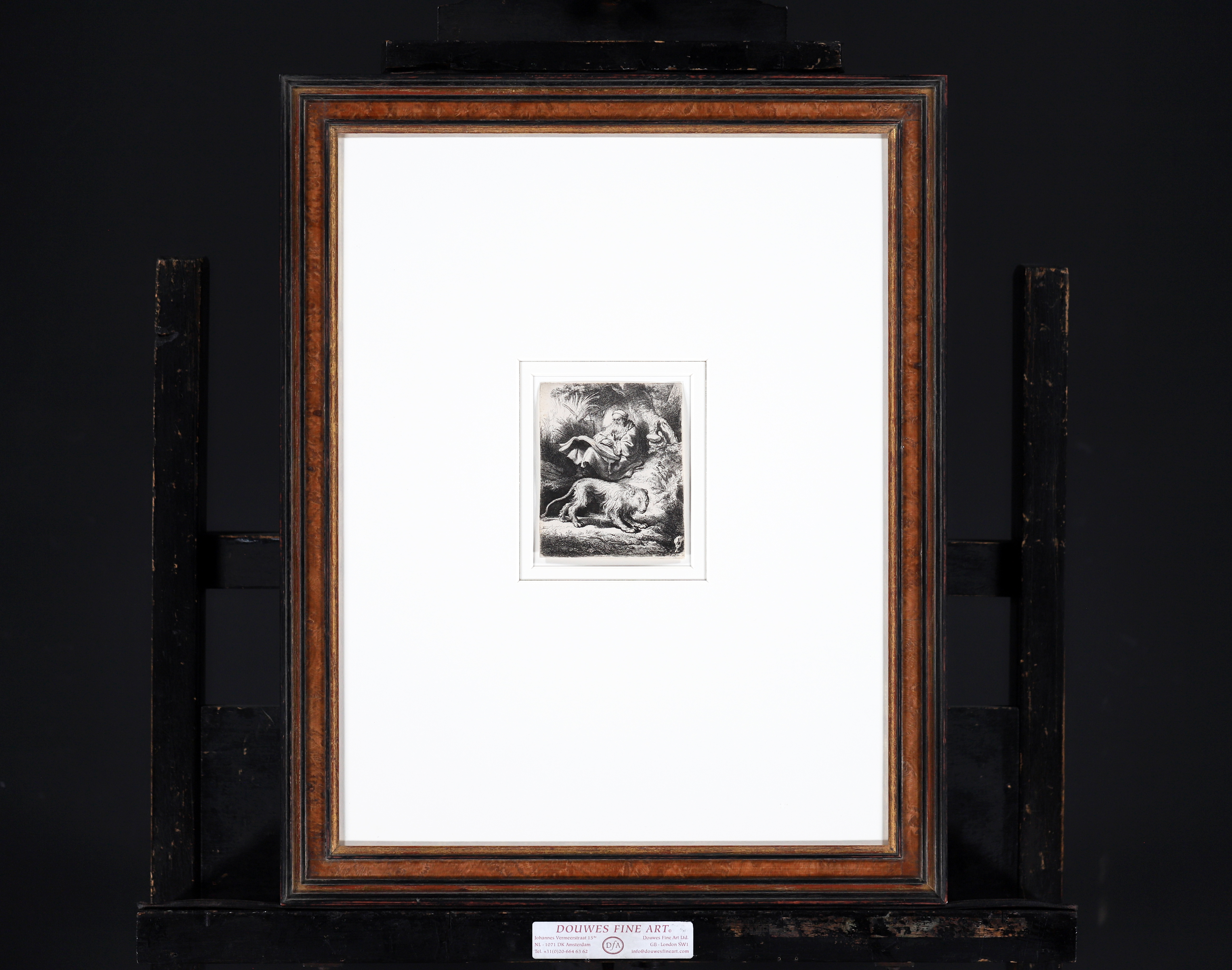
Rembrandt Harmensz. van Rijn
(Leiden 1606-1669 Amsterdam)
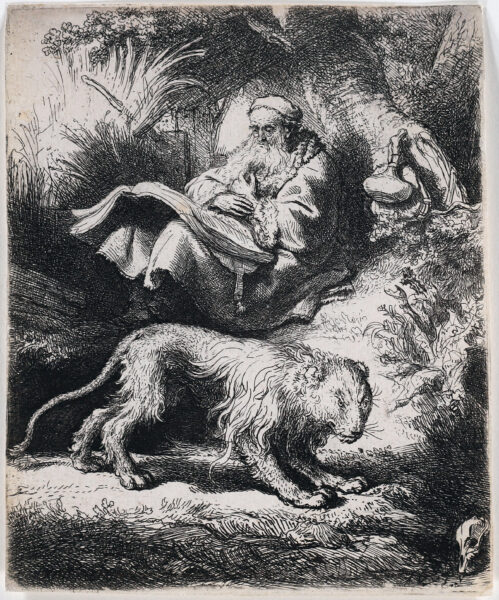
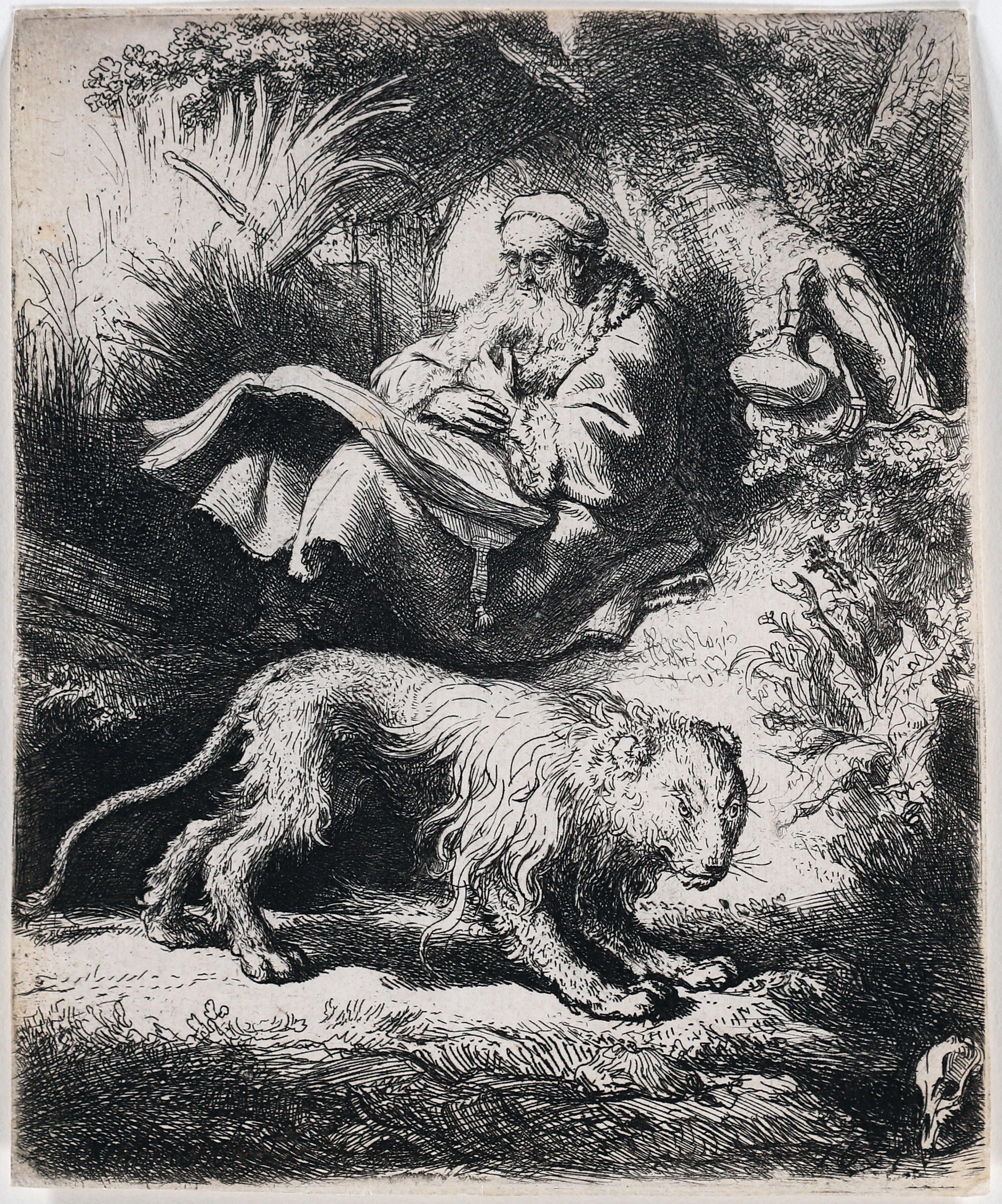
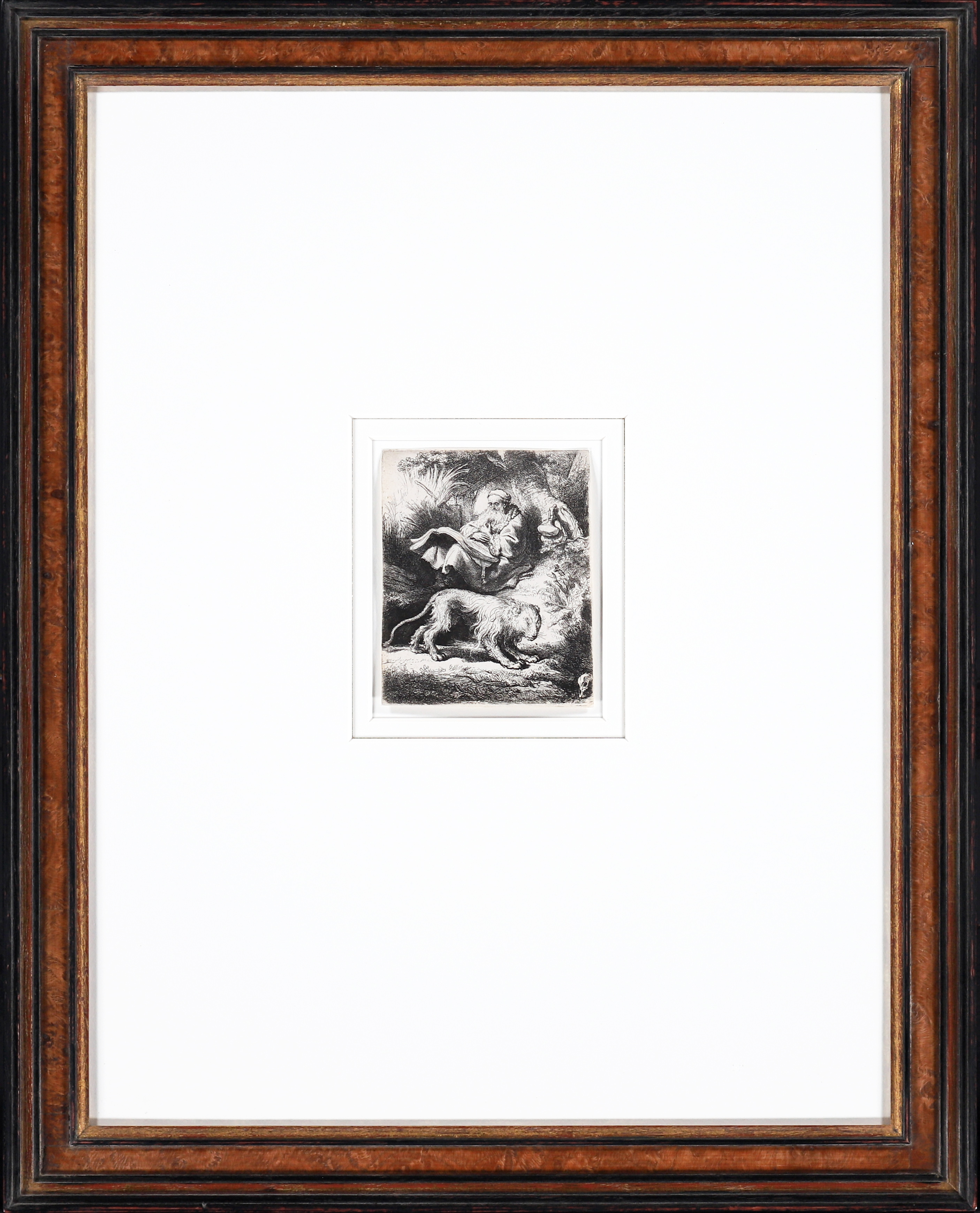
“St. Jerome Reading in a Landscape”, 1634
etching: 10,8 x 9 cm
signed (lower left) and dated (lower right) Rembrandt f.1634
"*" indicates required fields
Notes
This is St. Jerome, who spent part of his life in retreat in the desert. He is one of the four patriarchs of the western church and is particularly know for his translation of the Bible into Latin. For this reason he was often portrayed as a scholar in a study, but after the Counter-reformation he was mostly represented in Italian art as a semi-naked, penitent old man, who chastises himself with a stone. According to legend, he had helped the lion usually depicted close to him by removing a painful thorn from its paw, after which the animal remained with him.
Rembrandt must have had a marked liking for this saint, since he made no fewer than seven etchings of him. In the predominantly protestant Holland of the seventeenth century the choice of a Catholic subject like this was indeed remarkable, but the saint also performed an exemplary role for scholars and humanists, and there are moreover reasons to suppose that Rembrandt was responding to examples by distinguished graphic artists from the past. Rembrandt shows the moment of the legend when the lion looks in horror at the carcass of the donkey, after he was wrongly accused by St.Jerome of having killed and eaten his friend. The donkey had in fact been stolen and later the lion was forgiven.
The portrayal in this etching of 1634 belongs in the tradition of Jerome as a man of learning in the wilderness. The saint, dressed in a fur-trimmed robe, sits reading under a tree, beside which, on the left, a shelter can be made out with some difficulty. Remarkably enough the saint’s usual attributes, such as his cardinal’s hat and his crucifix, are absent, so that the lion is the only indication that this is not just an anonymous hermit.
Literature
Bartsch 100; ‘The New Hollstein’ E. Hinterding, J. Rutgers, G. Luijten, 2013, no.126, only state. Plate not in existence – with Nowell-Usticke (1967): R+
Trimmed just within the platemark on the left.
Provenance
- Earl of Aylesford (1786-1859), Lugt 58
- James Reiss (1812-1899), Lugt 1522;
- Peter Gellatly (1831-1912), Lugt 1185