
Cornelis Verbeeck
(1592? – c. 1637)
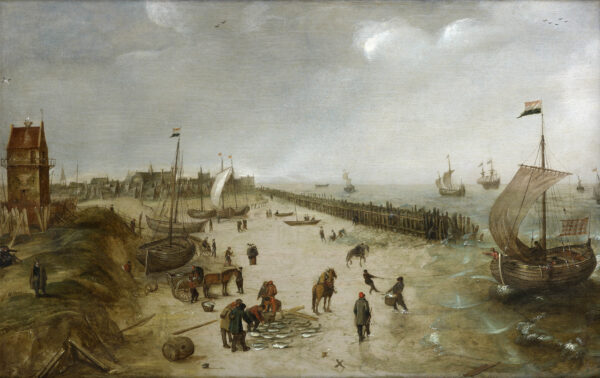
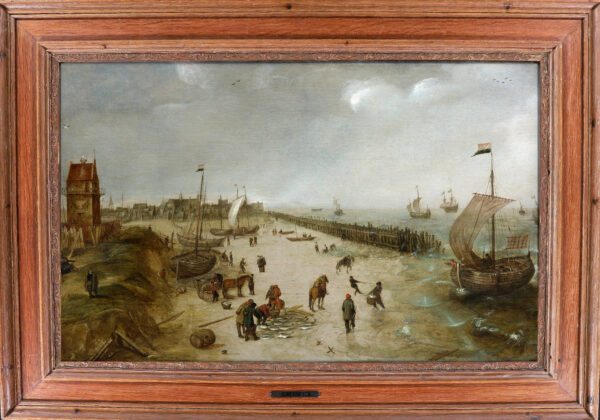
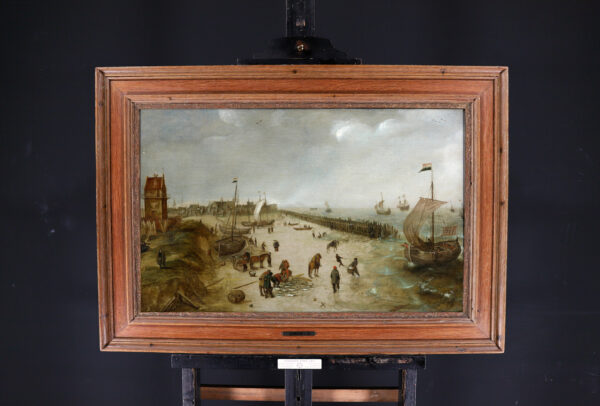
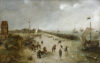
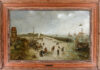
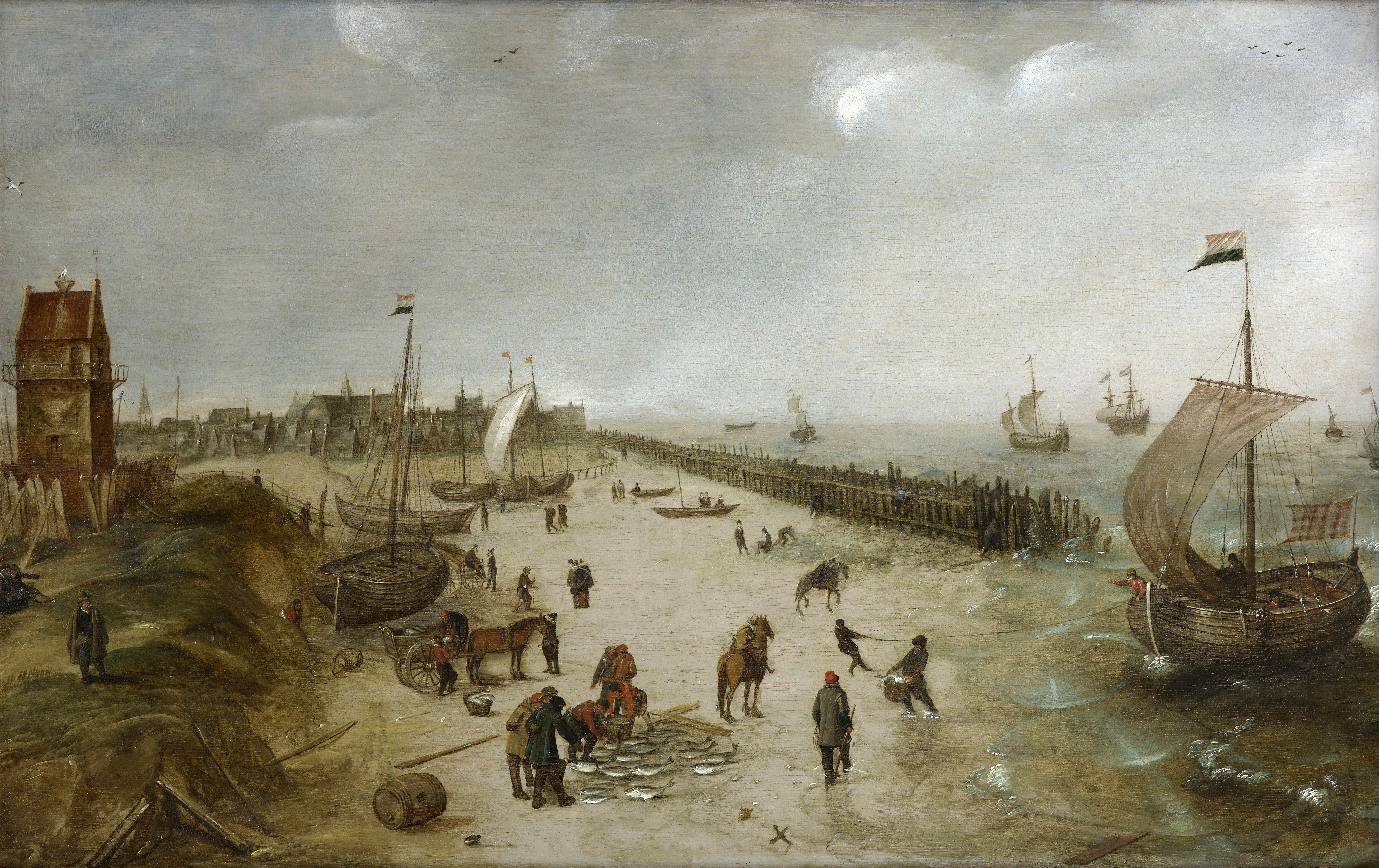
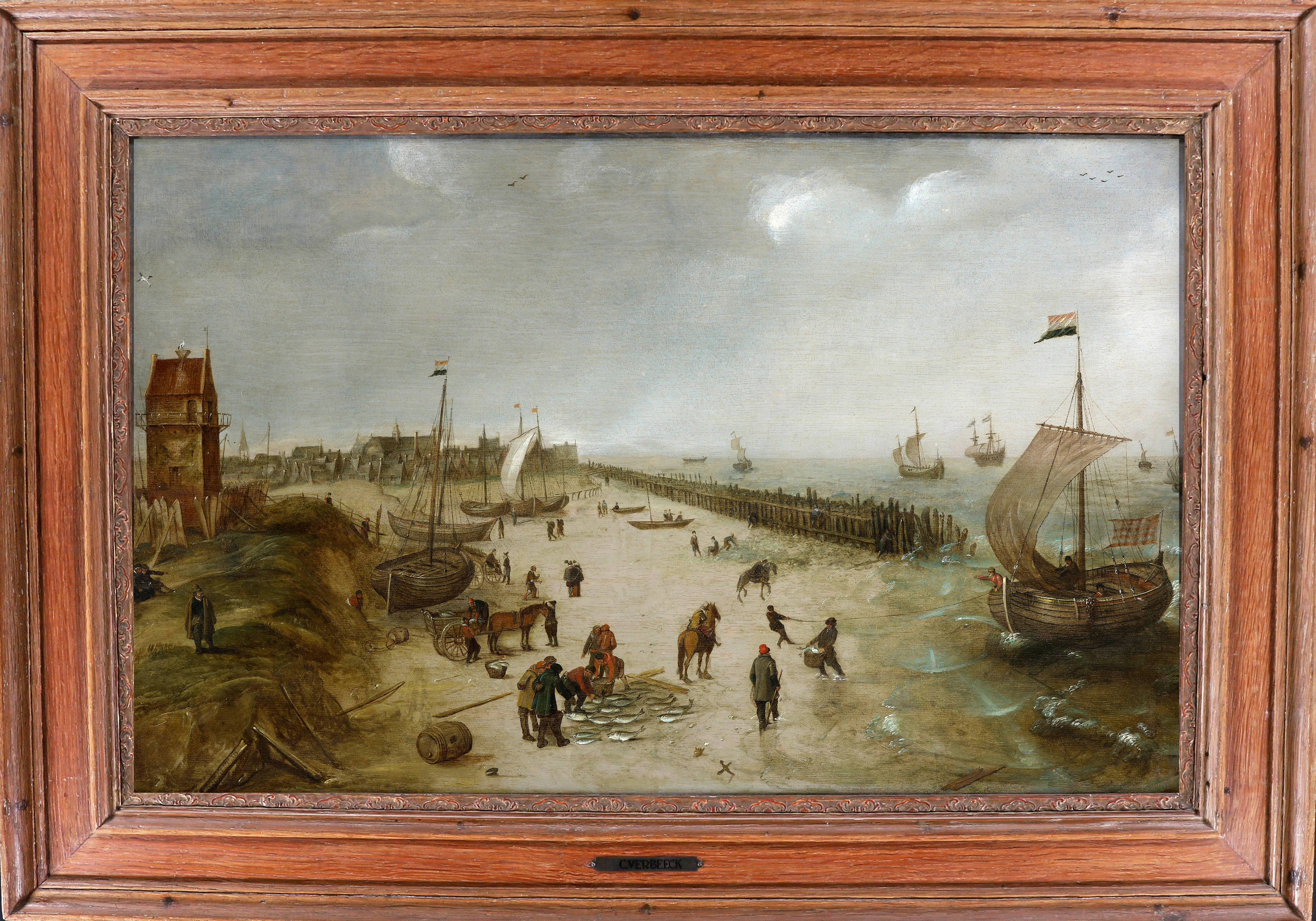
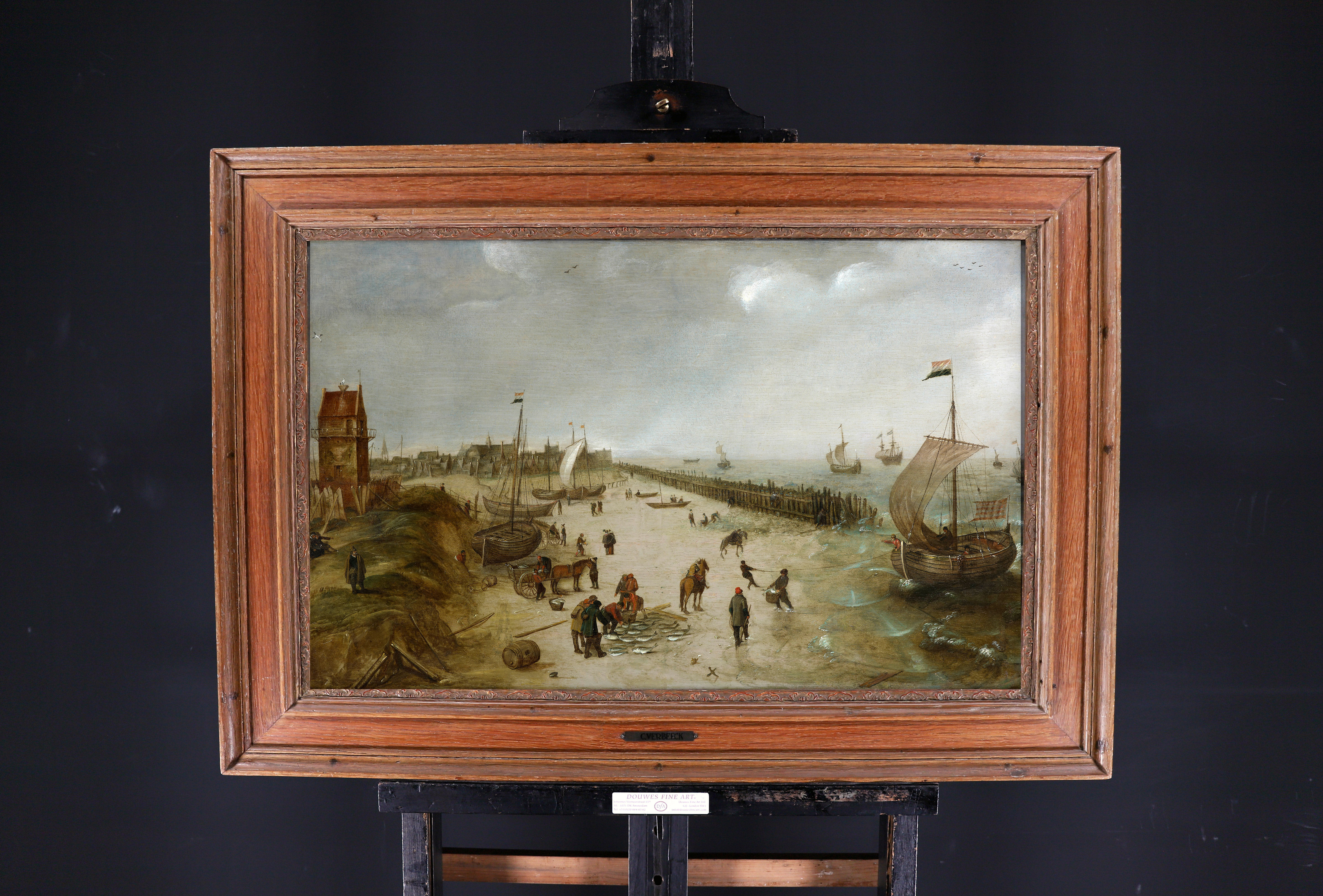
“The Beach at Petten with the ‘Hondsbossche Zeewering’”, c. 1625
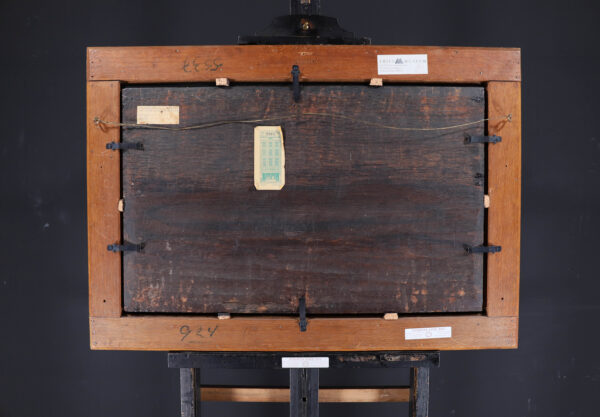
Oil on panel: 48 x 76 cm;
Signed ‘KORNELIO VB’ (VB in ligature) on a piece of wood at bottom left
"*" indicates required fields
Notes
Verbeeck painted primarily marine and seascape works. He was directly influenced by Hendrick Cornelisz Vroom. Verbeeck died in 1637. Some of his works are displayed at the National Gallery of Art.
There is a tendency to associate the seventeenth-century Dutch coastline with the seaside villages of Scheveningen, Egmond aan Zee or Zandvoort, all of which suffered loss and damage by the forces of nature or pillage during the Eighty Years’ War. These three villages had and still have one thing in common: a connection with a nearby or relatively nearby city. Things were slightly different for Petten, as shown by two small detailed maps. It lies in the northern part of the province of North Holland. The nearest town is Schagen to the north-east, in the West Friesland region.
The Hondsbossche is a sea defence consisting of a 5.5-kilometre long dike running from Camperduin in the south to Petten in the north, where the dike is shorter and higher. Although locally known respectively as the Hondsbossche and Petten Zeewering, they form one sea defence. Petten’s location is such that its history is not one of a beach resort. There is an old North Sea coast saying: ‘Wer nicht will deichen, muss weichen’ (You either build a dike or move). Petten acts as a warning to back up the old adage. Old maps show that since the Middle Ages there was a weak spot between the settlements of Camperduin and Petten, where the chain of dunes was reduced to a narrow strip, creating a geological vulnerability that had to be made safe.
In 1466 the dunes were no more than 30 metres wide in many places, and every year the sea swallowed up about three and a half to five metres of dunes. The settlement of Petten, which lay directly behind the dunes, was at the mercy of the advancing sea and suffered time and again down the centuries. In the Middle Ages the coastline lay about a kilometre further west. The serious weakness of the coast at Petten continues to this day and is well documented. In 2004 the Ministry of Transport and Water Management declared the Hondsbossche and Petten Zeewering (sea wall or coastal defence) as one of eight weak points along the Dutch coast. The repeated decline and reconstruction of the dike, along with some successful but other inadequate coastal management measures, have been affected by political unrest and a tug-of-war over responsibility and financing. Many prominent people have been involved with the coastal defences of the Hondsbossche and Petten to a greater or lesser extent, including Emperor Charles V, William the Silent, the States of Holland, Johan van Oldenbarnevelt, Johan de Witt and King William III. The area has always been seen as a danger spot and given high priority, since a major advance of the sea would cause flooding throughout North Holland.
Viewed from the north-northeast, Verbeeck’s scene clearly shows how alarmingly close to the sea the village was, with one row of houses only a few steps away. The position of the lighthouse located to the north-east of the village is accurately depicted, as can be seen from a drawing of around 1608. The lighthouse first appears on a map dated 1600, and was probably built towards the end of the sixteenth century. Verbeeck portrays it as a solid stone structure. A coal fire could be lit on top of the tower, as shown in an etching from around 1615 by Claes Jansz Visscher (c. 1587-1652). Verbeeck did not use the etching as a model for his painting. It views Petten from the north-east, with the village in the distance and the sea on the horizon beyond. The beach cannot be seen. There is every reason to believe that Verbeeck knew the village personally. For example, the sand dike is depicted accurately. It surrounds the village of Petten very close to the pilework and reverses direction to run in front of the lighthouse. The artist used shades of green for the vegetation lending stability to this dune.
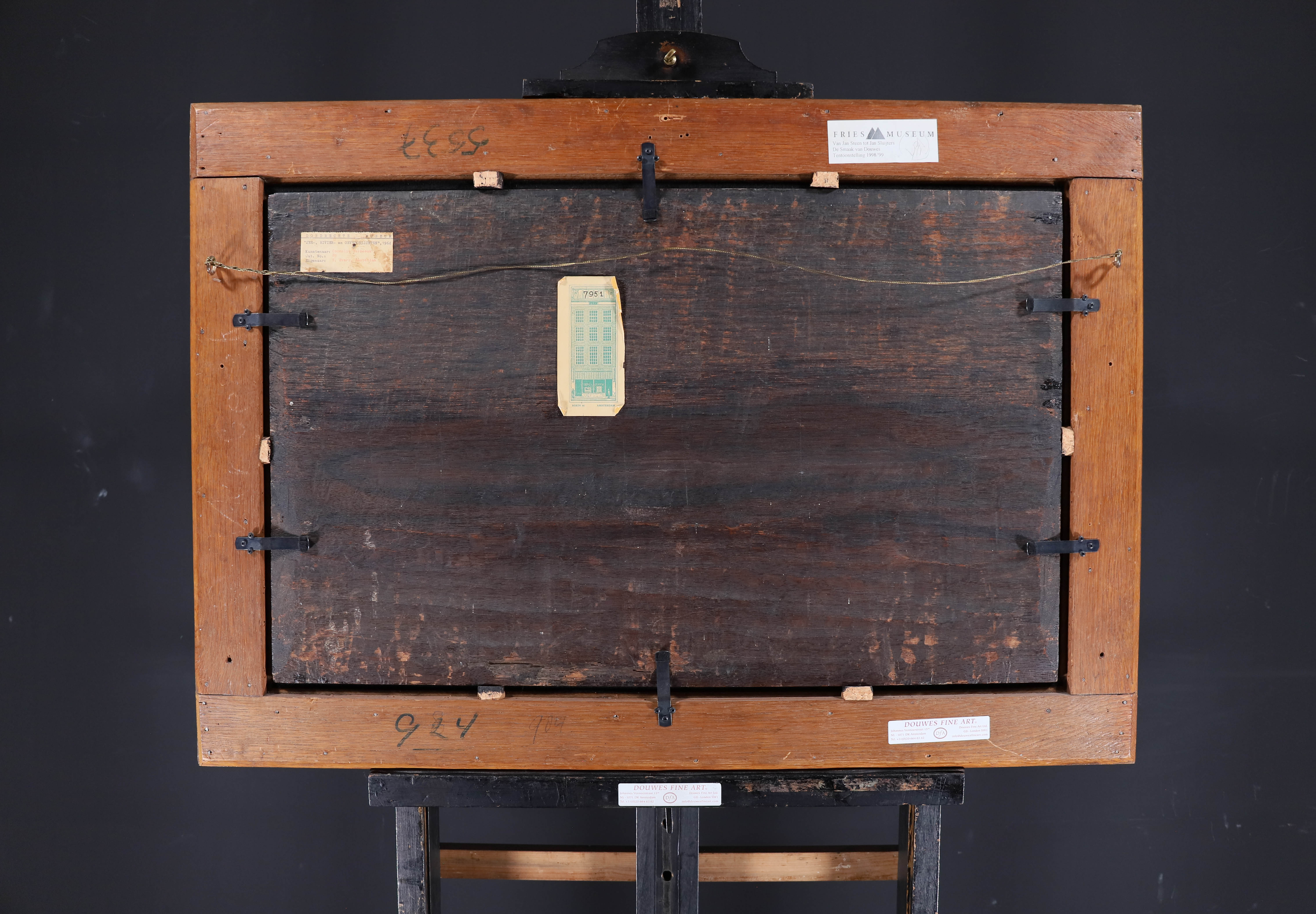
Provenance
- Curt Benedict Gallery, Paris, 1938 (as Hendrick Cornelisz. Vroom)
- Collection of Franziskus Cornelius Butot (1906-1992), Amsterdam, 1954
- Douwes Fine Art, Amsterdam, before 1964
- Private collection, The Netherlands, 1964
- Collection of H. Evers, Amsterdam, 1974
- Douwes Fine Art, Amsterdam/London, 1993 (as Cornelis Verbeeck)
- Inder Rieden Collection, since 1993
Literature
- Gerlinde de Beer, “The Golden Age of Dutch Marine Painting – The Inder Rieden Collection”, edited by Charles Dumas, Primavera Pers, Leiden 2019, Catalogue I, no. 09, page 276-286.
- Charles Dumas, Gerlinde de Beer, “In de ban van de zee – De Gouden Eeuw van de Nederlandse marineschilderkunst”, De Inder Rieden Collectie, Museum Bredius, 2019, Wilco, Amersfoort, The Netherlands, no. 20, with colour ill.
Exhibition
Charles Dumas, Gerlinde de Beer, “In de ban van de zee – De Gouden Eeuw van de Nederlandse marineschilderkunst”, De Inder Rieden Collectie, Museum Bredius, 2019, Wilco, Amersfoort, The Netherlands, no. 20, with colour ill.