
Hendrick Cornelisz. Vroom
(1562/66 - Haarlem - 1640)
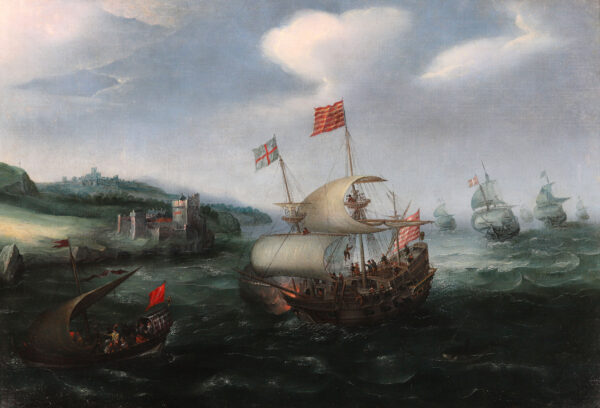
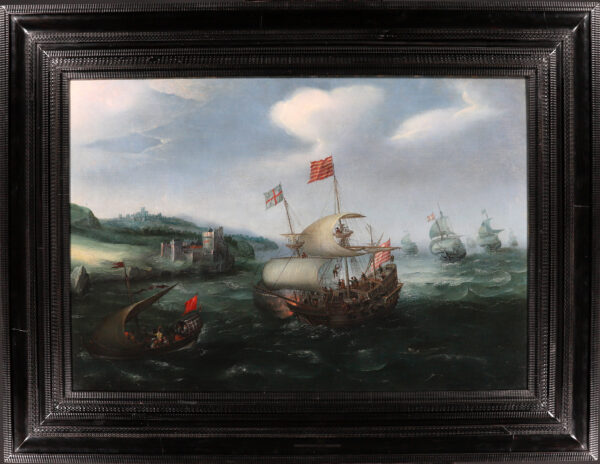
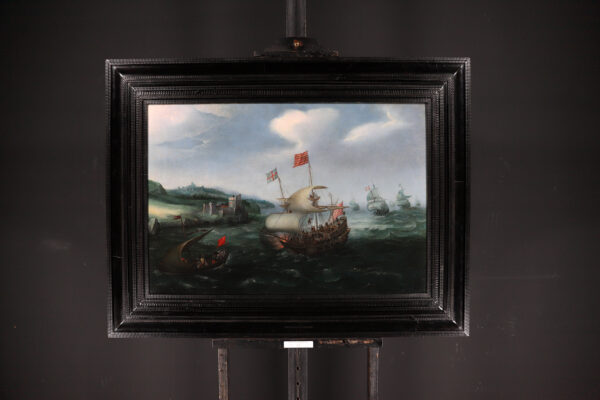
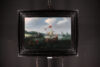
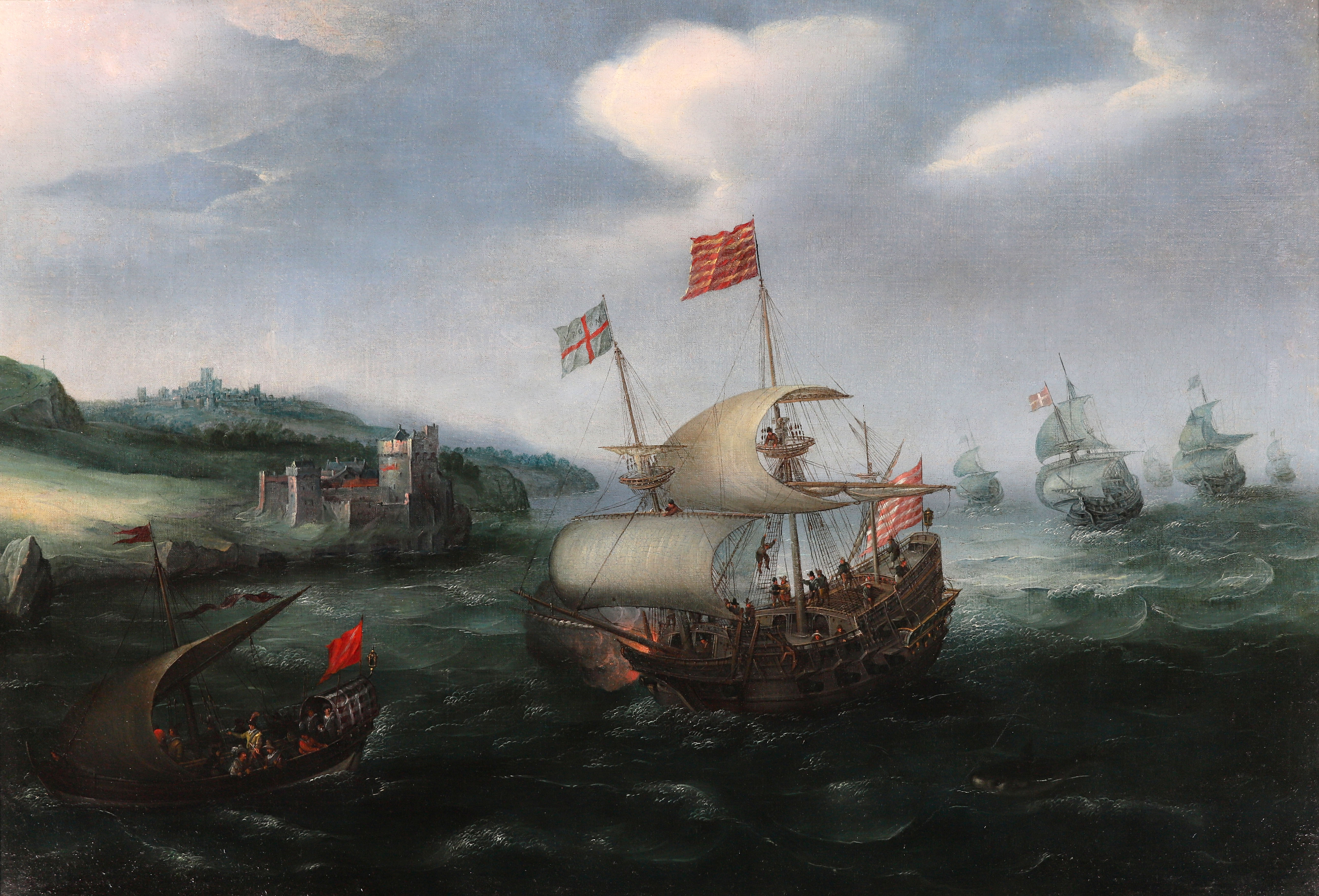
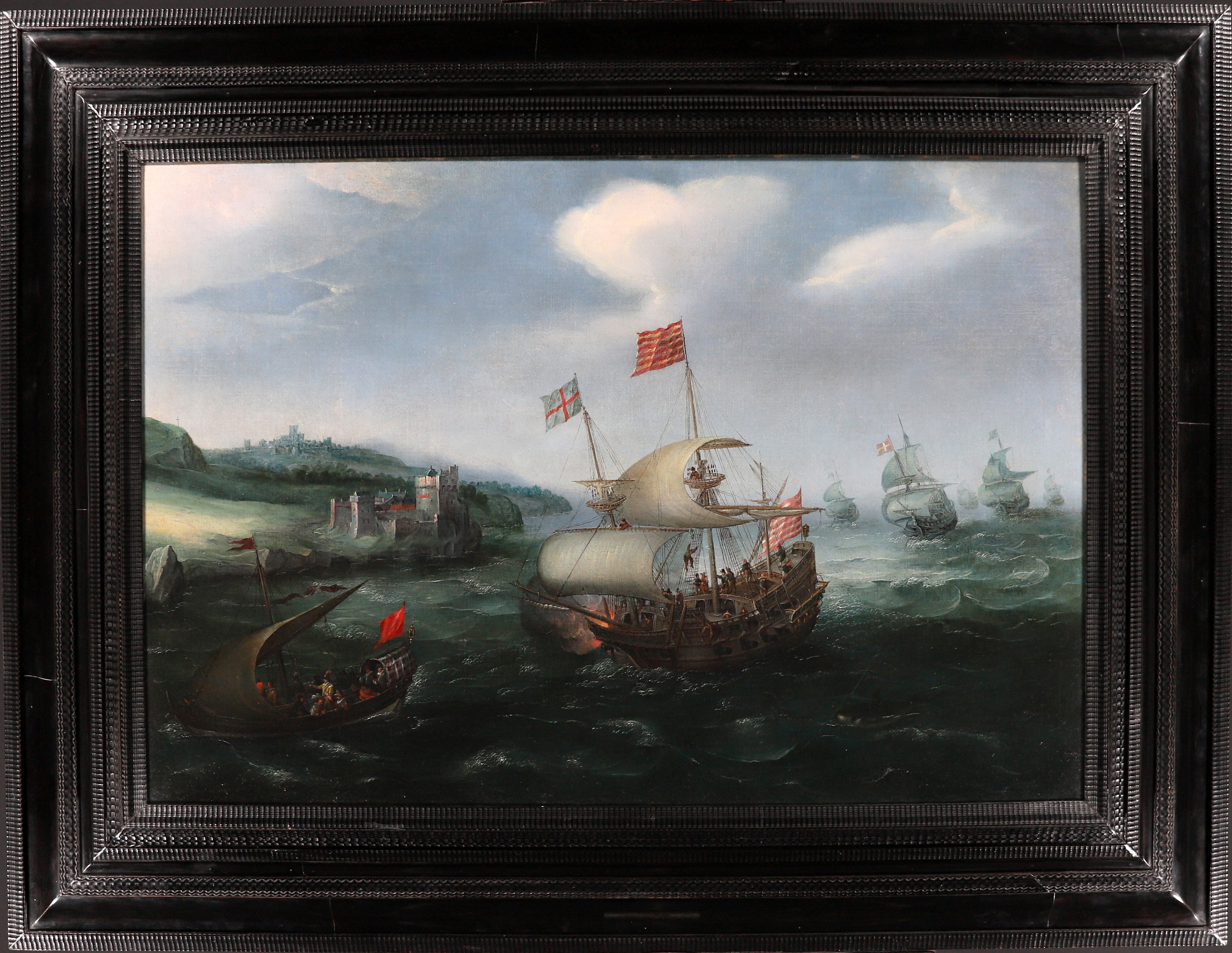
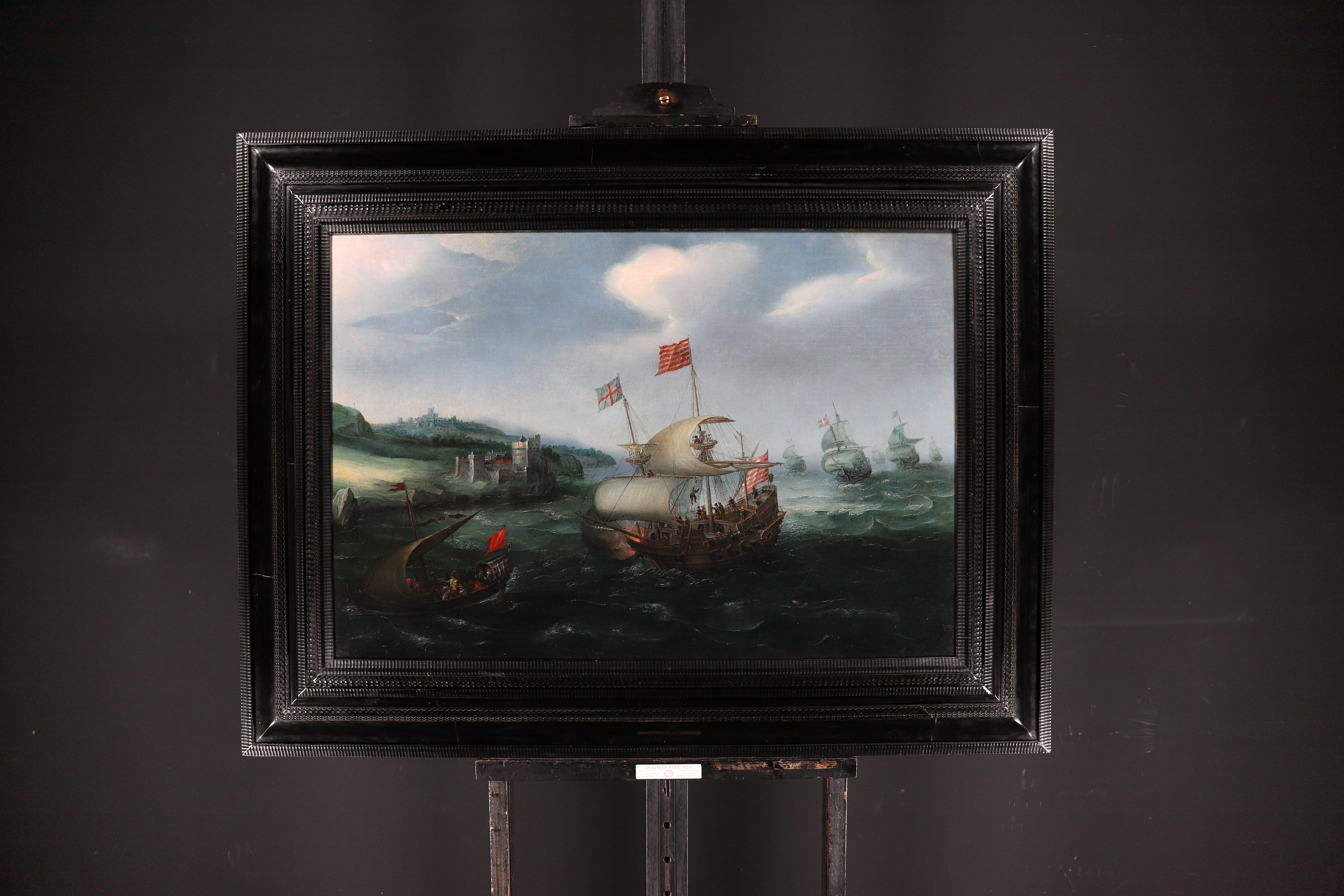
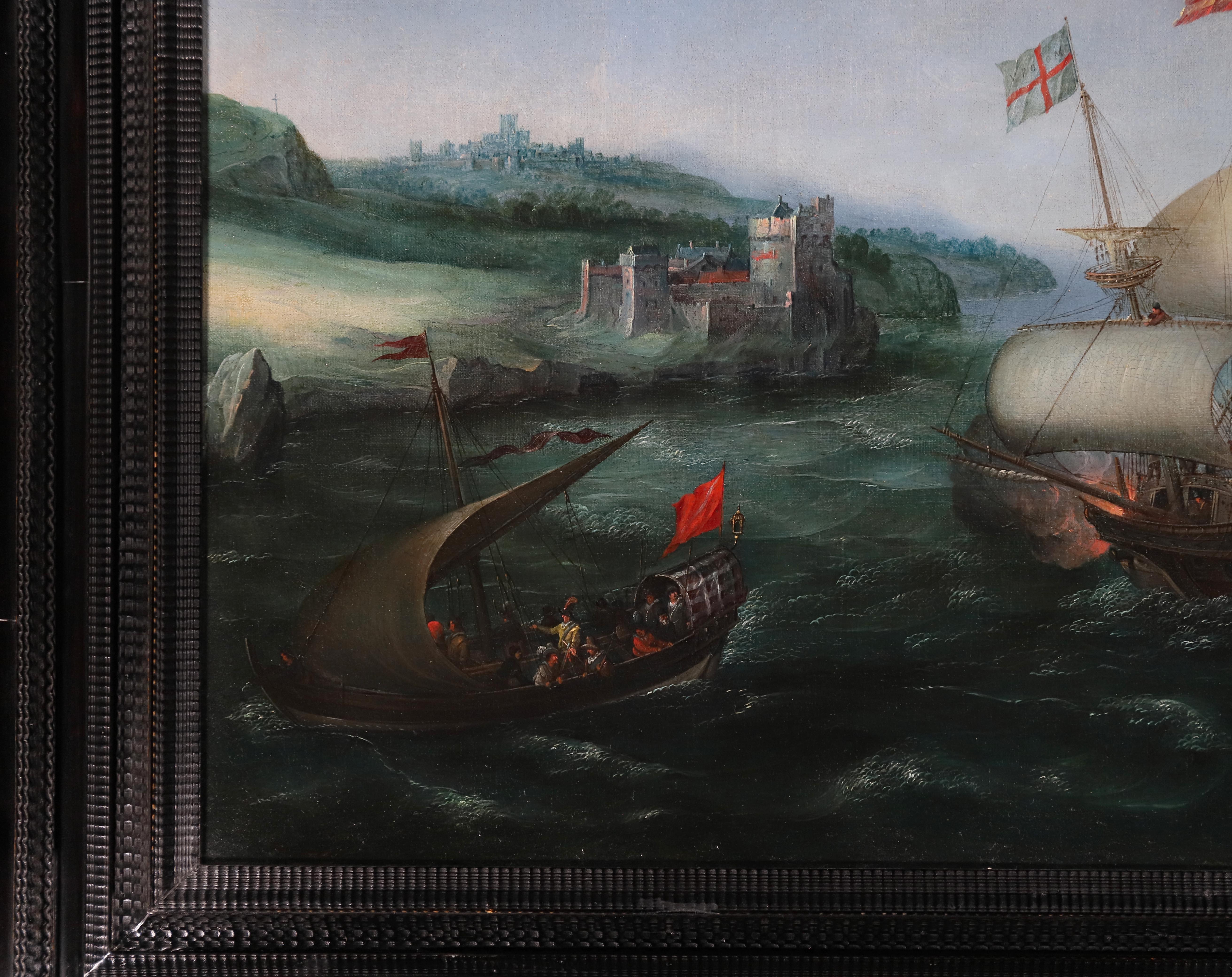
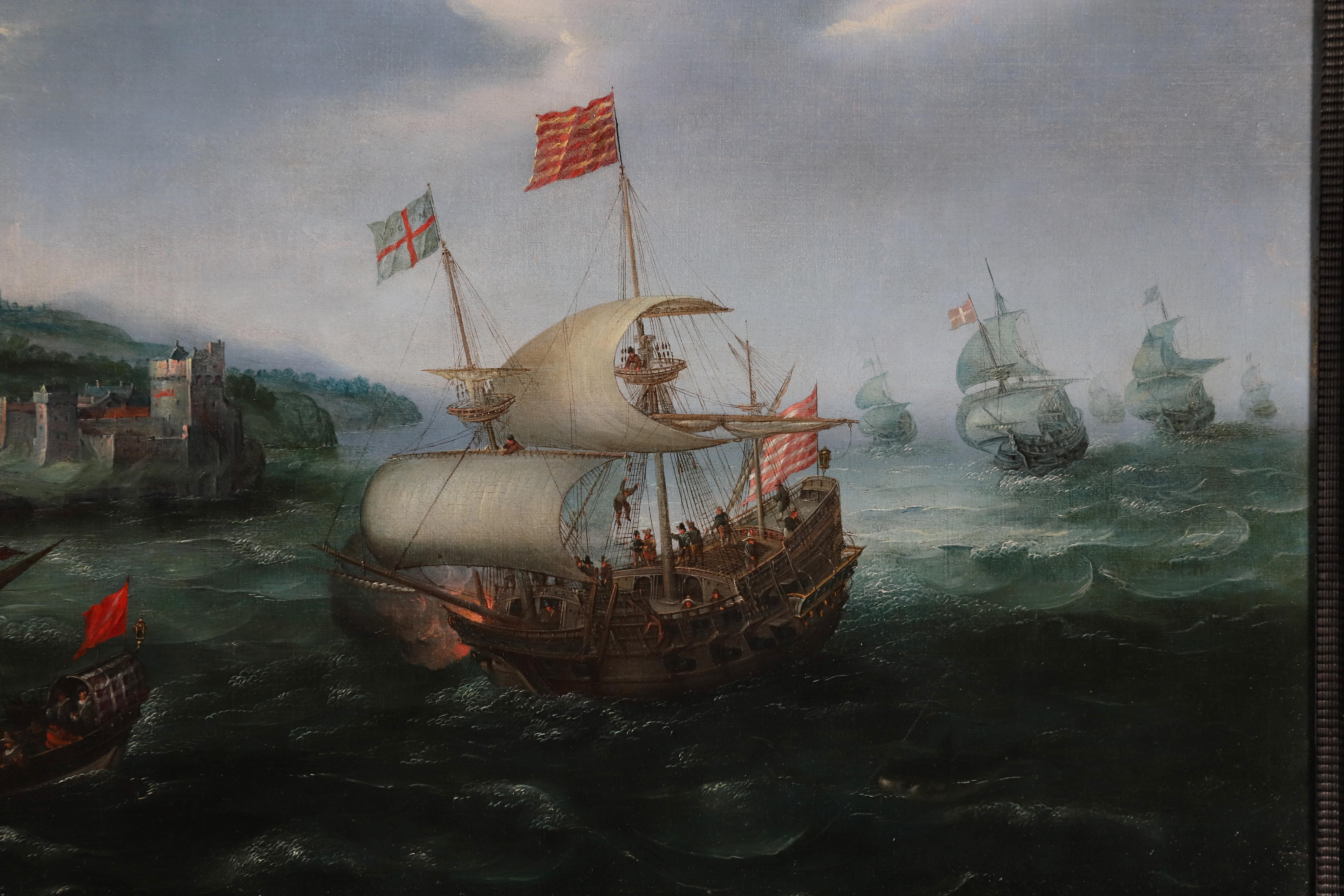
“A Disembarkation off the Coast of Dover”, c. 1615
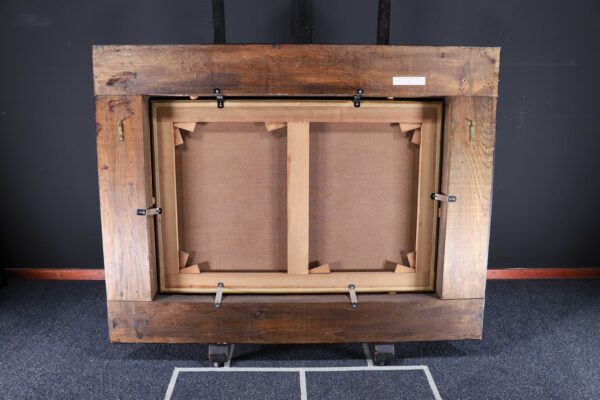
Oil on canvas: 61 x 91,5 cm;
Signed ‘VRO / OM’ on the flag of St. George on the foremast of the ship in the centre
"*" indicates required fields
Notes – The Artist
Hendrick Vroom was a Dutch Golden Age painter credited with being the founder of Dutch marine art or seascape painting. Beginning with the “birds-eye” viewpoint of earlier Netherlandish marine art, his later works show a view from lower down, and more realistic depiction of the seas themselves.
Vroom was born into a family of artists and began his career as a pottery painter and when his mother remarried, at 19 he rebelled against his stepfather who insisted he stick to pottery painting, by boarding a ship for Spain (Sevilla) and from thence via Livorno and Florence to Rome.
In Florence he was patronized around 1585–87 by Cardinal Ferdinando de’ Medici, later Grand Duke of Tuscany. While there he became a pupil of Paulus Bril.
He boarded a ship homewards and was back in Haarlem in 1590, the year he married, before travelling to Danzig (now Gdańsk) to visit his uncle, Frederick Henricksz, who was city architect there, and where he painted an altarpiece.
During his next journey, this time to Portugal, he survived shipwreck, but was threatened with execution as “an English pirate” – from which he was saved by being recognized as a Catholic from his salvaged devotional paintings, which convinced the monks on the beach that he and his companions were not “heathen Protestants” (Vroom, having been to Italy, had coached his fellow survivors in the catechism).[2] Having been granted free passage, Vroom travelled to St. Huves (Setubal), where he recorded his adventures in a painting that he sold to a painter there.
Notes – the Painting (Gerlinde de Beer, 2019)
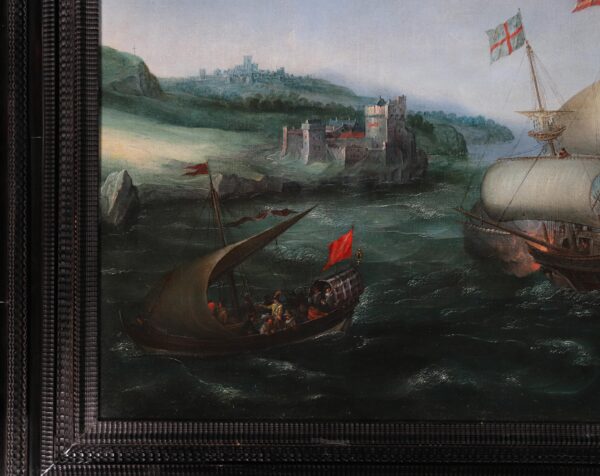
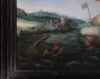
The extensive complex on the far left of this disembarkation scene is Dover Castle seen from the south as it stands out against the bright glimmering sky (see the detail on p. 170). The viewer’s attention, though, is captured by the three-master in the centre of the picture. It is eye-catching in several respects, not least for its impressive, decorative shape. Hendrick Cornelisz Vroom’s pioneering achievements were not confined to establishing marine painting as an independent genre. He was also the first to recognise the aesthetic value of a ship as a motif, which he melded with his specialist knowledge of shipbuilding at a similarly high level. This painting is an excellent example of that combination.
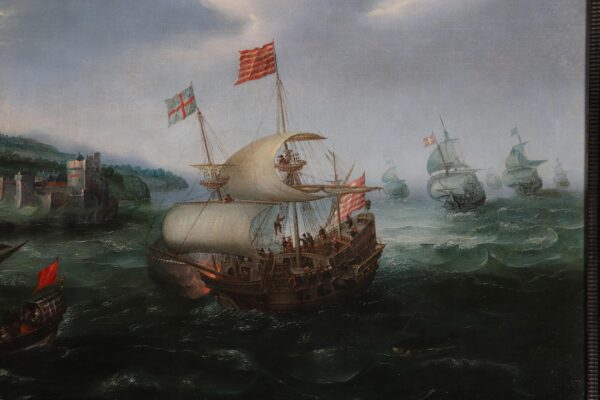
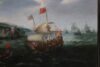
Sailing close to the foreground with her tall masts, large flags, and eased sails on the foremast and mainmast, the ship makes a formidable impression. The motif also lends itself to colourful embellishments. In addition to the strong reds and yellows in the flags, a gun salute at the starboard bow makes for a dramatic fireball, the reflection of which in glowing red, yellow and smoky blue shimmers through the square sail on the foremast (see fig. 1-1). A gun salute is a well-known and popular motif in marine painting, and is associated especially with the much-loved embarkation and disembarkation scenes of Simon de Vlieger (c. 1601-1653) and his pupil Willem van de Velde the Younger (1633-1707). But this painting serves as a reminder that it was the founder of marine painting, Hendrick Vroom, who had already recognised the colouristic appeal of the gun salute and firmly linked it to a disembarkation scene. The gun’s blazing flames emphasise the contours of the ship’s bow, which lies in the dark emerald green of the sea. The motif exemplifies Vroom’s mastery of presentation and the appeal of his colourful, illustrative manner of painting.
The gun salute gives the picture a ceremonial, official look, while at the same time drawing the viewer’s attention to a special event. The ship is shown in three-quarter and diagonal top view, allowing the viewer to see details of everything that is happening on board. It is a relatively short, lightly armed warship with a plump hull.
The waist is lower than the forecastle and the stern, including the poop with its gratings (the wooden framework that allowed air in and smoke out). There is a good view of the open gallery around the stern, which is typical for this type of ship. Another typical feature is the diagonal yard of the lateen sail on the mizzenmast at the stern, the shortest mast on the ship. Four gun-ports are open on the gun deck, and the cannon have been run out. More cannon are ready to fire amidships on the main deck and at the bow.
There are twenty men on board, and most are on deck. One sailor is climbing the shrouds of the mainmast, a second is in the mainmast crow’s nest, while a third is busy with the yard of the foresail, and yet another is above the cutwater at the prow near the base of the bowsprit, which has its spritsail furled. Preparations are being made for a
manoeuvre. The eased sails, which are also seen on the ships in the right background, indicate good sailing weather. There are white crests on the waves, even near the shore, where a small whale can be seen in the right foreground. The sea is more turbulent in the distance, where some waves dart up like flames.
The three-master is heading for the left foreground, with a small yacht ahead of her. Some of the passengers in the yacht are strikingly dressed. One man is standing between two others sitting at the side of the boat with feathers in their hats, and two of them carry muskets. They must be musketeers, who at that time were quite privileged. There are two men beneath the yacht’s awning, their distinguished grey attire trimmed with white suggesting that they are men of rank. The gun salute is probably intended as a farewell to these gentlemen, while the ship changes course and the yacht heads for the shore.
The actual nature of the event is unknown, but the flags give some indication. St George’s Cross had been the main emblem for English flags, ensigns and the heraldic system of the aristocracy since the fourteenth century. It is the national flag of England. Before 1606 it was flown from various masts. Then, on 12 April 1606, King James I (1566-1625) issued a royal decree with firm instructions to ships. He had succeeded his mother, Mary Queen of Scots, to the Scottish throne at the age of 13 months, becoming James VI, King of Scots. The Stuart king was proclaimed James I, King of England, Scotland and Ireland on 24 March 1603, becoming the first monarch to unite those kingdoms. Three years later, a union flag was created for the new kingdom of Great Britain that combined the flags of England and Scotland. The king further decreed that English ships (those from ‘South Britaine’) should fly the flag of St George from the foretop, as Vroom shows in this painting. Scottish ships were to fly the St Andrew’s Cross from the foretop, and both English and Scottish vessels would fly the new union flag from the maintop. The red and yellow stripes on the flag at the maintop of this three-master incorporate the colours of England and Scotland, and probably refer to the Union. However, it could also be the personal standard of a particular princely family.⁵ The red and white stripes of the flag at the stern of the three-master derive from the flag of St George. The flag order for foremast and mainmast applied to both ships of the Royal Navy and to privately owned merchantmen. The nearest of the ships in the background, is flying the Dannebrog, the national flag of Denmark with a white cross on a red field. It was also associated with James I, for in August 1589 in Copenhagen he married Anne of Denmark (1574-1619), daughter of Frederick II.
A direct reference to the disembarkation of the king can be ruled out, however. The ship and its flags do not correspond to the rank of a monarch. Furthermore, the scene makes more of an official than a ceremonial impression. It is nevertheless possible that this is a depiction of a real event that Vroom was commissioned to commemorate. When he painted the picture, he had long been known at the highest levels of the English court.
Provenance
- Sotheby’s, London, 1988
- Private collection, Europe
- Inder Rieden Collection, since 2017
Literature
- Gerlinde de Beer, “The Golden Age of Dutch Marine Painting – The Inder Rieden Collection”, edited by Charles Dumas, Primavera Pers, Leiden 2019, Catalogue I, no. 01, page 176-182 and as the cover illustration of the book.
- Charles Dumas, Gerlinde de Beer, “In de ban van de zee – De Gouden Eeuw van de Nederlandse marineschilderkunst”, De Inder Rieden Collectie, Museum Bredius, 2019, Wilco, Amersfoort, The Netherlands, no. 55, with colour ill.
- De Beer 2013, pp. 18-19, fig. 6.
Exhibition
Charles Dumas, Gerlinde de Beer, “In de ban van de zee – De Gouden Eeuw van de Nederlandse marineschilderkunst”, De Inder Rieden Collectie, Museum Bredius, 2019, Wilco, Amersfoort, The Netherlands, no. 55, with colour ill.