
Jan van de Cappelle
(1626 - Amsterdam - 1679)
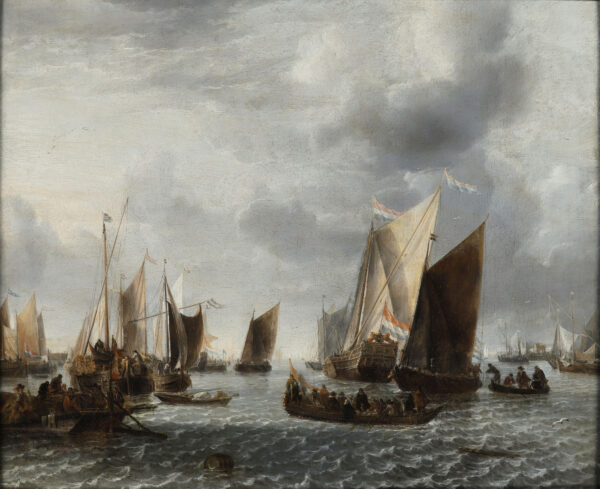
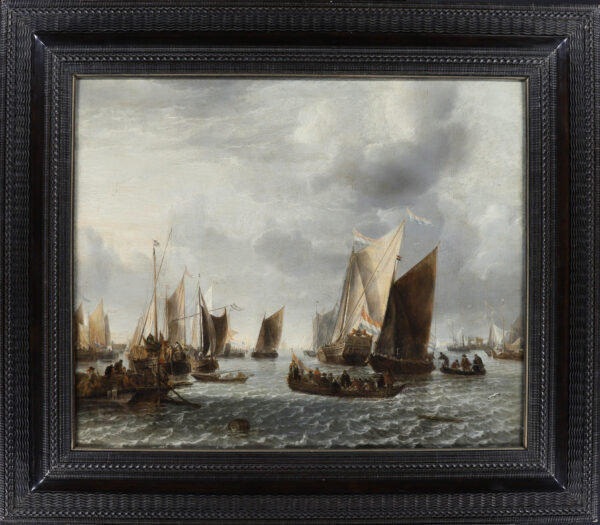
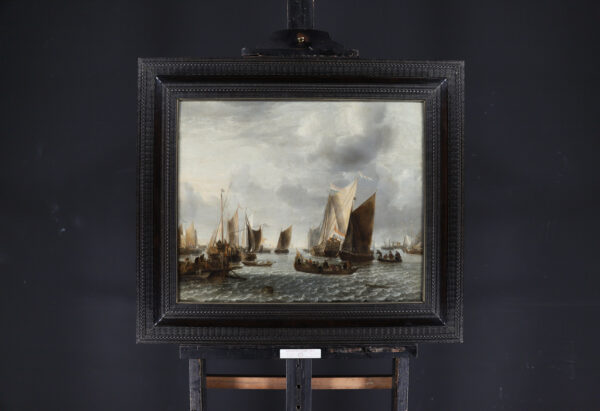
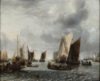
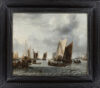
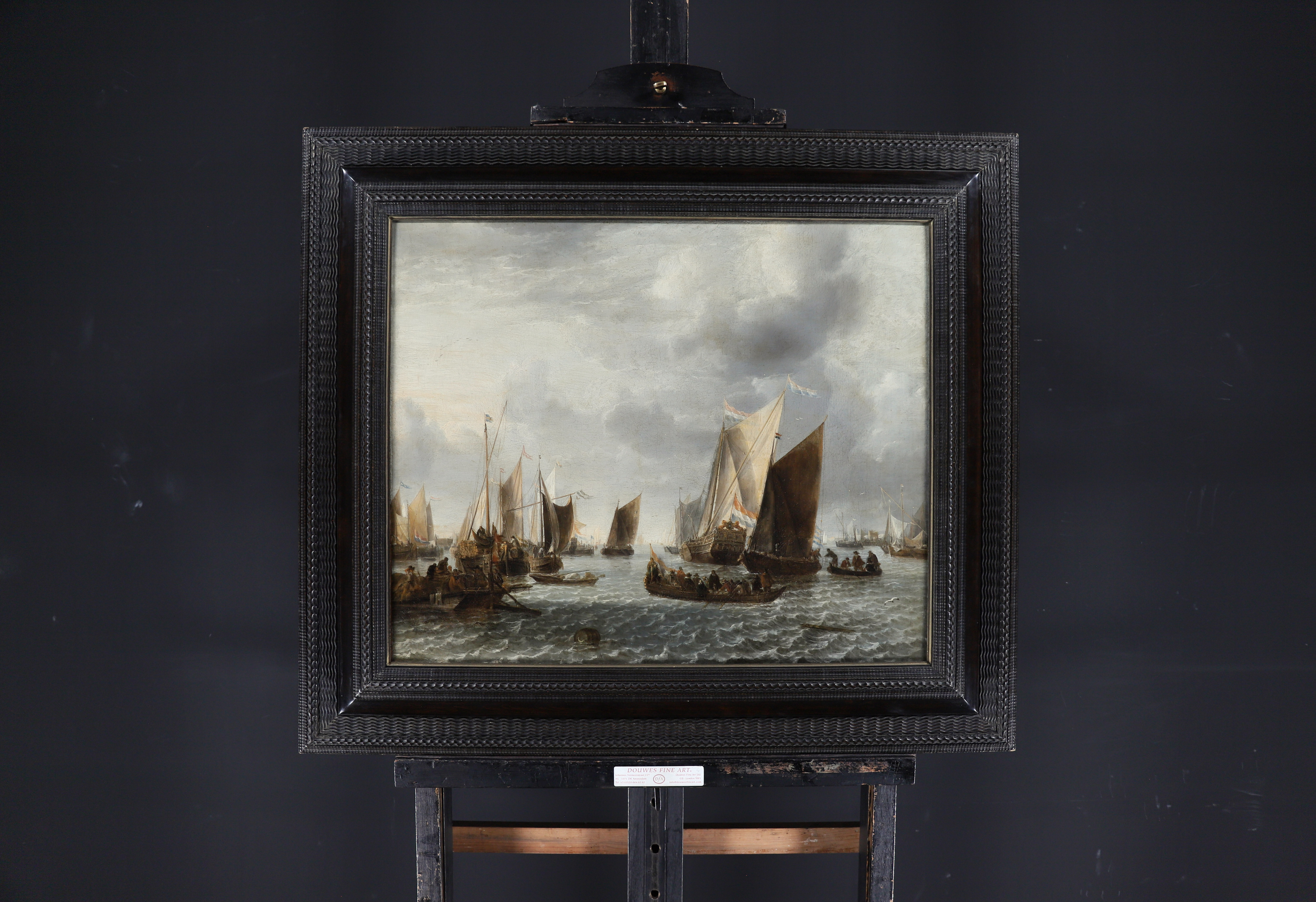
“A Disembarkation on a River”, c. 1655
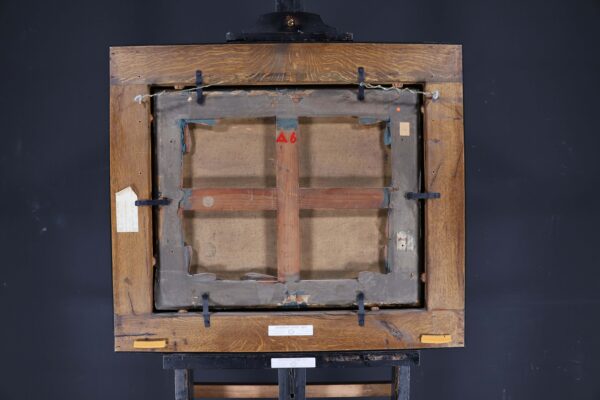
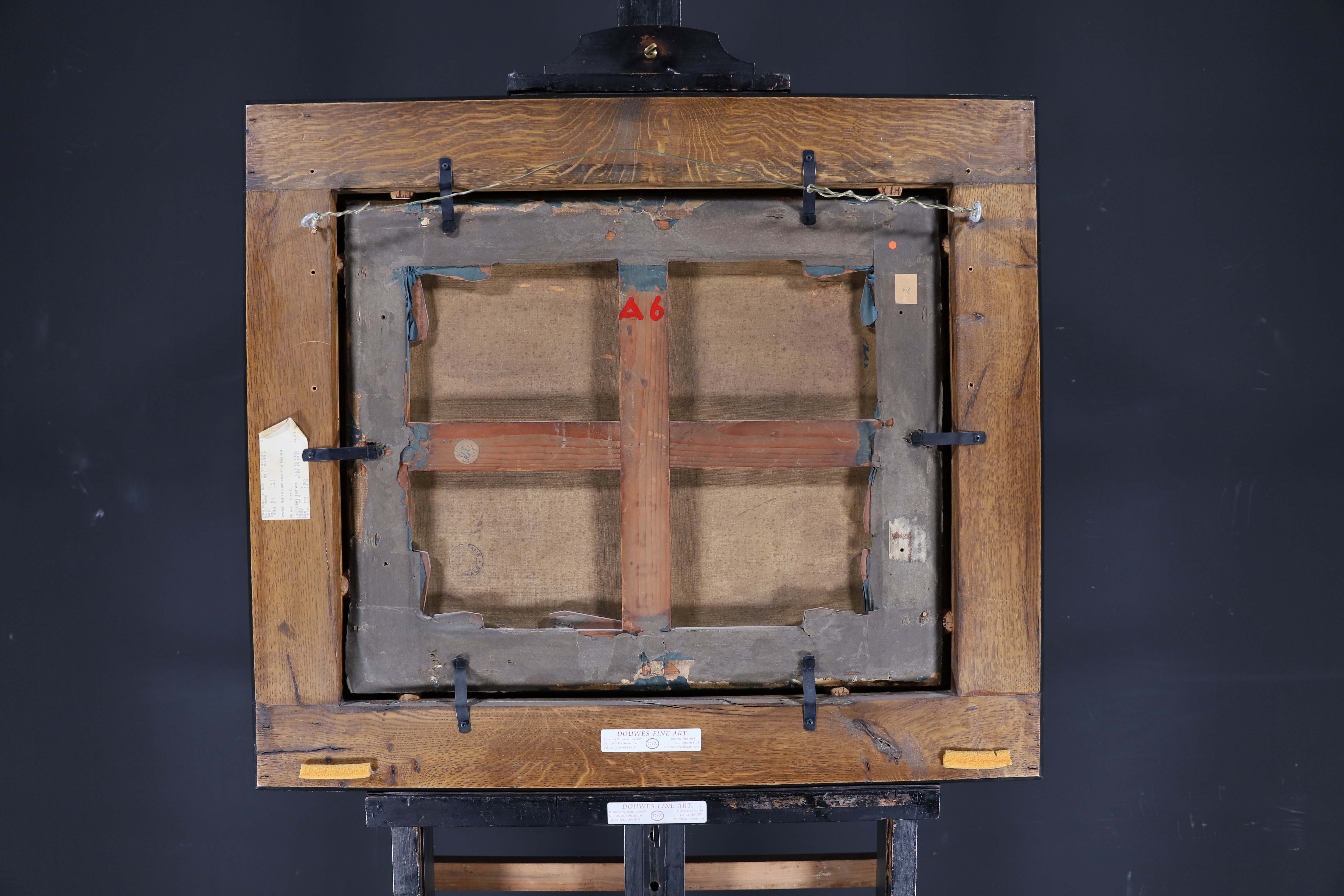
Oil on canvas: 50 x 60 cm;
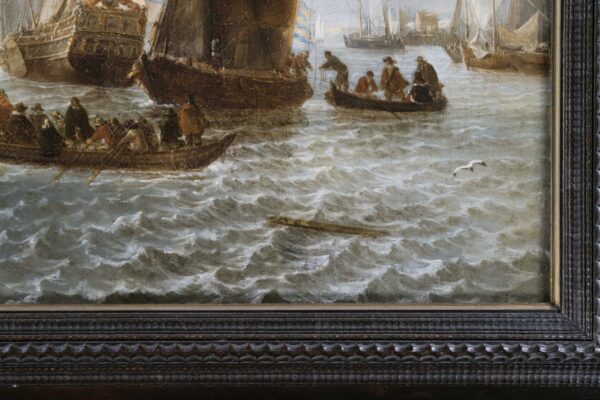
Monogrammed ‘IVC’ on driftwood to the right.
"*" indicates required fields
Notes from Gerlinde de Beer – The Golden Age of Dutch Marine Painting – The Inder Rieden Collection
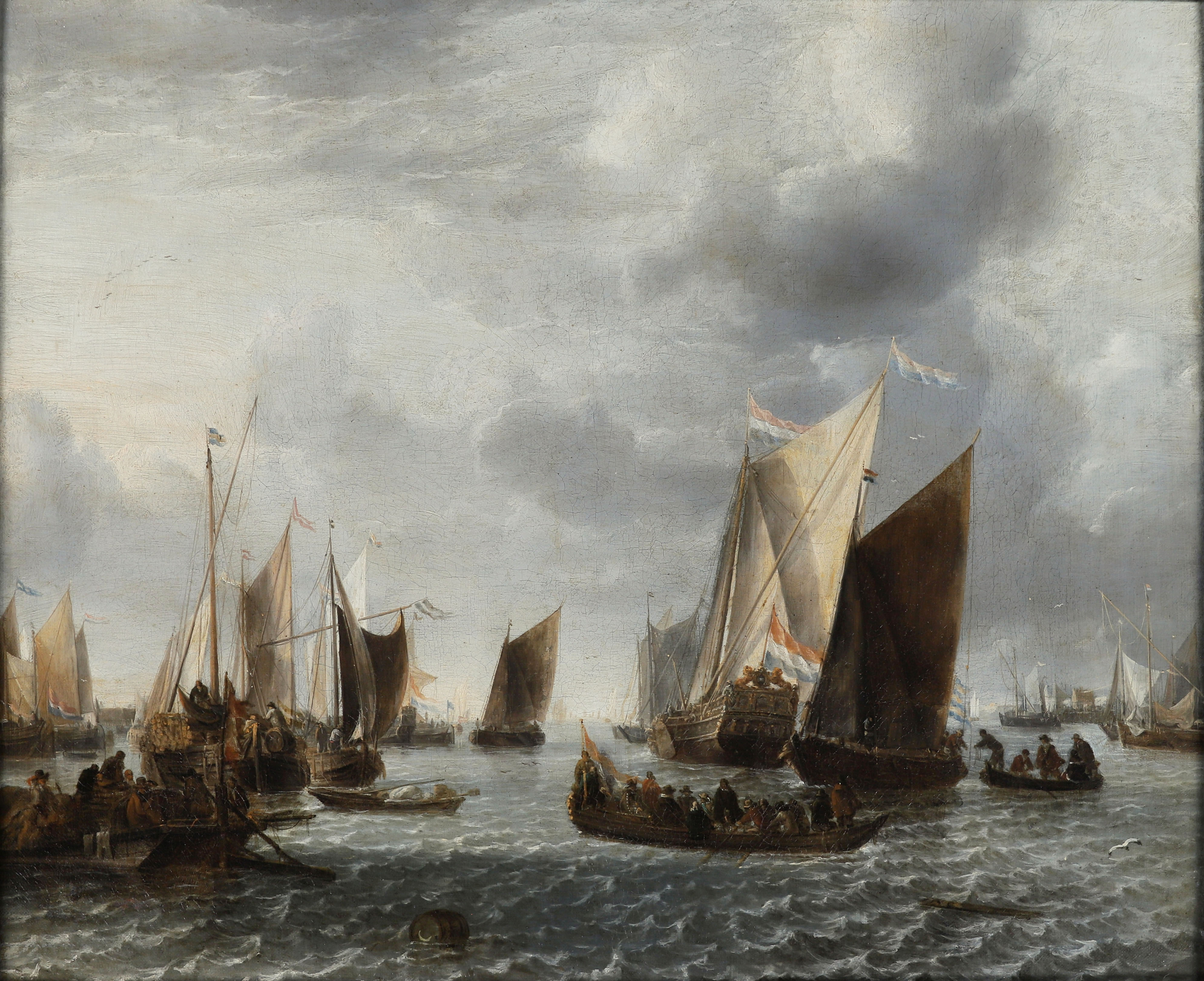
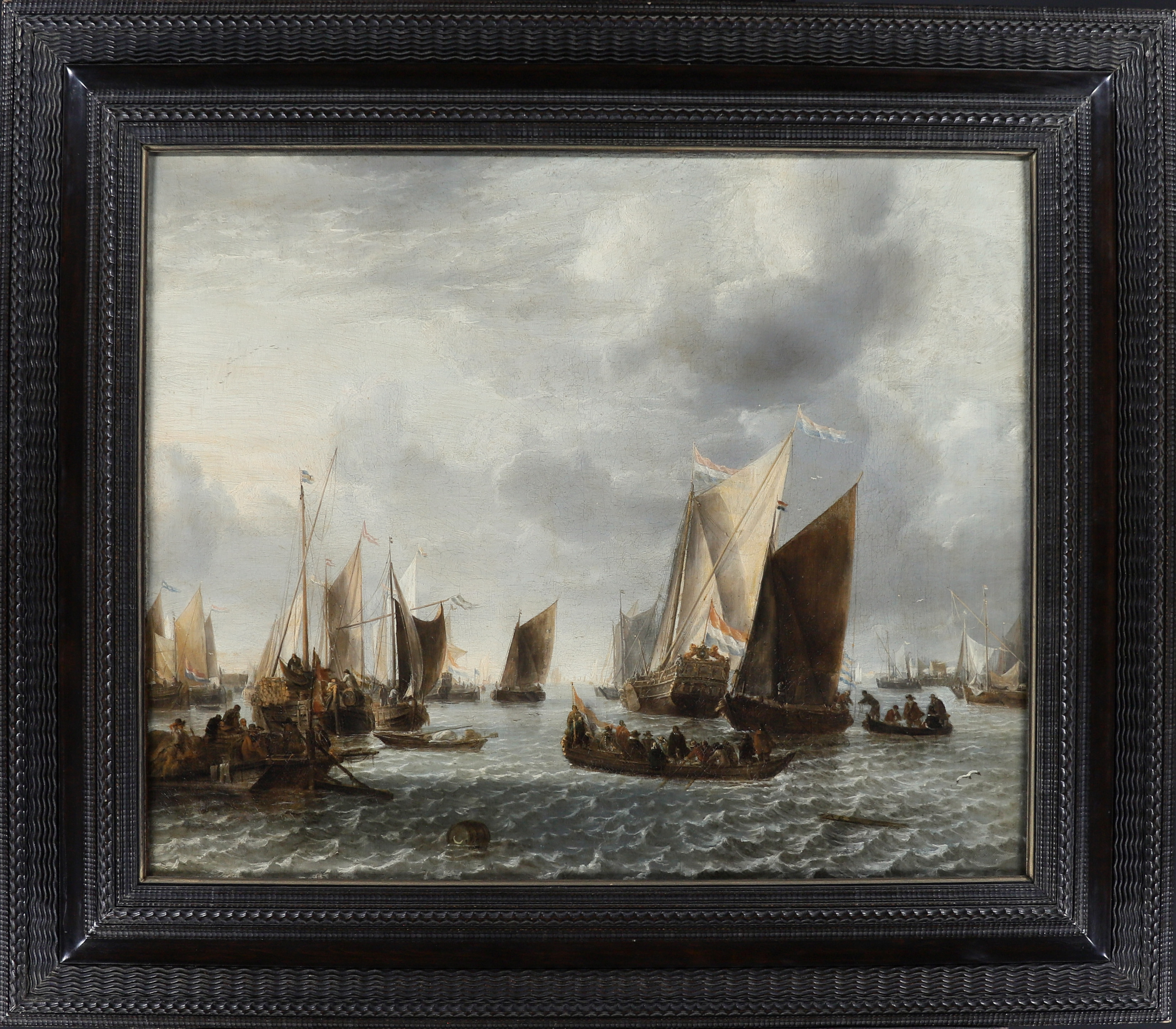
A large number of ships, of various types, are gathered together on lightly choppy water. Many flags are fluttering, almost horizontal in the wind. More ships can be seen in the middle distance, outlined against the horizon. Gaps between the ships allow glimpses of riverbanks on either side. The short waves are a further indication that this is a river. Through a gap in the clouds, light enters from the left. According to Franz Ossing, the fluffy clouds and the towering cumuli cannot be associated with a particular weather situation. But sailing conditions are good, although only the single-master in the middle distance is taking advantage of this. The focus of the painting is a disembarkation, marking the end of a sailing trip: the disembarking passengers are heading for the nearby riverbank.
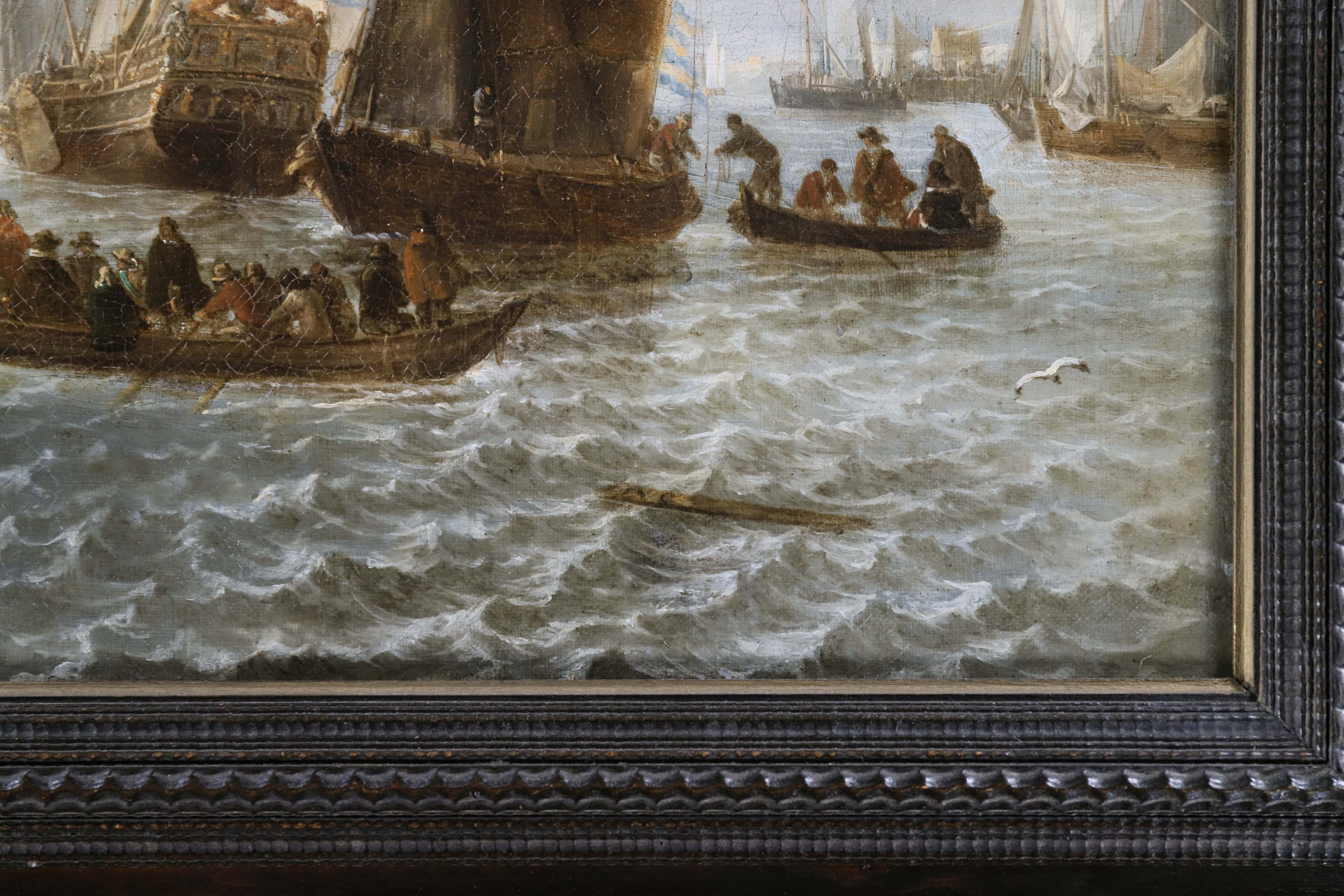
A fully-occupied rowing boat (see fig. 38-1) makes its way to the right, along the border between shaded foreground and bright middle distance. The clothing of the passengers at the back of the boat reveals them to be men of high rank. The man at the rear particularly stands out thanks to his lavish attire, including a collar with a golden pendant.
A group of vessels lies beyond the rowing boat, including the most important ship in the painting – a statenjacht (States yacht) (see fig. 38-2). States yacht denoted a function rather than a particular type of vessel: it was an elaborately decorated spiegeljacht used for official duties. In this picture, the three large national flags, as well as the shield flanked by two lions on the tafferel of the yacht, are indications of its official role. The States yacht lies a short distance behind and above the rowing boat, which has collected the distinguished passengers from the ship. The sunlight highlights the splendid frame and carvings of the States yacht. The heavy form of the kaag, which lies in the shadow between the rowing boat and the States yacht, seems to intrude into this space. The three motifs slightly overlap. At the stern of the kaag, here shown in three-quarter port bow view, a sailor grasps a mooring rope, about to take a pair of bourgeois passengers on board from a small rowing boat. Of the two vessels behind the States yacht only the nearer is identifiable: its characteristic stem shows it to be another kaag.
Only half of the vessel in the left foreground is visible, but the general subject of the painting, as well as the shallow ferry construction and the outboard rudder, allow it to be identified as a legerpleit, a boat used to carry soldiers and ammunition on military campaigns. Here, it takes a parallel but opposite course to the rowing yacht, suggesting a connection between the two vessels, while also highlighting the official and military context of the painting. Beyond the legerpleit two overlapping cargo vessels form a short diagonal row of ships, continued in the distance by a yacht and a smal- or wijdschip. The two groups of motifs on either side narrow the centre of the picture into a funnel shape, leading the eye into the distance. The interior of the picture is framed by two groups of closely adjacent boats, one near each riverbank. The combination of the four groups of ships also marks out the course and extent of the river.
Cat. no. 38 is an example of a naval parade, a genre characterised by a composition with a large number of ships divided into groups, and arranged in rows running diagonally towards the horizon. Gaps between the rows allow the viewer to see into the distance. The parade picture was first devised by Simon de Vlieger (c. 1601-1653), who painted its prototype in 1649 with his Disembarkation of Frederick Henry, Prince of Orange, off Dordrecht, now in Vienna (fig. 38-3).¹ For a theme, De Vlieger chose an event from three years earlier.
Provenance
- Collection of Comte Henry Jules Charles Emmanuel Greffulhe (1848-1932), Paris
- Kleinberger Gallery, Paris, 1925
- Collection of Max Geldner (1878-1958)
- Thence by descent
- Douwes Fine Art, Amsterdam/London, 1993
- Inder Rieden Collection, since 1993
Literature:
- Gerlinde de Beer, “The Golden Age of Dutch Marine Painting – The Inder Rieden Collection”, edited by Charles Dumas, Primavera Pers, Leiden 2019, Catalogue II, no. 38, page 618-626.
- Charles Dumas, Gerlinde de Beer, “In de ban van de zee – De Gouden Eeuw van de Nederlandse marineschilderkunst”, De Inder Rieden Collectie, Museum Bredius, 2019, Wilco, Amersfoort, The Netherlands, no. 33, with colour ill.
Exhibition:
Charles Dumas, Gerlinde de Beer, “In de ban van de zee – De Gouden Eeuw van de Nederlandse marineschilderkunst”, De Inder Rieden Collectie, Museum Bredius, 2019, Wilco, Amersfoort, The Netherlands, no. 33, with colour ill.