
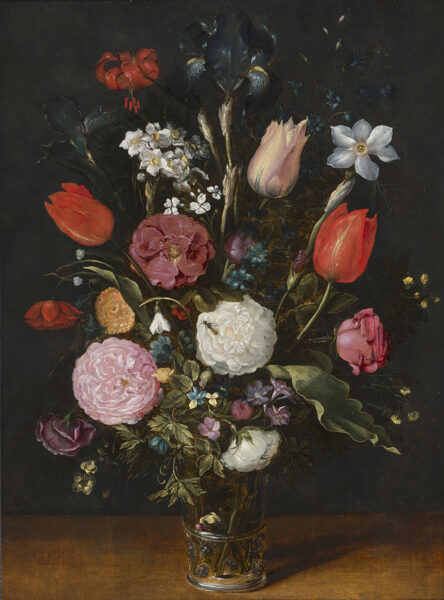
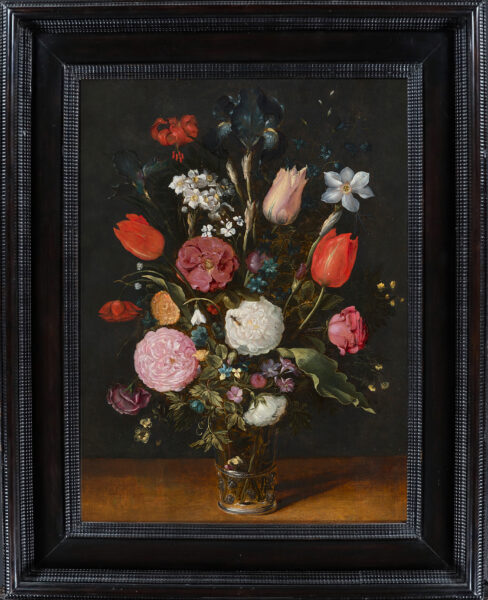
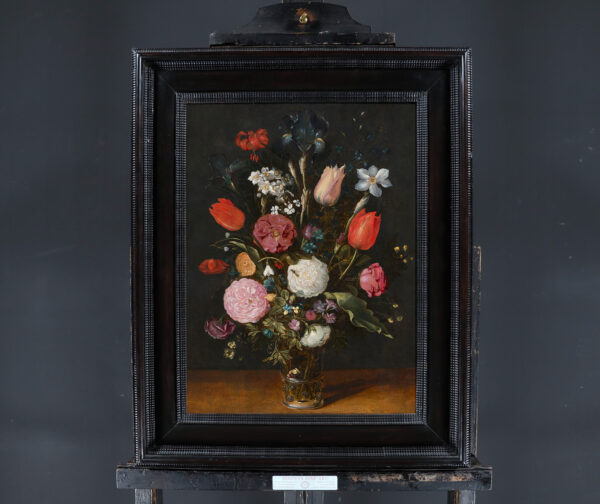
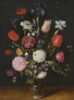
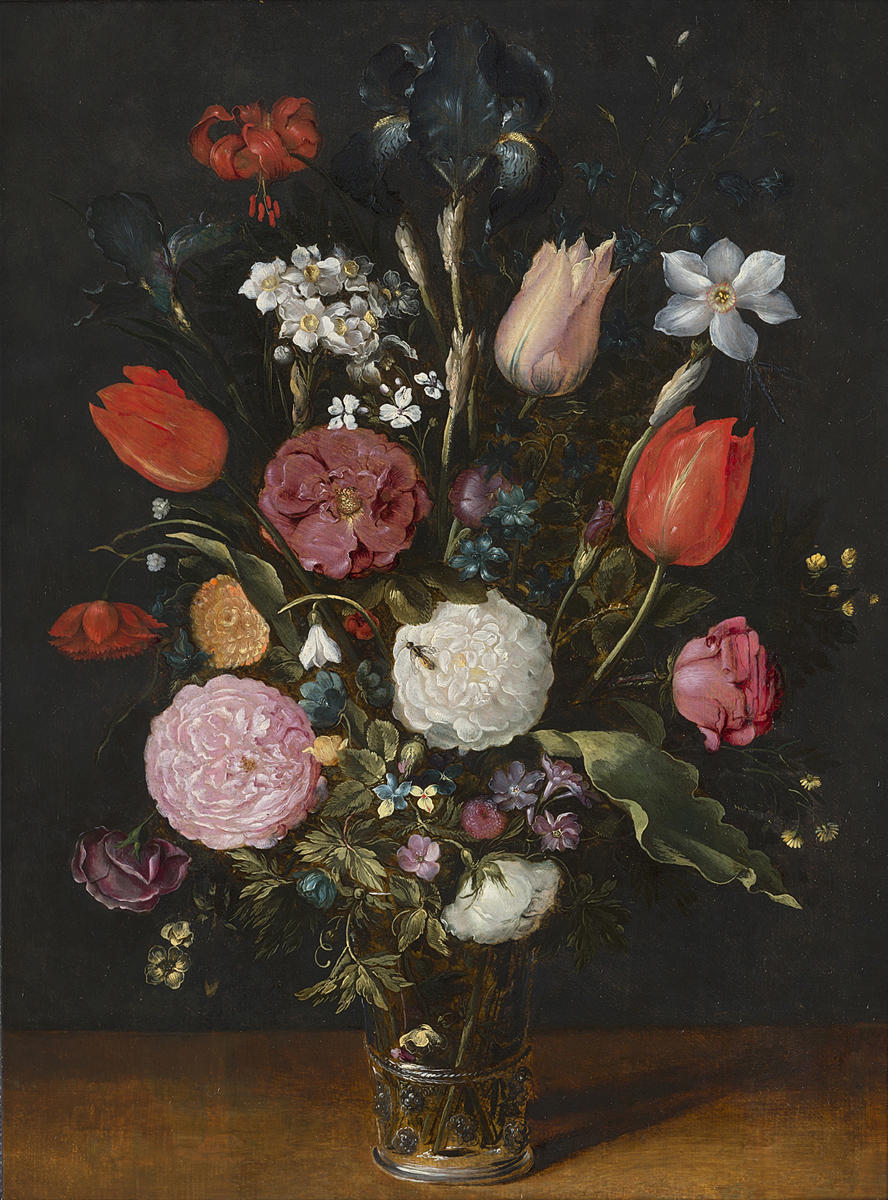
Attr. to Jan Brueghel II and Studio
(1601 – Antwerp - 1678)
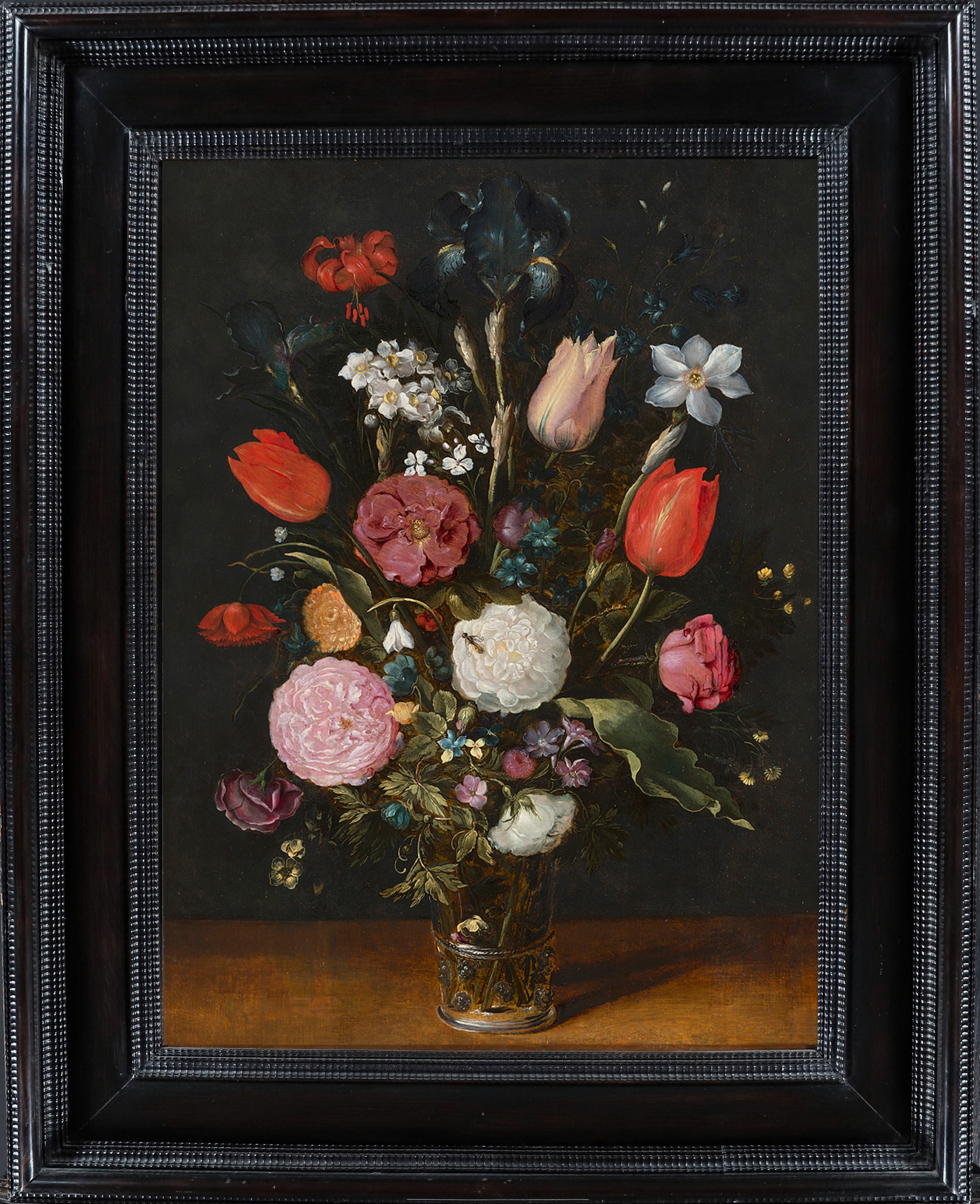
“Bouquet of Flowers in a Glass Vase”
Oil on panel: 49 x 36,5 cm
"*" indicates required fields
Notes
In this painting we see a symphony of shapes and colours; daffodils, tulips, pinks, and roses are arranged in a hand-blown glass vase. This painting was inspired by the original work of Jan Brueghel I (1568-1625), created c. 1610 and currently in the collection of the Prado Museum in Madrid, inv. no. P001423. Jan Breughel II possibly made this painting between 1610-1622 in the studio of his father, before he travelled to Italy.
Although the traditional interpretation of these vases of flowers alludes to vanity and the transience of earthly existence, Brueghel’s stand out for their ability to capture the beauty of the visible world, appealing to aesthetic enjoyment rather than to moral reflection.
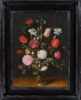
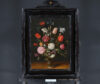
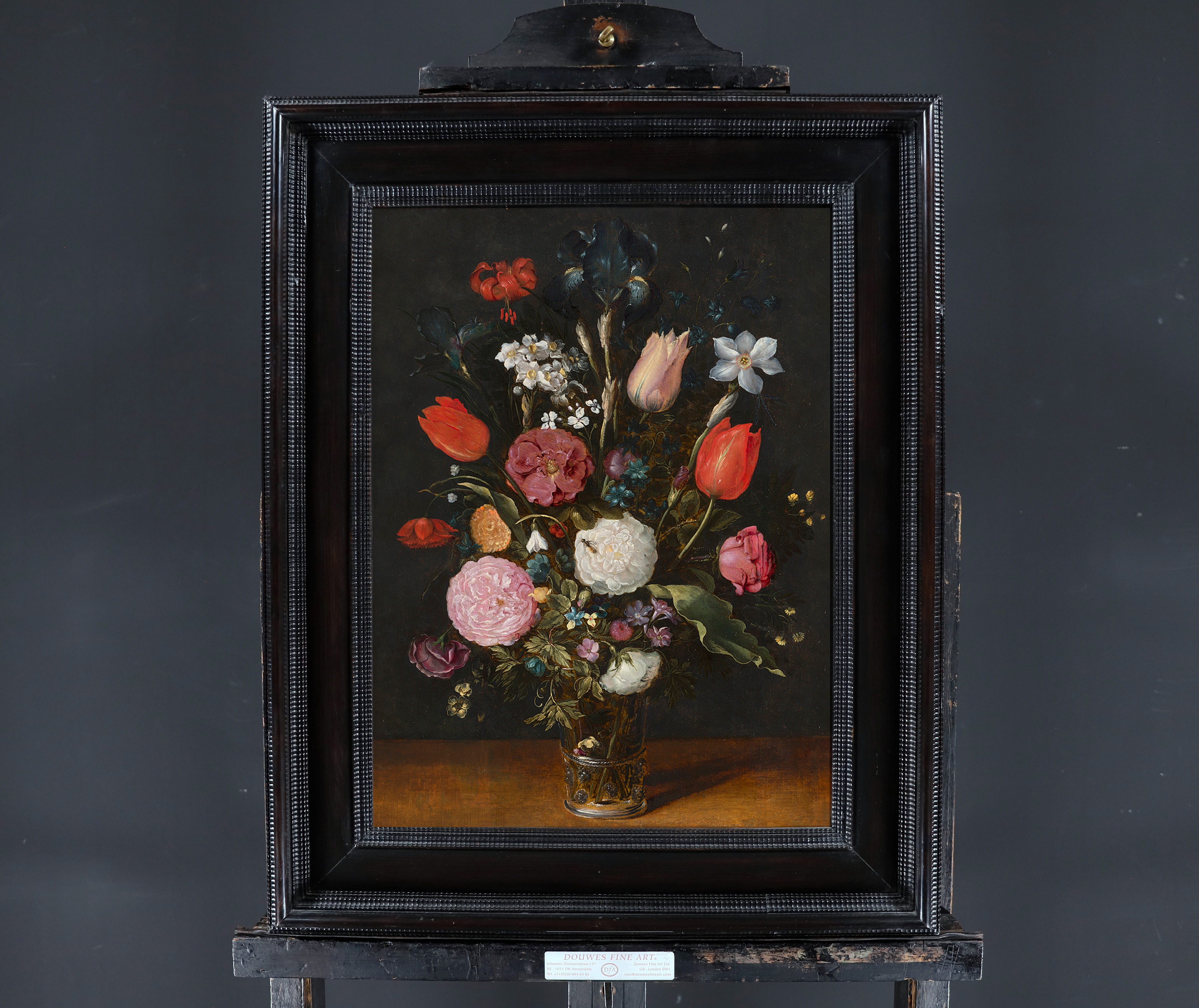
Along the left of the painting a small strip of circa 3 cm was added a long time ago, probably to centre the flower piece. The frame was adjusted accordingly. But the added strip could be covered in the frame in such a way that only the original composition shows, creating a fascinating a-symmetrical effect This is a matter of personal taste.
Jan Brueghel the younger was trained by his father and spent his career producing works in a similar style. He produced landscapes, allegorical scenes, flower pieces and he also copied works by his father.
Jan was travelling in Italy when his father died of cholera and he returned to take control of the Antwerp studio. In 1626 he married Anna-Maria Janssens, daughter of Abraham Janssens. He was made dean of the guild of Saint Luke in 1630. In the same year he was commissioned by the French court to paint Adam cycle. In the following years, he also produced paintings for the Austrian court and worked independently in Paris before returning to Antwerp in 1657.
He collaborated with a number of prominent artists, including Rubens, Hendrick van Balen, Adriaen van Stalbemt, David Teniers the younger. His pupils were his sons Abraham, Philips and Jan Pieter, his nephew Jan van Kessel, and his younger brother Ambrosius.
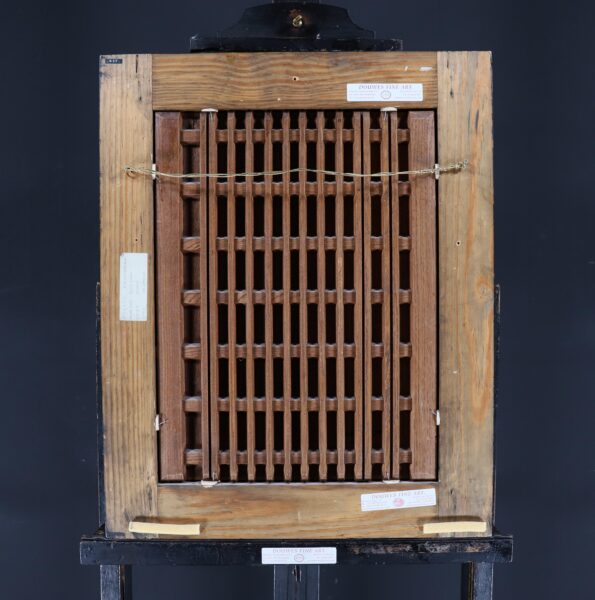
Provenance
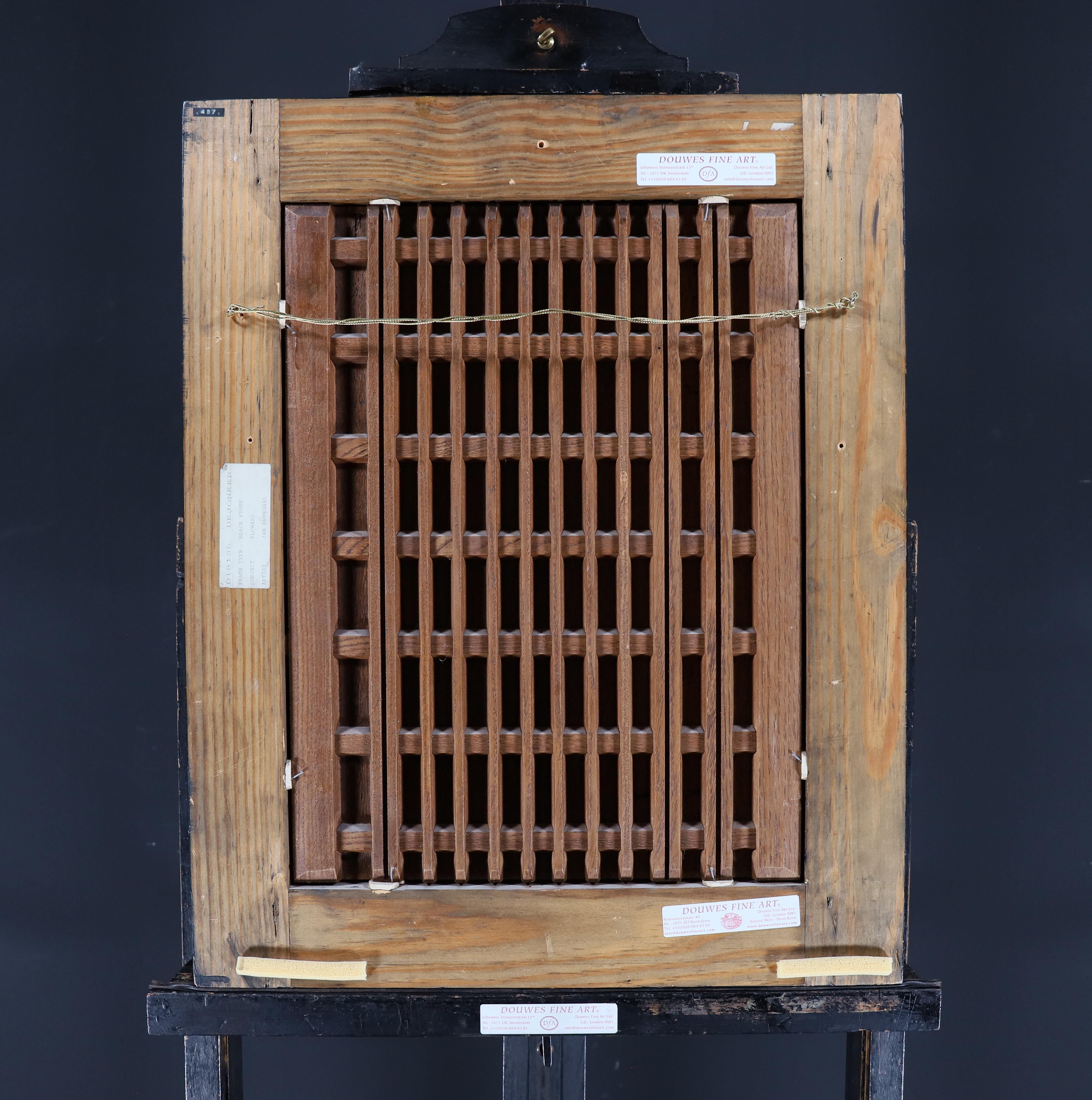
probably with de Jonckheere
from a Swiss private collection
Douwes Fine Art, Amsterdam
Inder Rieden Collection, London, 2014
Expertise
We are grateful to Fred Meijer from the RKD for confirming the attribution (08 August 2014).