
Rembrandt Harmensz. van Rijn
(Leiden 1606-1669 Amsterdam)
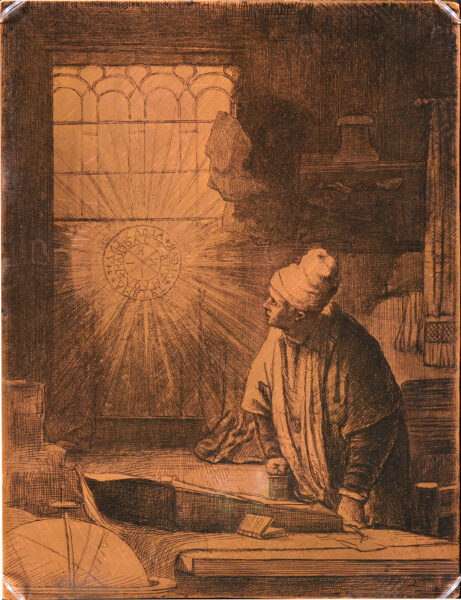
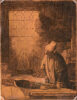
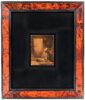
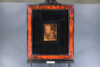
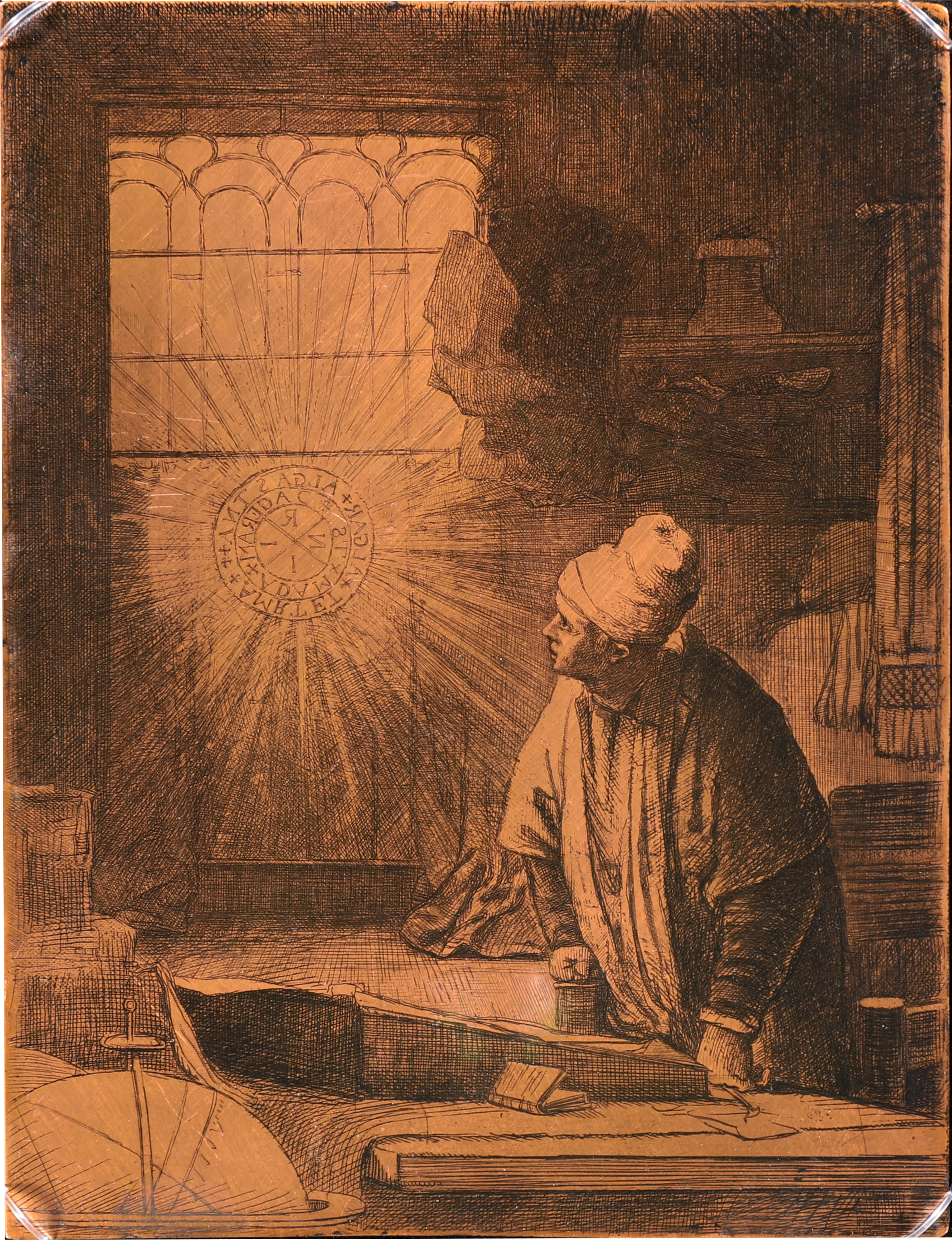
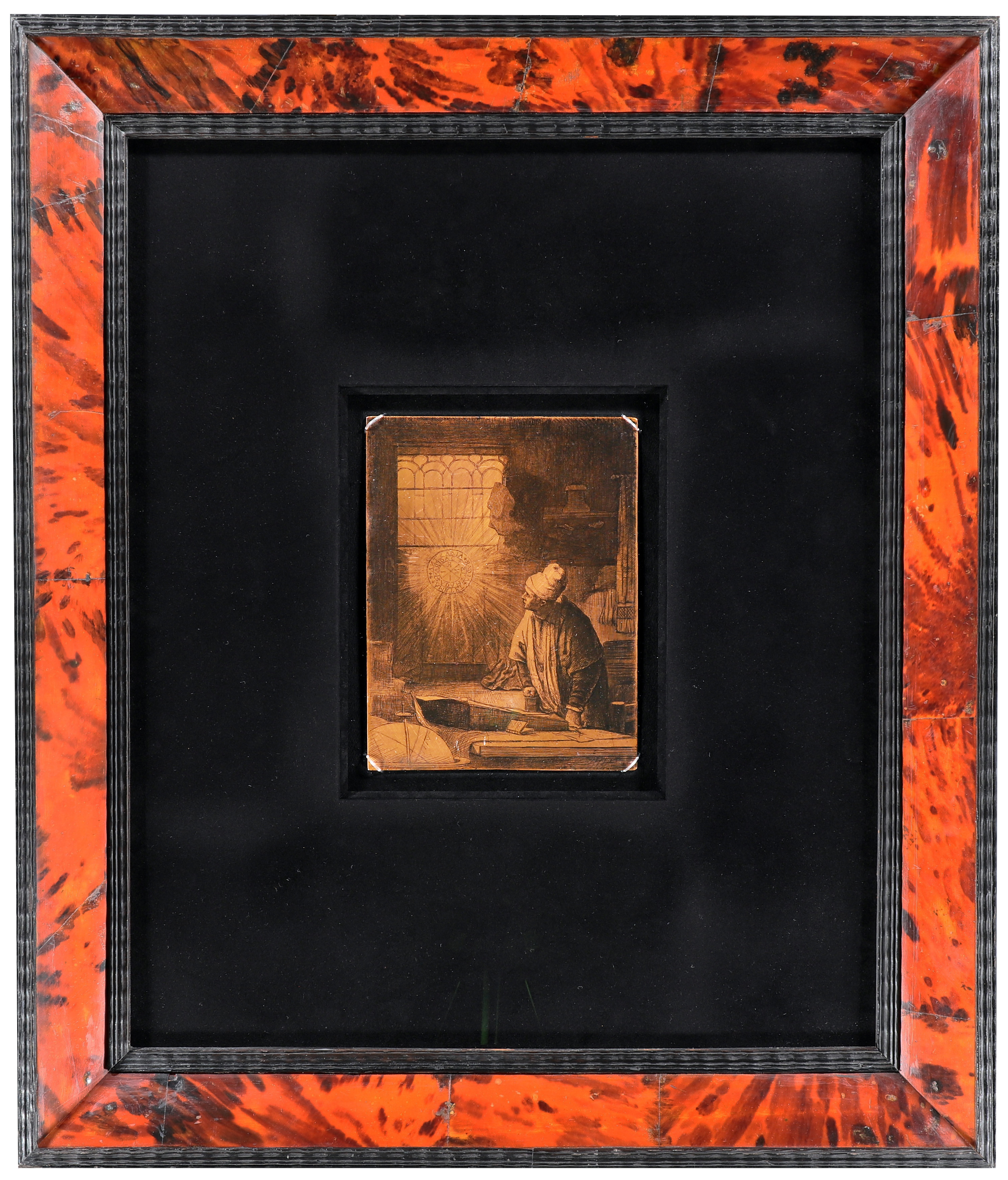
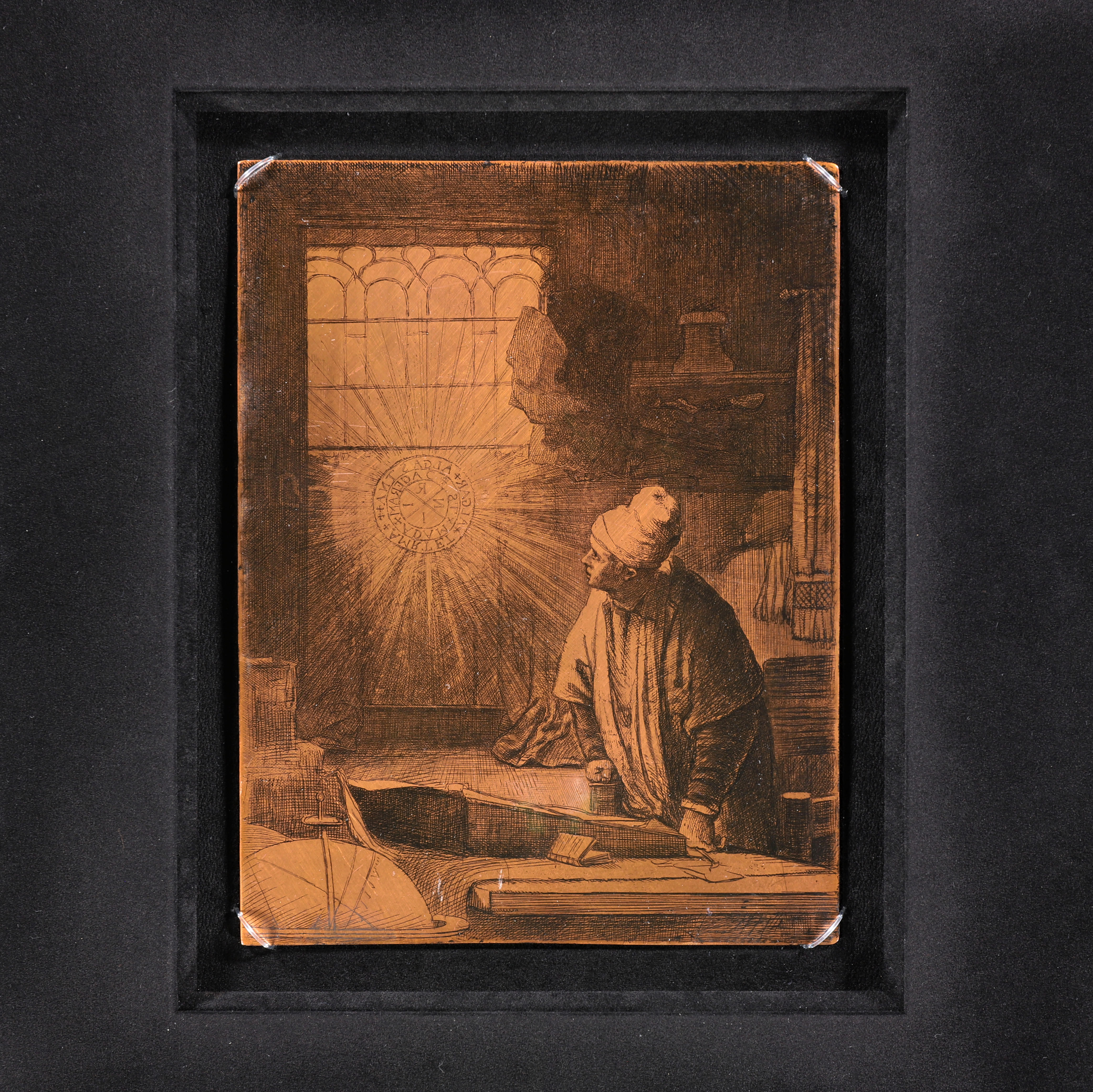
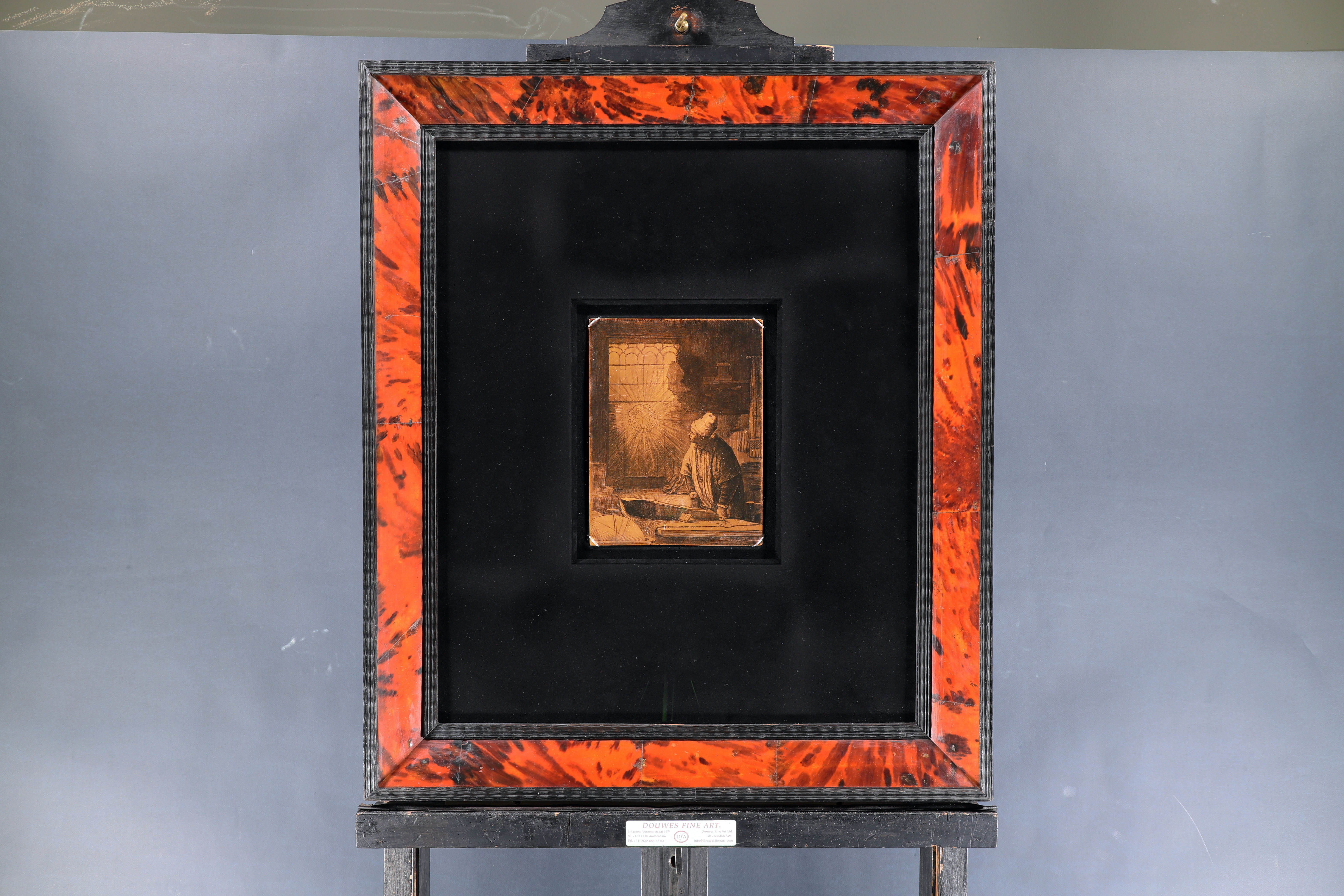
“A Scholar in his study (‘Faust’)”, c. 1652
Also known as ‘Dr. Fautreius
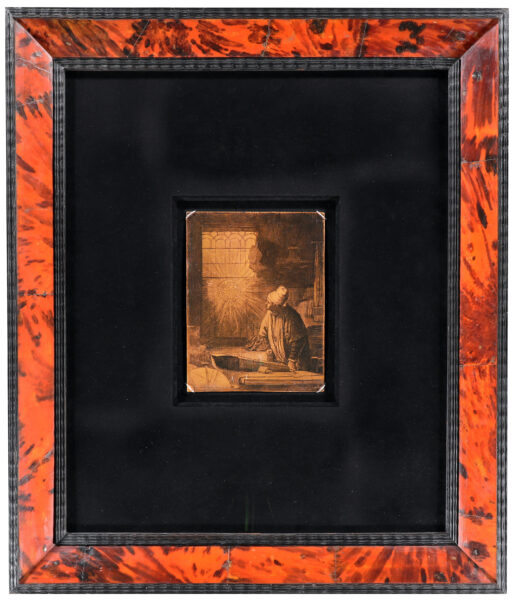
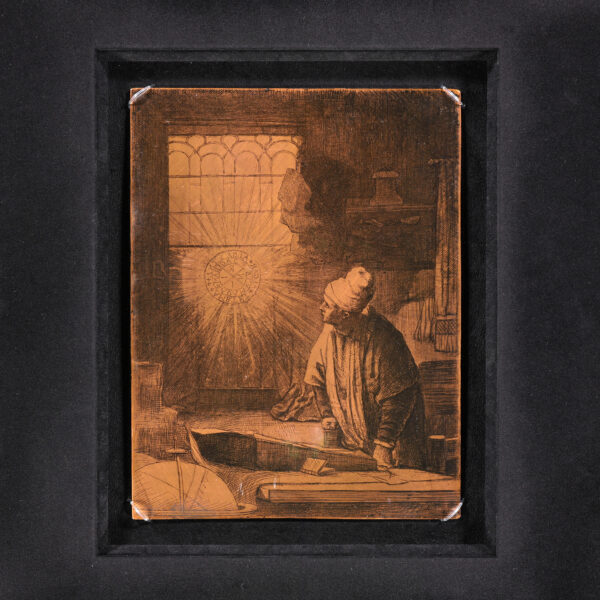
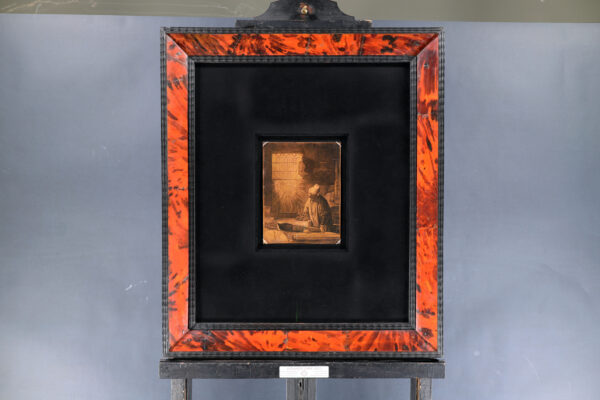
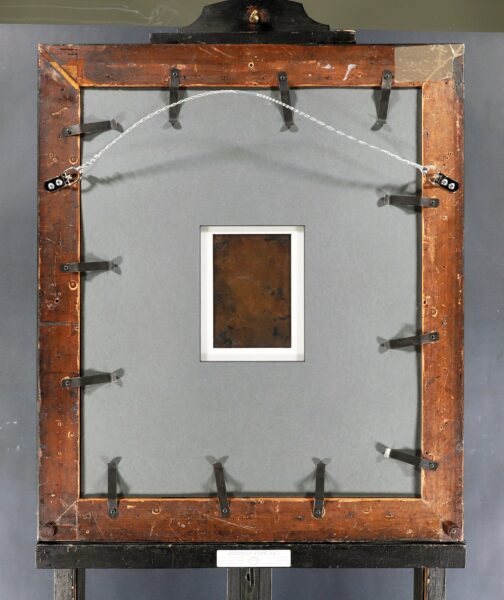
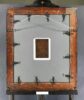
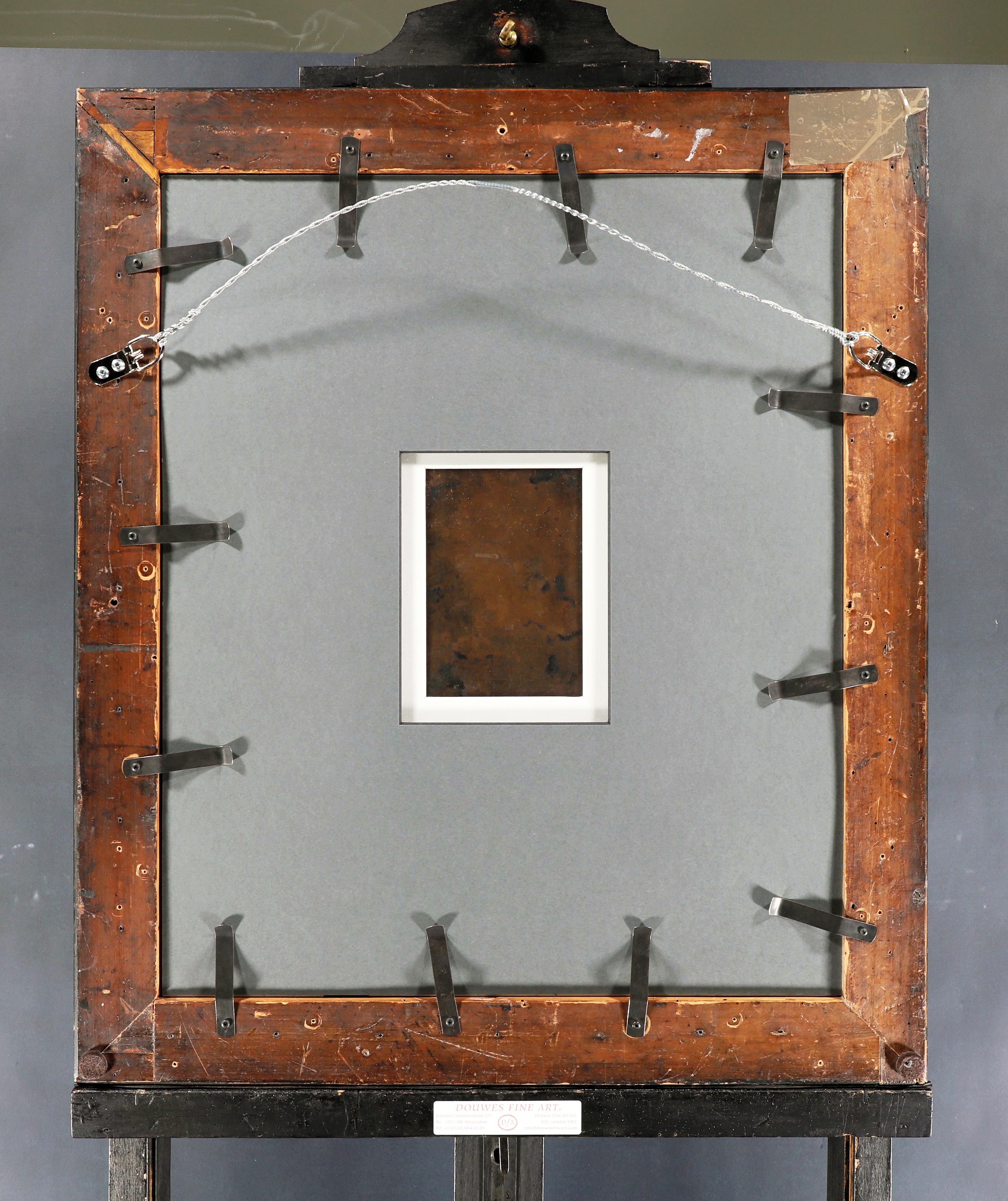
Original copperplate; 21 x 16 cm, ca. 3 mm thick
"*" indicates required fields
About the Etching
This is one of Rembrandt’s most puzzling and intriguing prints, as its exact subject is a mystery. Although it is most often known as Doctor Fautreius or Faust. It shows an elderly scholar in his study, transfixed by the apparition of a blazing disc of light enclosing a series of letters. The scene may represent an alchemist. Although nicknamed ‘Faust’, it does not accord with any passage in Marlowe’s original ‘Dr Faustus’ (c. 1587). The shining disc also remains unexplained, although the letters ‘INRI’ match the inscription placed over Christ’s head during the crucifixion (Iesus Nazarenus, Rex Iudaeorum). The scene possibly shows an allegory of faith on how Rembrandt interpreted the story of the legend Faust; the letters surrounding the disc are intended to be indecipherable, reminding the learned scholar that human knowledge is limited and ambiguous, in contrast with the clarity of divine wisdom. This makes sense according to the Faust of early books—as well as the ballads, dramas, movies, and puppet-plays which grew out of them—where he is irrevocably damned because he prefers human to divine knowledge: “he laid the Holy Scriptures behind the door and under the bench, refused to be called doctor of theology, but preferred to be styled doctor of medicine” (Walter Alison Philips, ‘Faust’, 1911).
The Story of Faust
Faust is the protagonist of a classic German legend, based on the historical Johann Georg Faust (c. 1480–1540), who was a German itinerant alchemist, astrologer and magician of the German Renaissance. The erudite Faust is highly successful yet bored and depressed with his life as a scholar. After an attempt to take his own life, he calls on the Devil for further knowledge and magic powers with which to indulge all the pleasure and knowledge of the world. In response, the Devil’s representative, Mephistopheles, appears. He makes a bargain with Faust: Mephistopheles will serve Faust with his magic powers for a set number of years, but at the end of the term, the Devil will claim Faust’s soul, and Faust will be eternally enslaved. Mephistopheles is a difficult servant, and Faust is challenged by his tricks, lies, and temptations. Despite their adventures, Faust accomplishes little or nothing of substance, wasting his opportunity with frivolities and indulgences offered up by the demon. Faust tries to revoke his pact under the burden of growing disgrace and damnation, but is dominated by Satan and his own doubts.He is irrevocably corrupted and believes his sins cannot be forgiven; when the term ends, the Devil carries him off to Hell. However in Goethe’s later rendition of the story (c. 1790), Faust is saved by God via his constant striving. Today, “Faust” and the adjective “Faustian” imply a situation in which an ambitious person surrenders moral integrity in order to achieve power and success for a limited term.
Literature
Bartsch 270; Hind 260; White-Boon 270;
‘The New Hollstein Dutch’ (Hinterding/Rutgers), 2013, no. 270, in its last state (of seven)
with Nowell-Usticke (1967): Copperplates are classified as unobtainably rare.
Provenance
Rembrandt van Rijn, Amsterdam, c. 1652;
Clement de Jonghe 1679: as ’33 practiseerende alchemist’;
Unknown owner c. 1700 (two dots added);
Pieter de Haan, auctioned in 1767, lot 63;
Sold for fl. 6 to Fouquet;
Sold to Claude-Henri Watelet 1786, lot 363;
Rembrandt plates en bloc to Basan for 500 Livre, Pierre-Francois Basan (died 1797);
by descent to Henry-Louis Basan (his stock list nr. 1434);
sold c. 1809 to Auguste Jean (his stock list 1810, died 1820);
by descent to his widow, Veuve Jean, auctioned 1846, lot 540;
Bought by Auguste Bernard (retired 1876);
by descent to his son, Michel Bernard;
His Sale in 1906 to Alvin-Beaumont;
who sold it in 1937 to Robert Lee Humber (died 1970);
his heirs, sold in 1993 through Artemis London in association with R.M. Light;
Private collection, The Netherlands.
With Douwes Fine Art, Amsterdam
Exhibitions:
- Stedelijk Museum, Amsterdam, ‘Harry Mulisch Zielespiegel’ Exhibition, 7 dec t/m 14 feb 1998.