
Rembrandt Harmensz. van Rijn
(Leiden 1606 – 1669 Amsterdam)
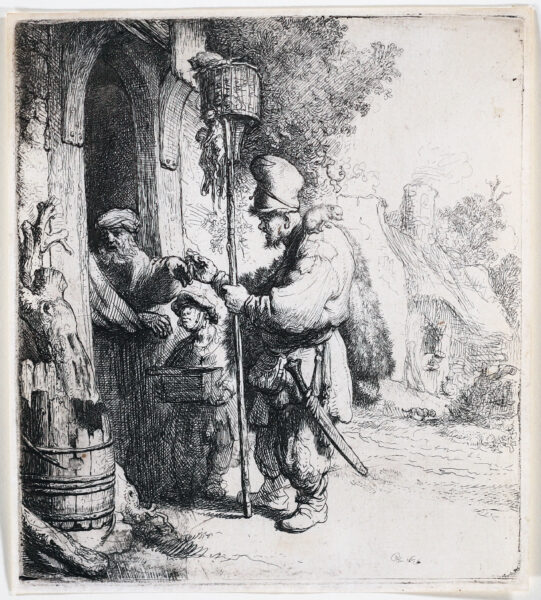
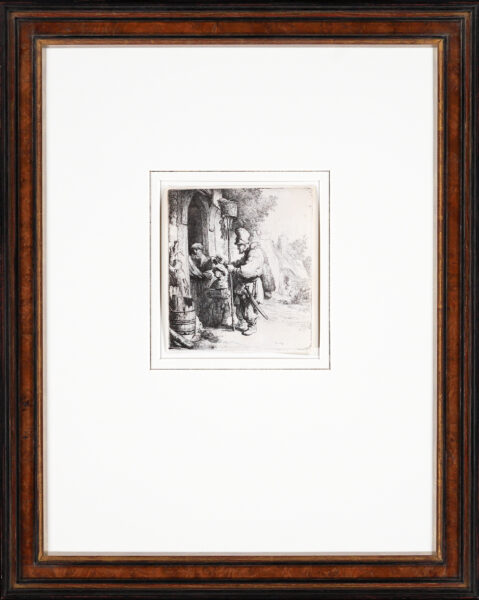
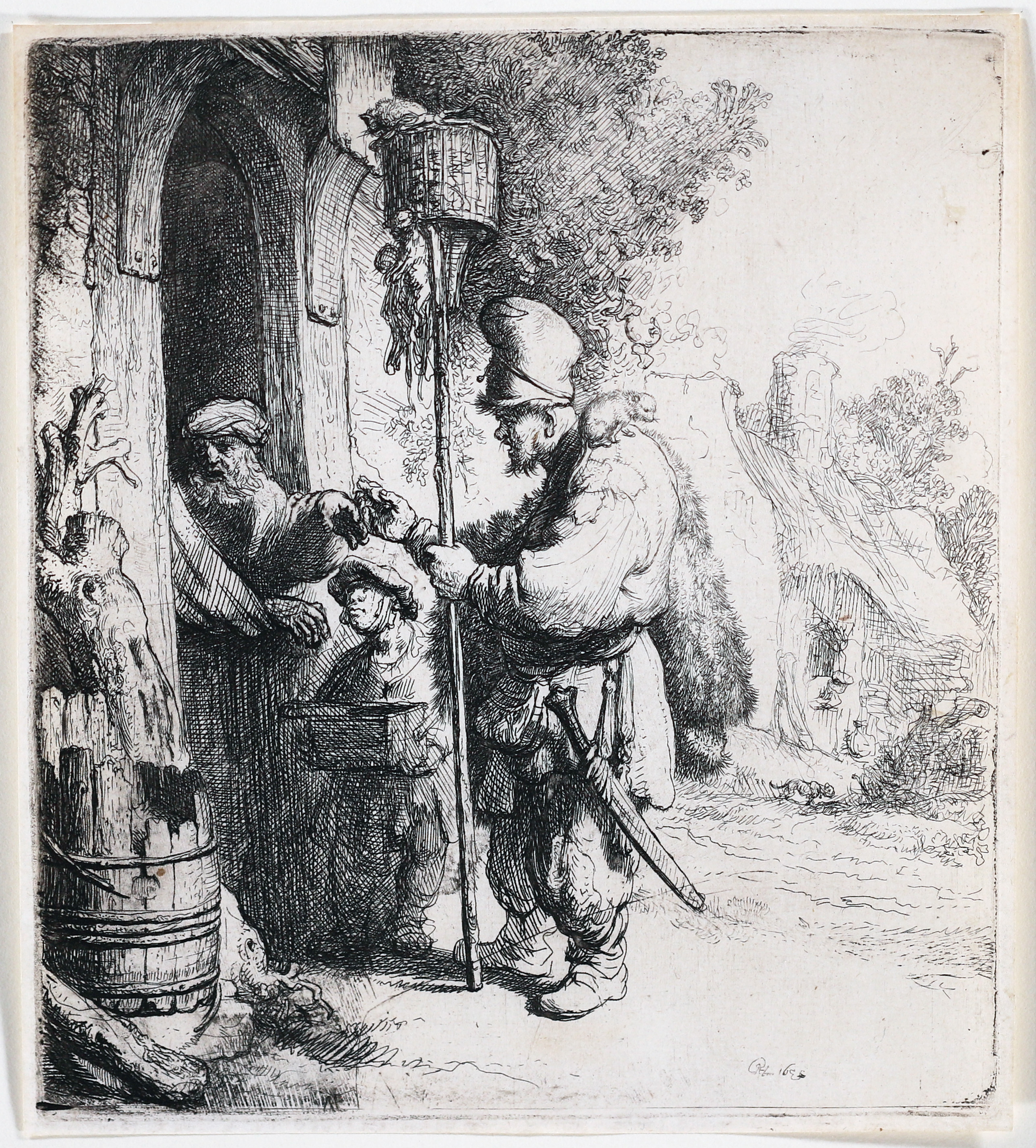
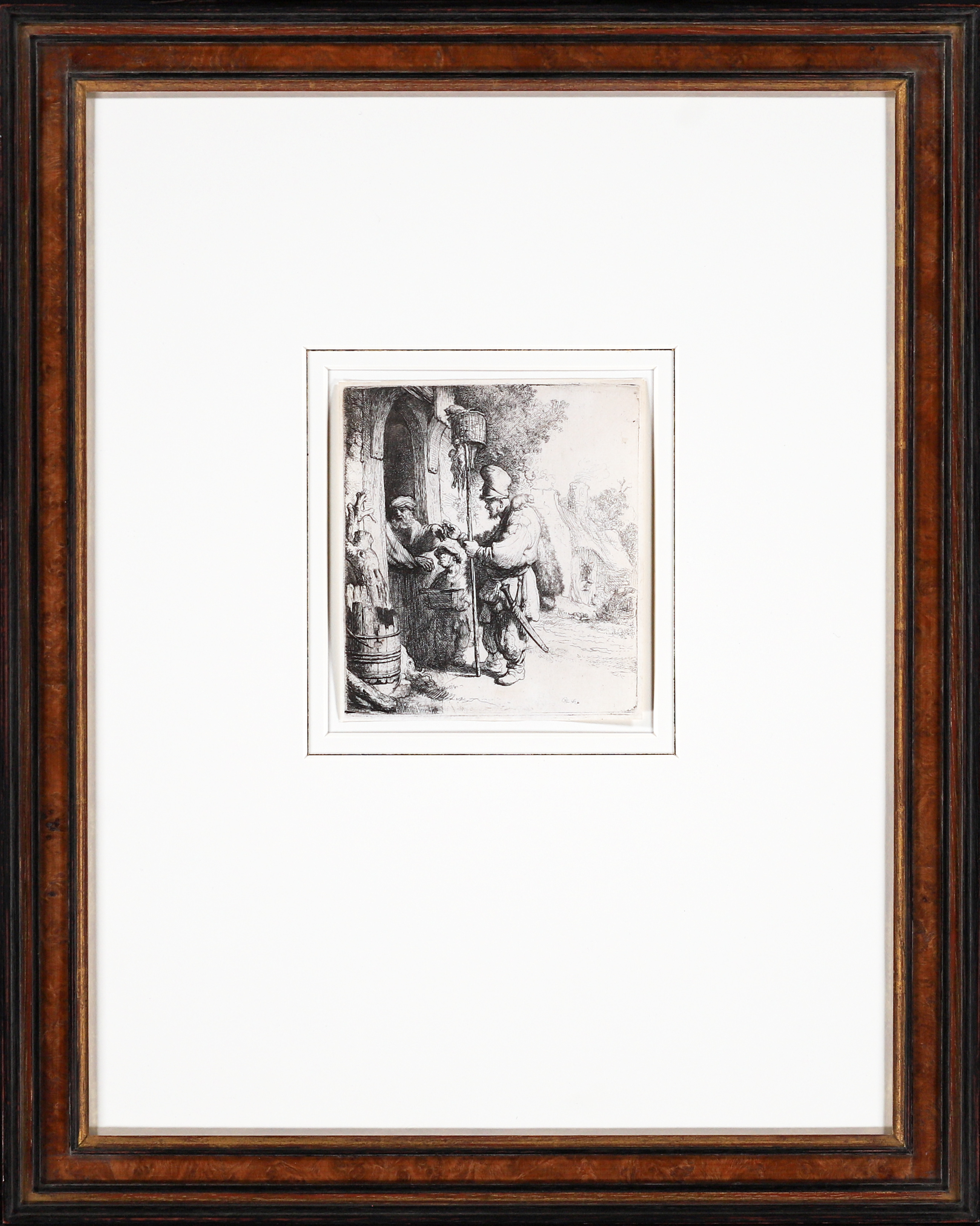
“The Rat Catcher”, 1632
monogrammed and dated: RHL 1632 (the last two numbers in reverse)
etching: 14,4 x 12,8 cm
"*" indicates required fields
Notes
As one of the towering figures in the history of art, Rembrandt, a miller’s son from the university town of Leiden, was an artist of unmatched genius. Equally gifted as a painter, printmaker, and draftsman, Rembrandt proved himself to be as skillful at making portraits as he was at creating religious and mythological narratives. His landscapes are just as remarkable as his rare still lifes and subjects detailing everyday life.
Widely recognized as the greatest practitioner of the etching technique in the history of art, Rembrandt created 300 prints that constitute a body of work unparalleled in richness and beauty.
This print is very detailed and in excellent condition. The third state is the only available, as the first and second were trial impressions and only three are known in Dresden, Paris and London. The print was extremely popular in the 17th century. The plate, however, did not survive, and good impressions such as this one are extremely rare.
On the top of a pole, the rat catcher carries a basket containing live rats. As proof of the efficiency of the poison being peddled, dead animals are hanging from under the basket. The rat catcher himself looks rather impressive in his thick coat, wearing a tall cap, with big strong hands, a bearded and expressive face, and armed with a sabre hanging from his belt. To add to his imposing figure, a sizeable rat sits happily on his left shoulder. The delicate lighting in this etching enhances the overall velvet tonality. The young boy, standing between the rat catcher and his costumer, is holding a large box possibly containing the poison. The subtle use of light on his face gives an attractive charm to this scene. The elderly customer wearing a small turban, is half hanging over the door hatch. It almost seems as if he is talking back to someone in the house, deliberating whether they should make use of the rat catcher.
Literature
Bartsch 121; New Hollstein 111: third state (of III).
With Nowell-Usticke(1967): R ‘A scarce plate’
Provenance
- Private collection, USA
- Sotheby’s London
- Private collection, The Netherlands