
Rembrandt Harmensz. van Rijn
(Leiden 1606-1669 Amsterdam)
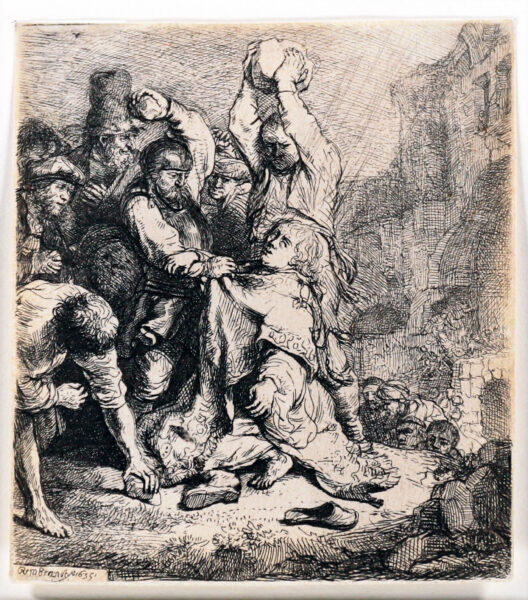
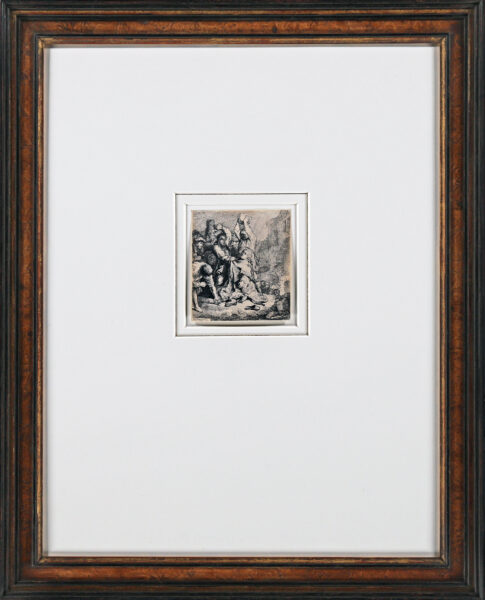
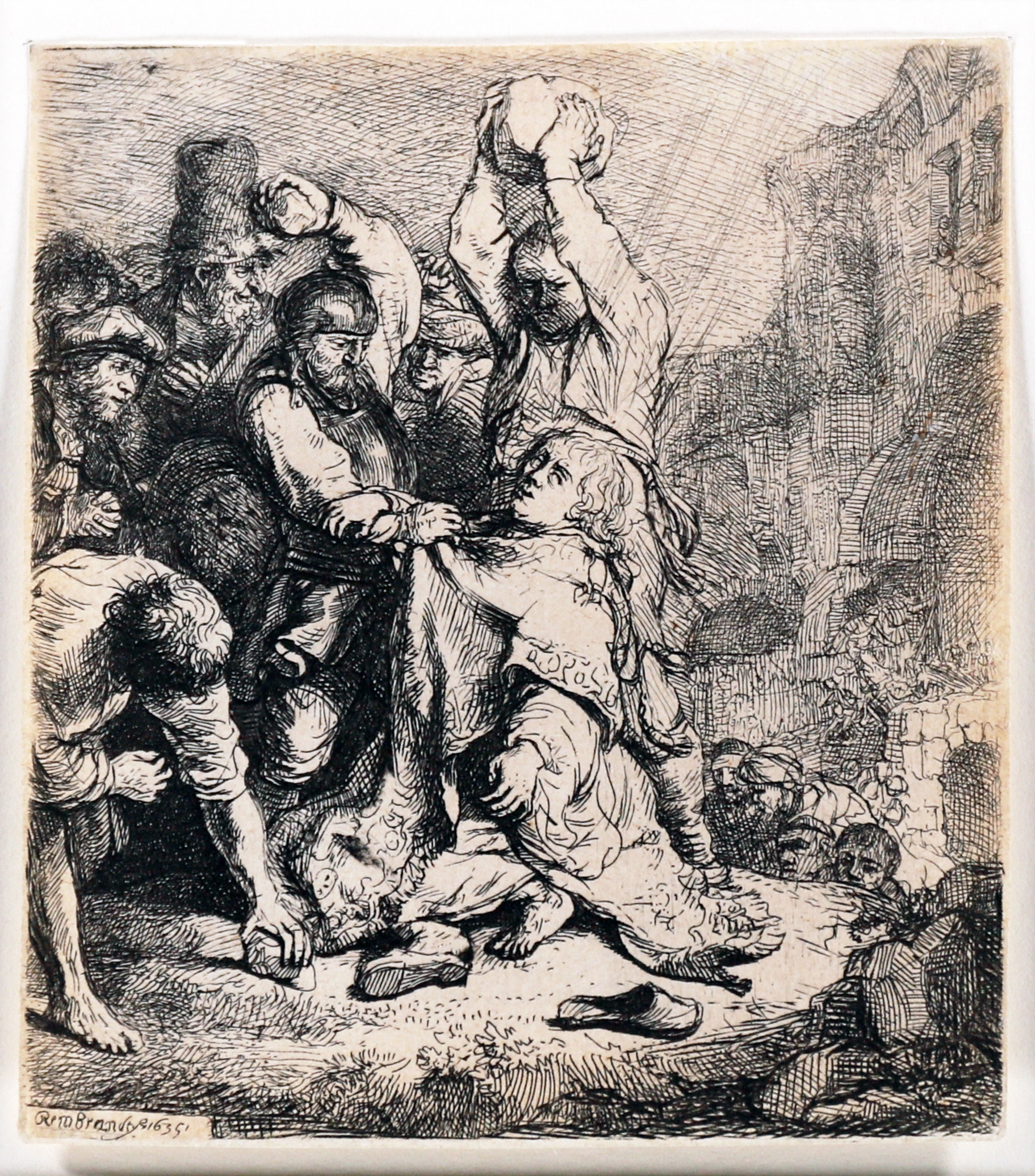
“The Stoning of St. Stephen”, 1635
etching with touches of burin: 9,5 x 8,5 cm
signed and dated lower left: Rembrandt. f 1635.
"*" indicates required fields
Notes
Rembrandt had chosen the martyrdom of St Stephen as the subject of his first recorded painting, completed in 1625 at the age of 19 (now in the Musée des Beaux-Arts, Lyon). Some ten years later, he reprises the theme in this dramatic etched portrayal of the saint’s murder by stoning. According to the Acts of the Apostles from the Bible, Stephen was a disciple of Jesus and deacon in the early Christian church who was assigned to distribute food and charities to widows and needy members of the community. His teachings espoused Jesus as saviour and his arguments against traditional Jewish beliefs offended the authorities of certain synagogues, who falsely accused him of preaching against the Temple (blasphemy) and sentenced him to death. Considered the first martyr of Christianity, Stephen is compassionate to the end, imploring God to forgive his murderers of their sins.
Challenging traditional forms of historical narrative, Rembrandt interpreted the events of that day through visual clues and fragmented narratives, whilst incorporating images of modern-day political martyrdom as a powerful reminder of the ongoing cost of freedom: Stephen’s killers could pass for thugs you’d wouldn’t want to encounter in Amsterdam alleyways or canalboats.
Literature
Bartsch 97; The New Hollstein no. 140: First state (of IV)
Plate in existence, private collection, USA – with Nowell-Usticke (1967): C2
Provenance
- With the collector’s marks of the University Library of Cambridge (doublures sold by auction in 1878) (Lugt 2457);
- Paul Davidsohn (1839-1924?) (Lugt 654);
- according to annotation from the collection of Carlos Gaa (sold in auction in 1926);
- A. Lieberg (1898-1978) (Lugt 1681ter).
- Bubb Kuyper
- Private collection, The Netherlands