
Rembrandt Harmensz. van Rijn
(Leiden 1606-1669 Amsterdam)
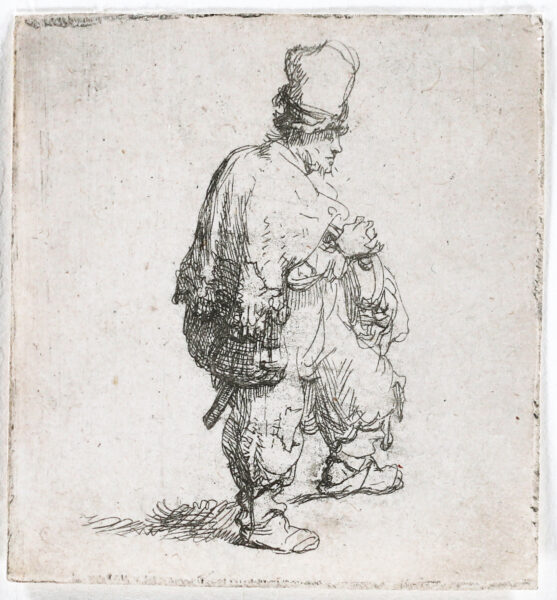
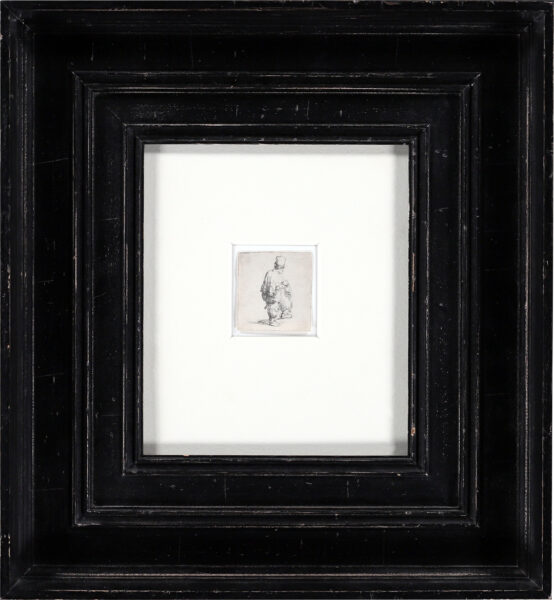
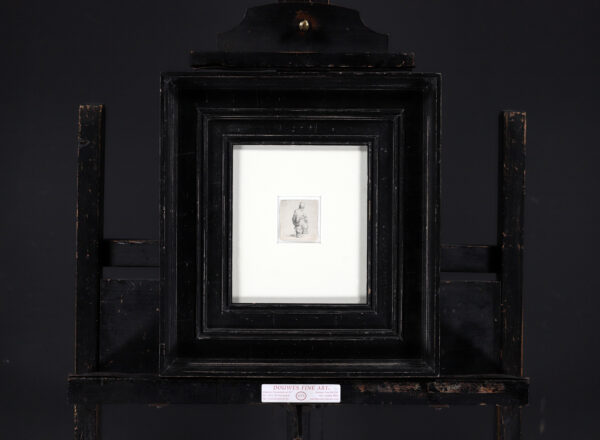
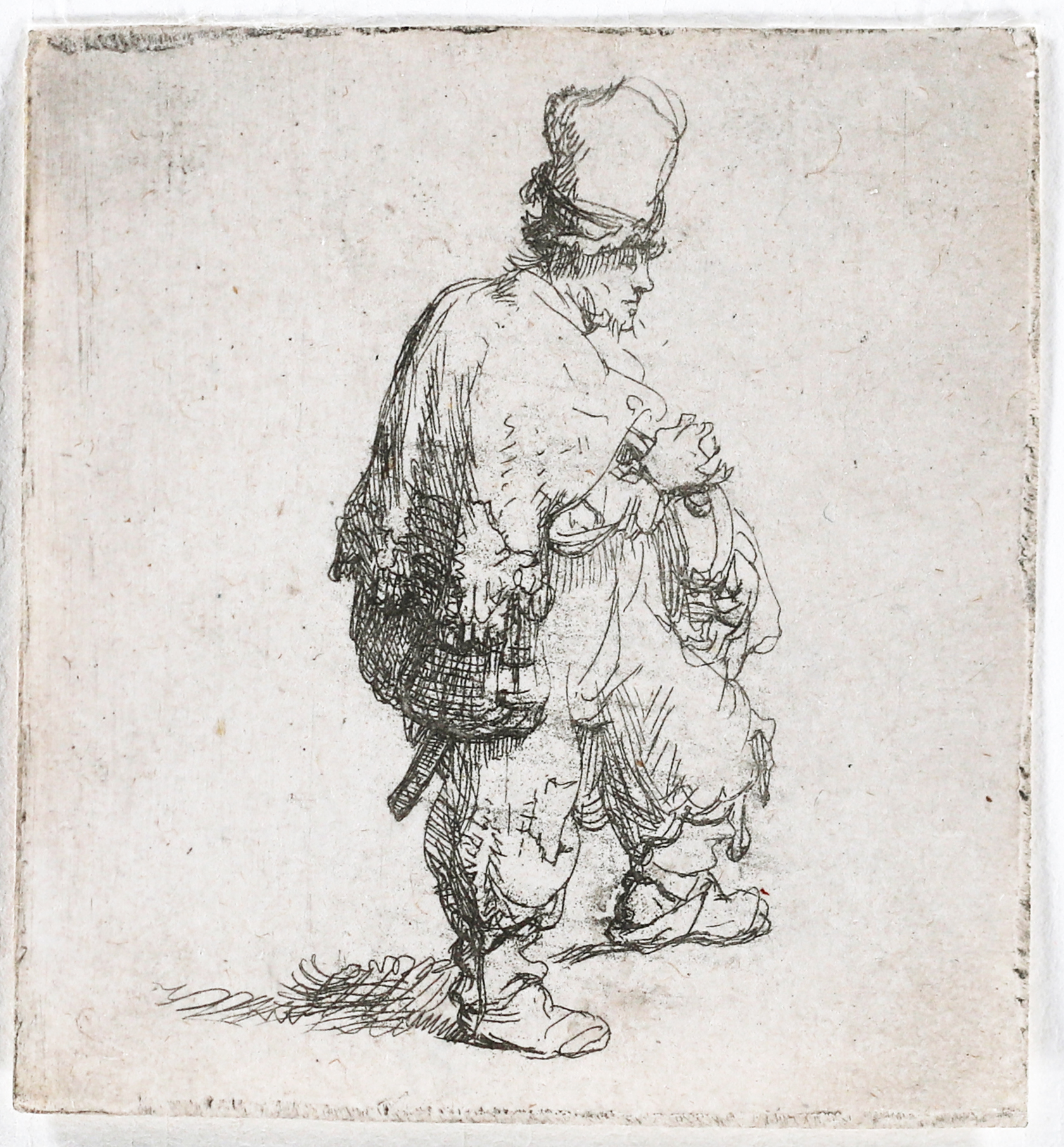
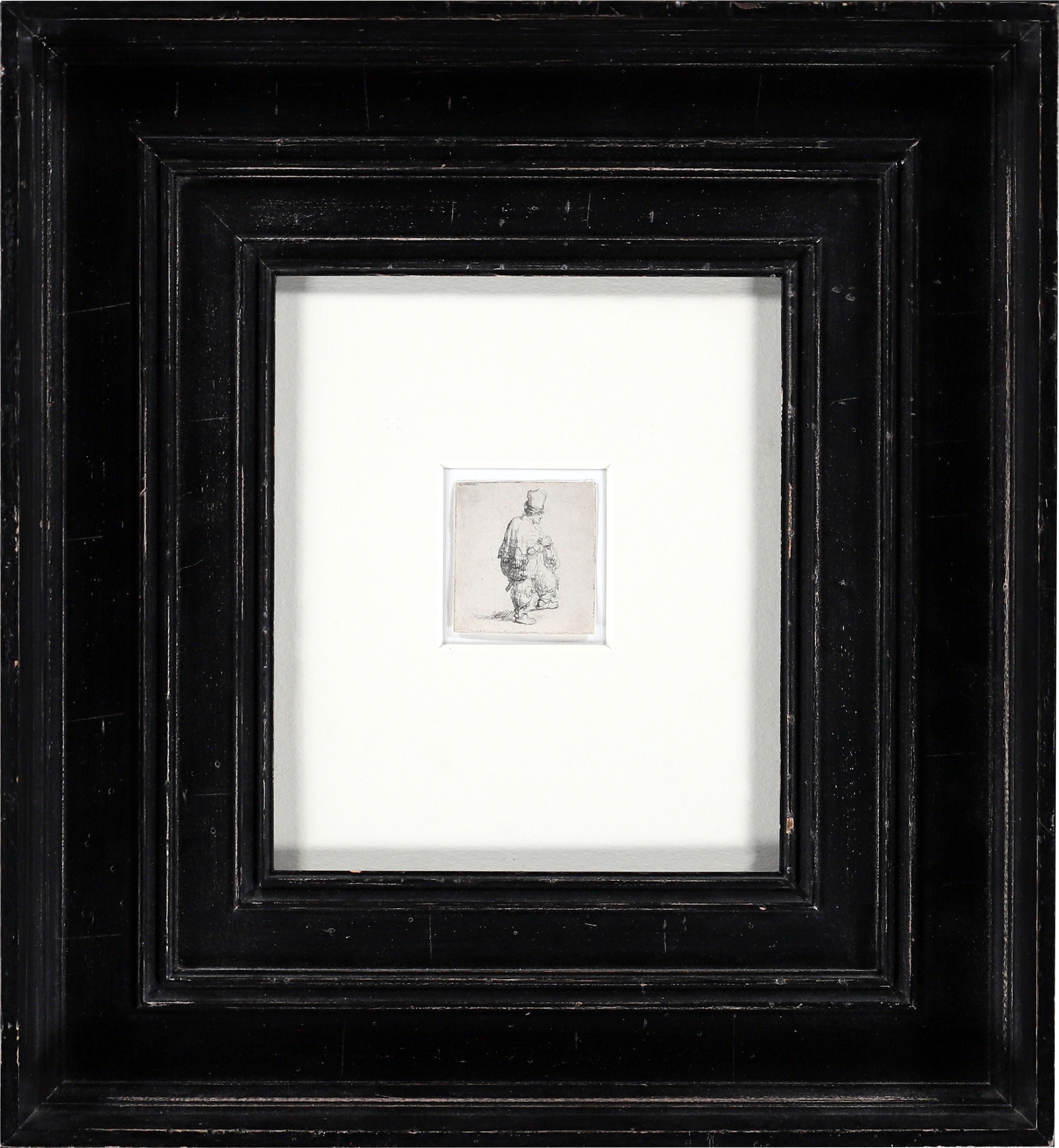
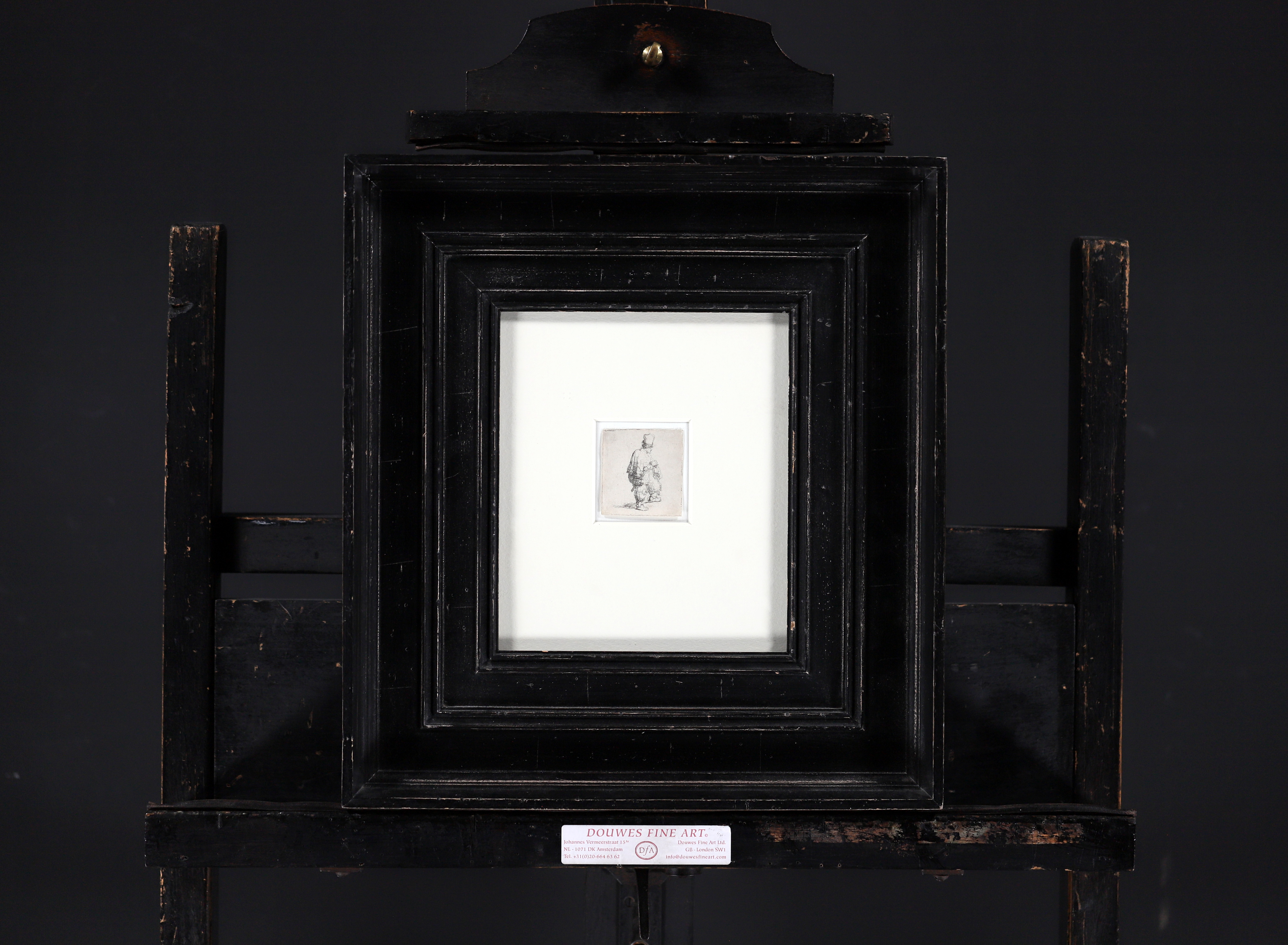
“A Standing Hurdy-Gurdy Player” (Polander with arms folded), c. 1631
Etching: 5,1 x 4,8 cm
RRR+ – An extremely rare, delicate little print!
"*" indicates required fields
Notes
Initially, Rembrandt was fascinated above all by beggars. Later, he also developed an interest in other colourful city folk, which he usually depicted in the same minuscule format. In six etchings in 1631, he portrayed a quacksalver in outmoded clothing, two Polish soldiers, a skater and two street musicians. This is one of the street musicians he portrayed.
The hurdy-gurdy is a medieval string instrument that produces sound via a hand-cranked, rosined wheel acting as a bow against strings. Most hurdy-gurdies have multiple drone strings, resulting in a sound similar to that of bagpipes or a barrel organ. This composition was previously thought to be a depiction of a Polander standing with his arms folded. However, J.P. Filedt Koks pointed out that it is more probable to be a beggar playing the hurdy-gurdy. Hence the name change in 1972.
This extremely rare small composition is most sought after by collectors, especially in the first state. We can only guess at Rembrandt’s deeper reasons for creating so many etchings of beggars. Scholars have often interpreted the series as a deeply felt commentary on social injustice and a gesture of solidarity with the poorest of the poor. Whatever the motivation may have been, it soon became clear that the public was delighted with this new genre.
Literature
Bartsch 140; The New Hollstein no. 75: First state (of II)
Plate not in existence – with Nowell-Usticke (1967):
RRR+ – An extremely rare, delicate little print!
Provenance
- Gerstenberg (Lugt Suppl. 1840c & Lugt Suppl. 2785)
- G.Boemer, Düsseldorf, Neue Lagerliste 22, 1958, no. 241;
- W. Lippisch, München;
- With Helmuth H. Rumbler Kunsthandlung, Frankfurt, 2006.
- Private Collection, United Kingdom