
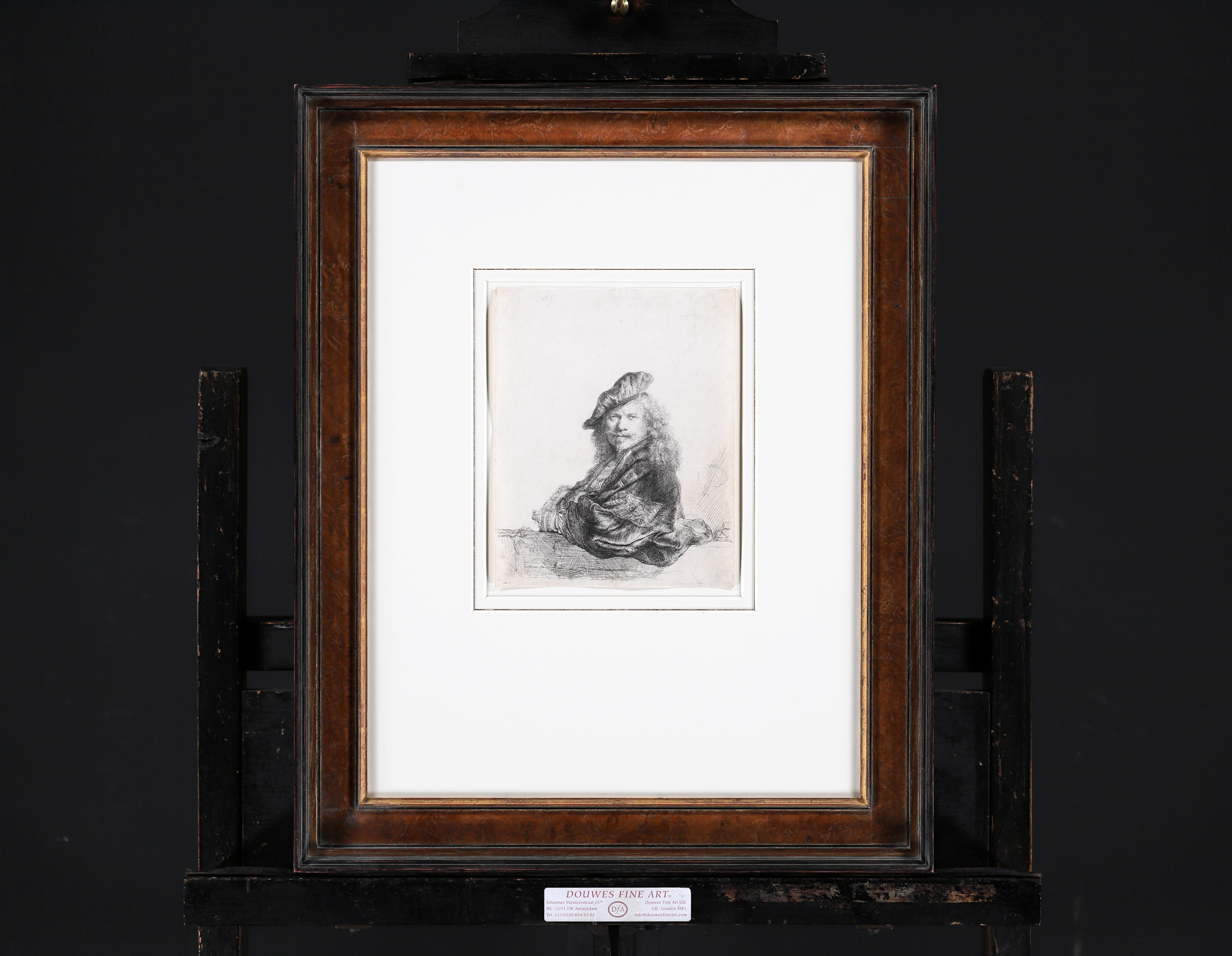
Rembrandt Harmensz. van Rijn
(Leiden 1606-1669 Amsterdam)
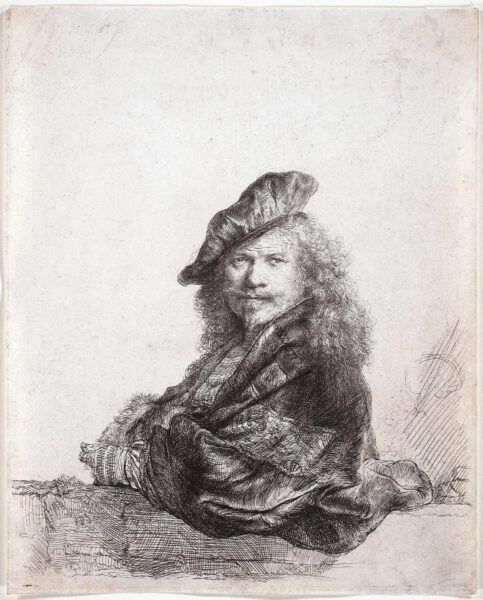
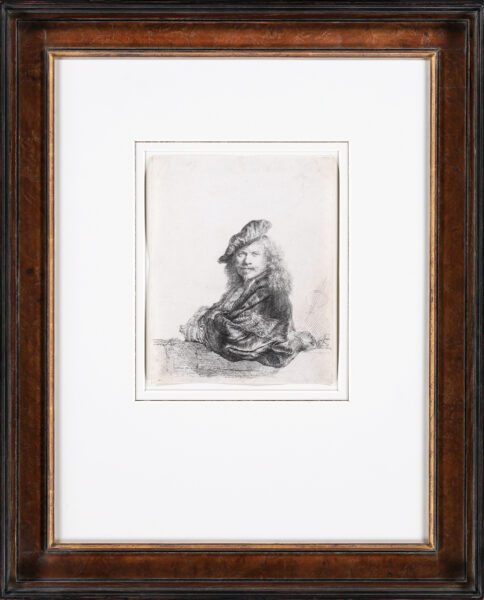
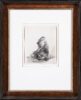
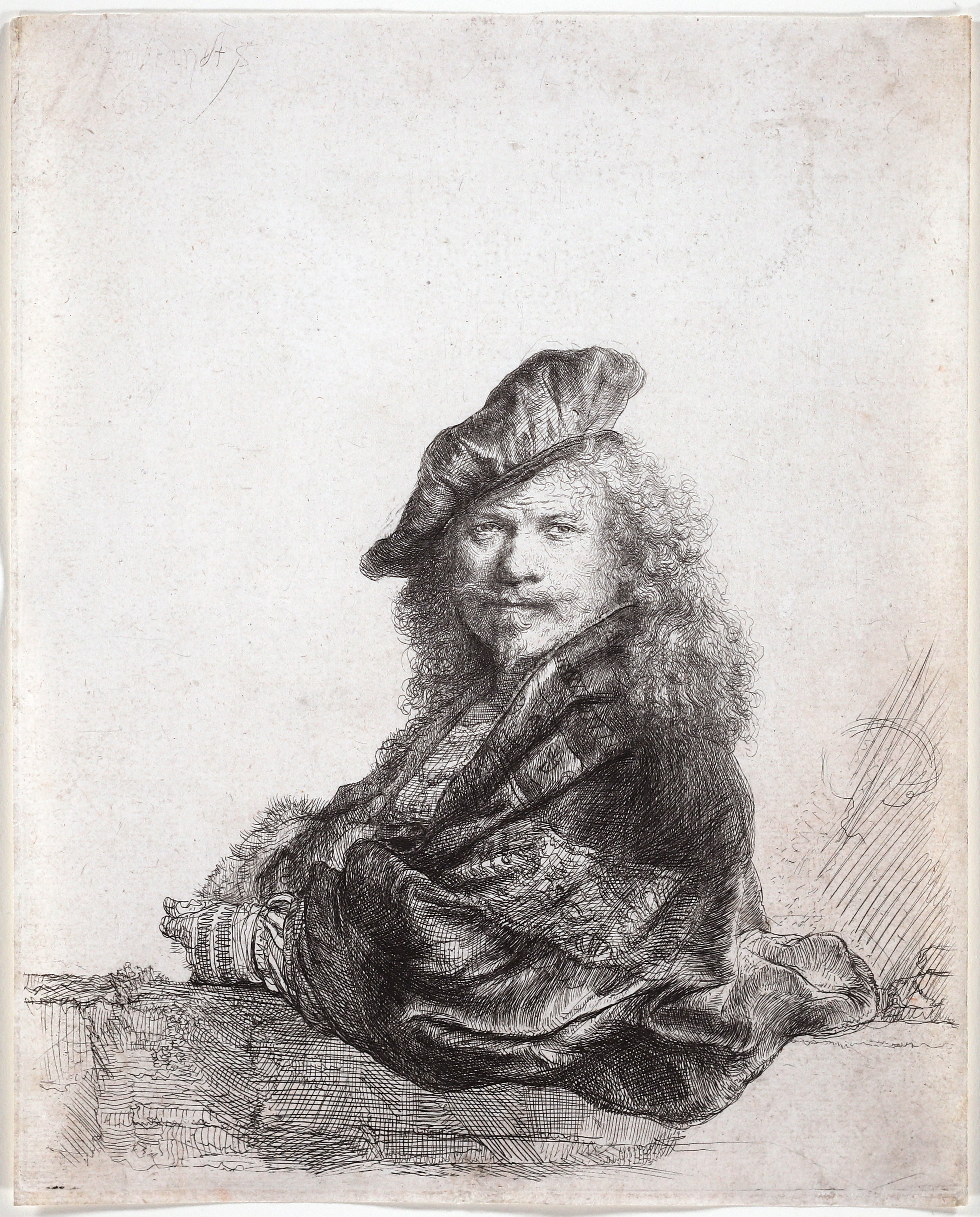
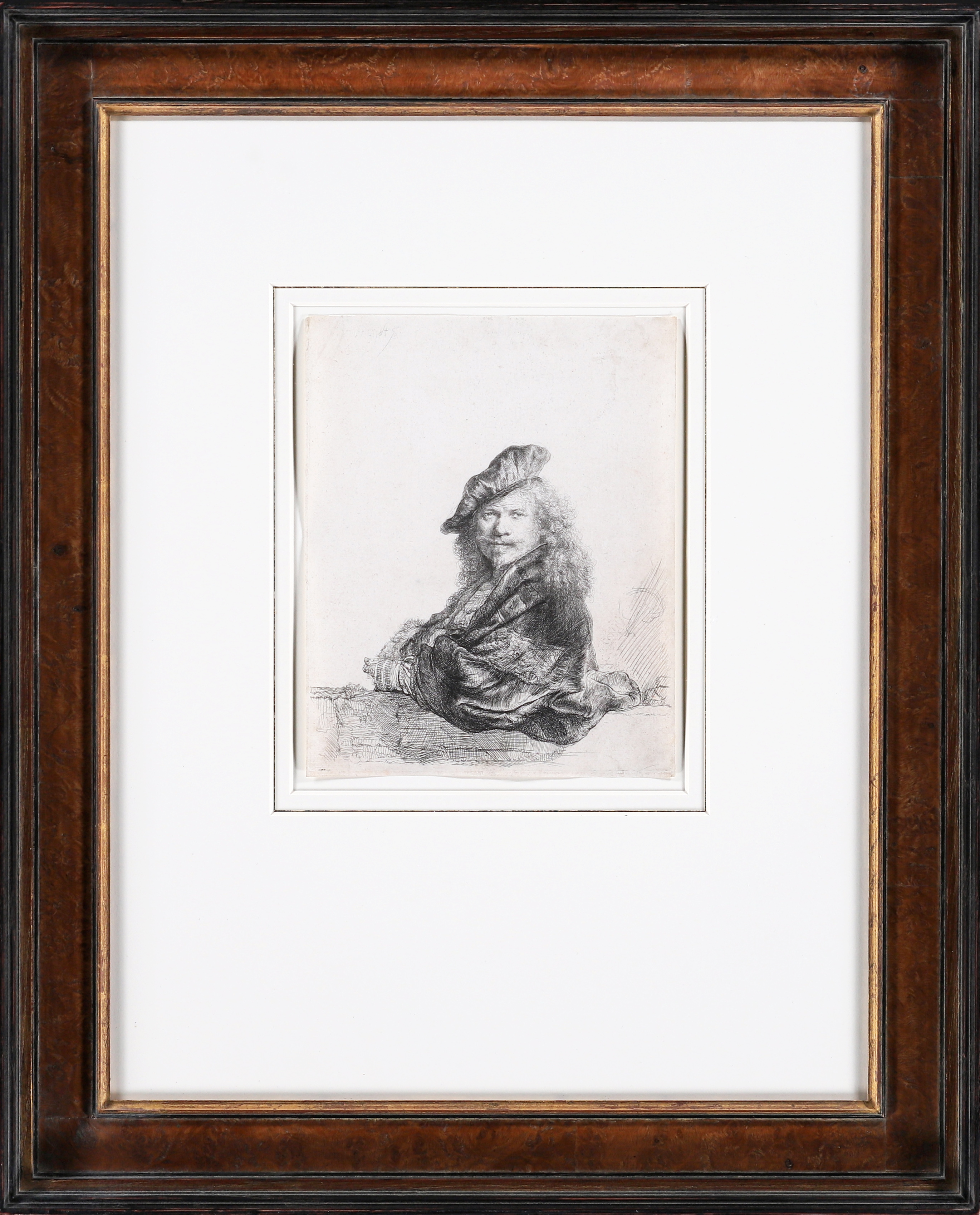
“Self-portrait leaning on a stone sill”, 1639
etching with touches of drypoint: 20,1 x 16,2 cm
signed and dated upper left: Rembrandt f | 1639.
"*" indicates required fields
Notes
Rembrandt’s etchings are remarkable for their high number of self-portraits (over 30 out of about 290). These are particularly collectible, perhaps due to the smaller number of states as well as the artist’s compelling and powerful presence. Unlike his stately religious scenes, or regal, posed portraits of others, which exhibit his careful and calculating brilliance as an etcher, Rembrandt’s self-portraits reveal him as an artist and a man. In them he assumes the role of the experimenting artist, approaching the most difficult of subjects – himself. These self-portraits are often described as ethereal and wistful for their notable contrasting areas of high and low etched space.
In 1639 Rembrandt portrayed himself as a self-confident and successful artist. Opulently dressed, his beret worn at an angle, he leans casually on a stone wall, gazing openly at the public. He elegantly joins his great predecessors Raphael and Titian by quoting two of their paintings – Raphael’s ‘Portrait of Baldassare Castiglione’ (today in the Louvre) and a portrait by Titian known as ‘Ariosto’ (London, National Gallery) – which Rembrandt saw in Amsterdam during the spring of 1639.
In Rembrandt’s day both these paintings were owned by an Amsterdam collector, Alfonso Lopez, and in 1639, the same year as this etching, Rembrandt made a sketch after the painting by Raphael (now in the Albertina, Vienna). By following the example of Raphael, Rembrandt probably wanted to be seen as his student and artistic equal.
Rembrandt depicts himself fictionally, in the nostalgic garb of his Renaissance heroes – not just those from Italy, but with echoes of northern European self-portraits by artists such as Albrecht Dürer and Lucas van Leyden. He took this approach several times in the 1630s, and part of his intention was presumably to produce an image that was a worthy emulation and even improvement on its artistic ancestors, especially those in Lopez’s collection that were widely known in Amsterdam.
Rembrandt’s style is here rather detailed, and he brilliantly evokes the textures of his velvet cap and his hair, which to judge from other self-portraits of the period he has lengthened; it was normally trimmed at the level of his ear.
From the Venetian role model, Rembrandt adopted the link between pictorial space and viewing space by means of the arm resting on the balustrade and, from the Roman portrait, the spirited attention focused on the viewer.
During his lifetime, Rembrandt’s extraordinary skills as a printmaker were the main source of his international fame. Unlike his oil paintings, prints travelled light and were relatively cheap. For this reason, they soon became very popular with collectors not only within but also beyond the borders of the Netherlands.
Trimmed within the plate mark at the upper edge and on the plate mark at the right edge, otherwise with thread margins. A very good impression of this extremely scarce etching.
Literature
Bartsch 21; The New Hollstein no. 171: Second state (of II)
Plate not in existence, with Nowell-Usticke (1967):
RR- “Very scarce–a most desirable portrait”
Provenance
- Private collection, USA
- Swann Galleries, New York
- Private collection, The Netherlands