
Rembrandt Harmensz. van Rijn
(Leiden 1606 - 1669 Amsterdam)
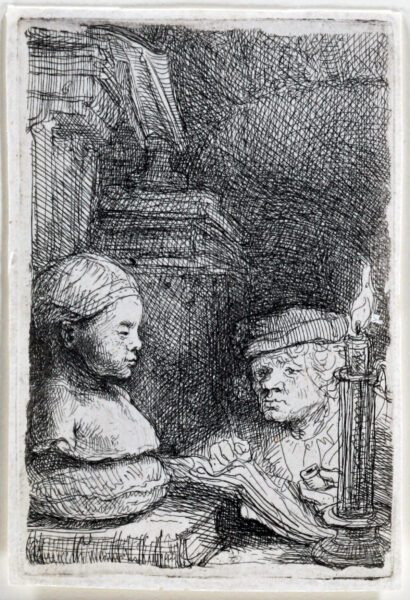
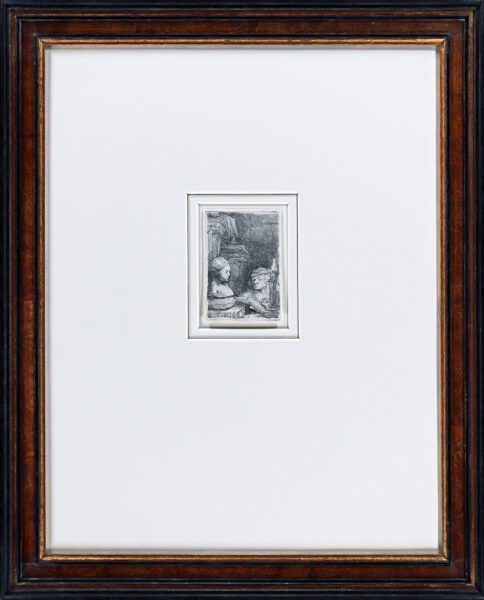
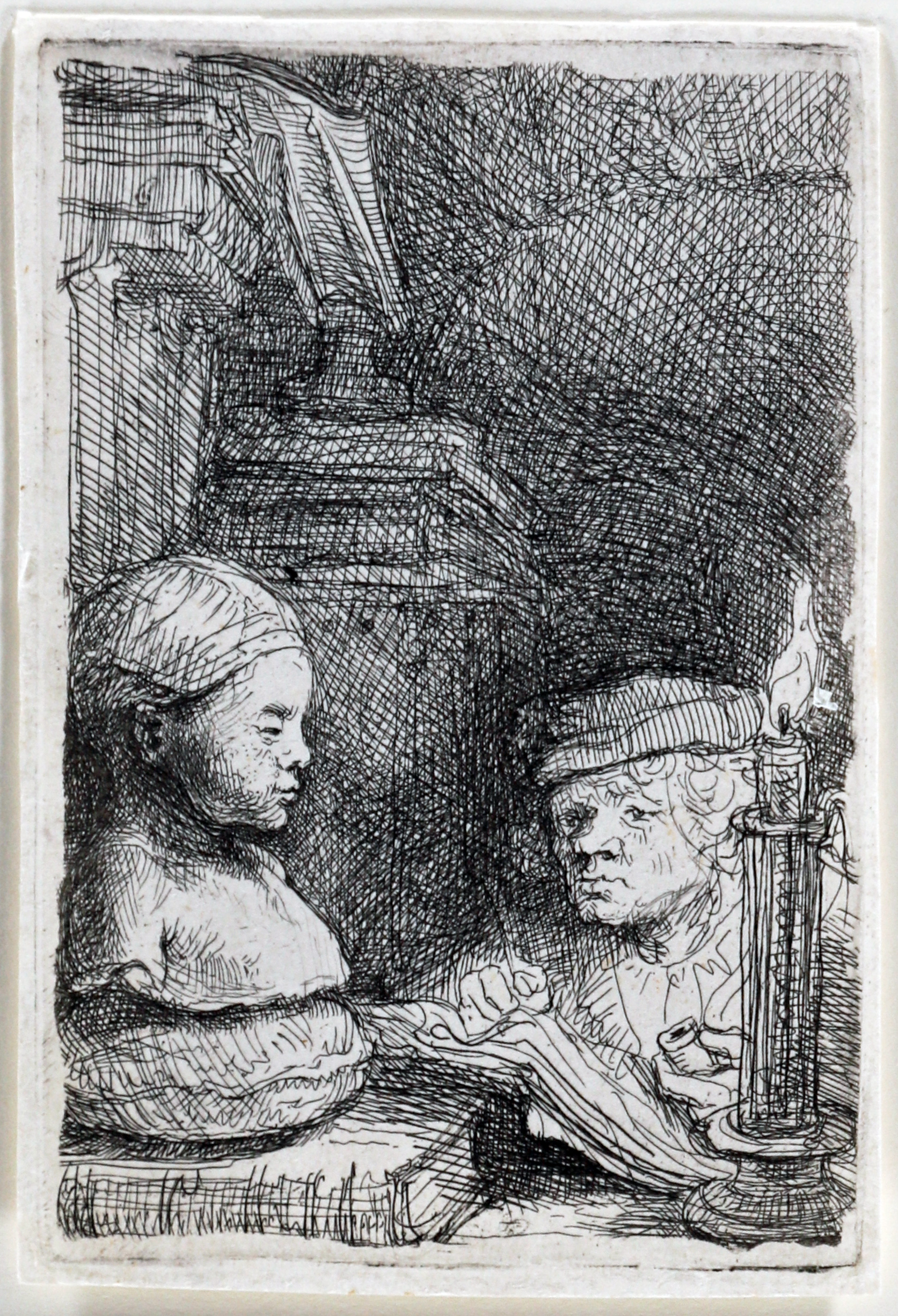
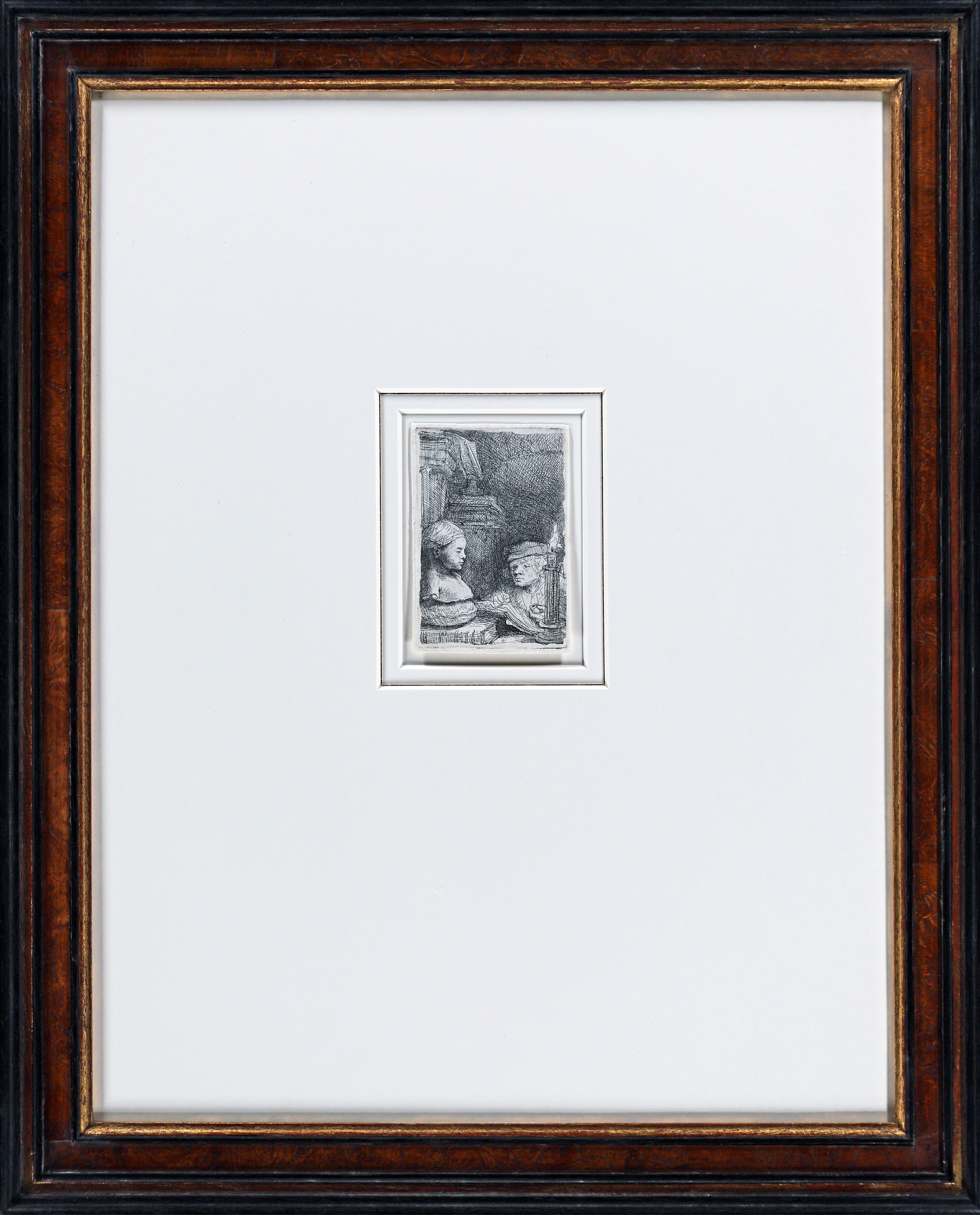
“Man drawing from a cast”, c. 1641
etching: 9,2 x 6,2 cm;
"*" indicates required fields
Notes
During his lifetime, Rembrandt’s extraordinary skills as a printmaker were the main source of his international fame. Unlike his oil paintings, prints travelled light and were relatively cheap. For this reason, they soon became very popular with collectors not only within, but also beyond the borders of the Netherlands.
Offering a private view into the effort of an artist, Rembrandt depicts the action of drawing in Man Drawing from a Cast. Drawing after sculptures or plaster casts was a regular part of artistic training; only after having mastered this sufficiently was the young painter allowed to draw from the living model. Your own sketches, but also drawings and prints by other artists, were a reservoir of information and inspiration, to be delved into at will. These same methods appear to be employed in the workshop depicted here as well, given the large number of albums, books and papers stuffed into the cabinets in the background. A large-sized book has even been used as an improvised socle for the cast.
Rembrandt’s technique is important to the success of this intimate etching. Beyond the man and his cast, the world retreats, as a single candle illuminates this quiet night scene. The limited light directs both our focus and the man’s, and subtle tonal shifts move across the lowly lit forms, rendering this scene with precision. Through his use of contrasts, Rembrandt evokes the moment as not so much one of solitude, as of intimacy. There could, in addition, be a moral subtext to the work: practice makes perfect. There is surely an autobiographical element operating; the features of the artist depicted here bear a slight resemblance to Rembrandt’s own, even if it is not a self-portrait.
This impression is from the first of six states; only this state was by Rembrandt himself.
Provenance
- With the collector’s mark of J.E. Wetterauer on verso (Lugt 3870)
- Private Collection, The Netherlands
Literature
Bartsch 130; The New Hollstein Dutch 192: first state of VI
Plate in existence in the Kremer Collection- with Nowell-Usticke (1967): C1