
Joos de Momper
(1564 - Antwerp - 1635)
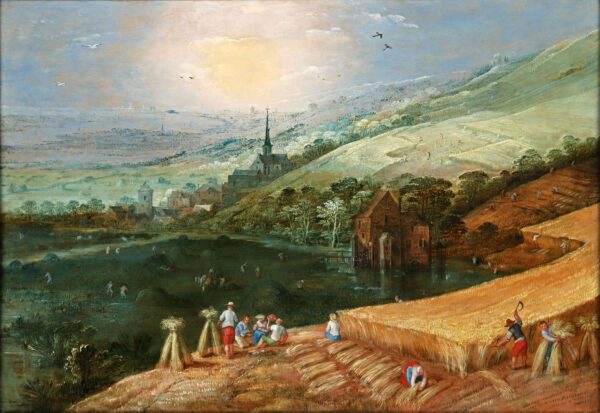
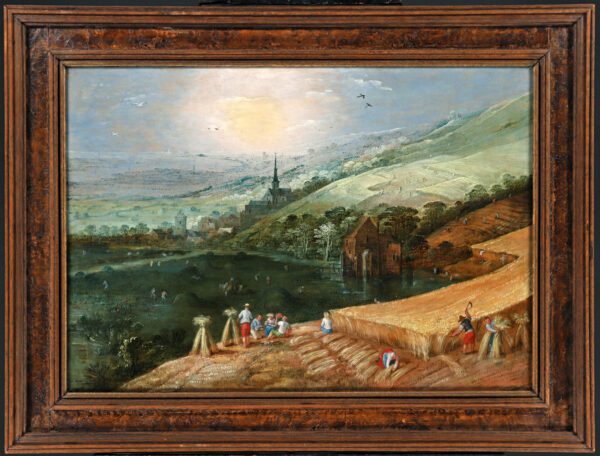
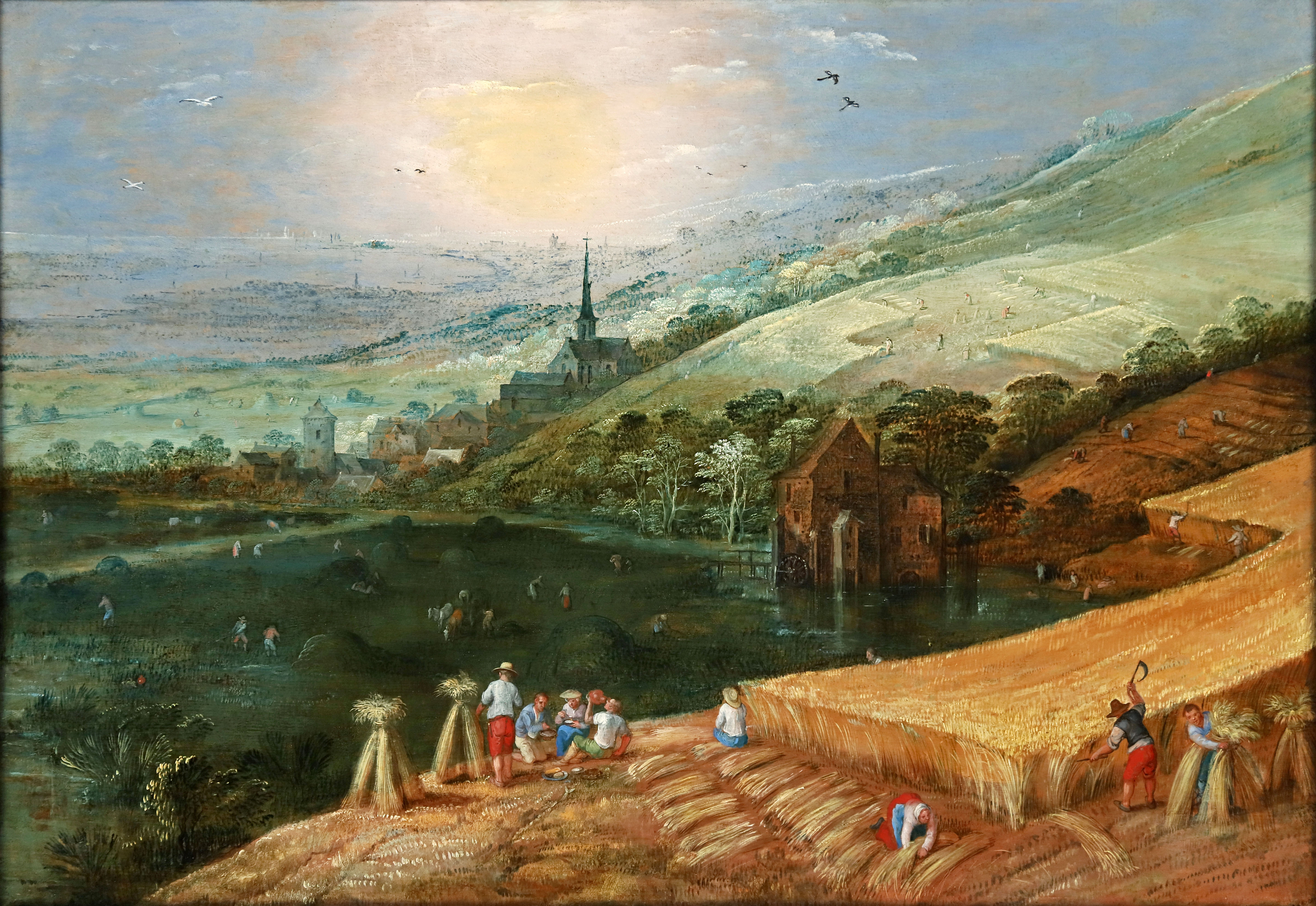
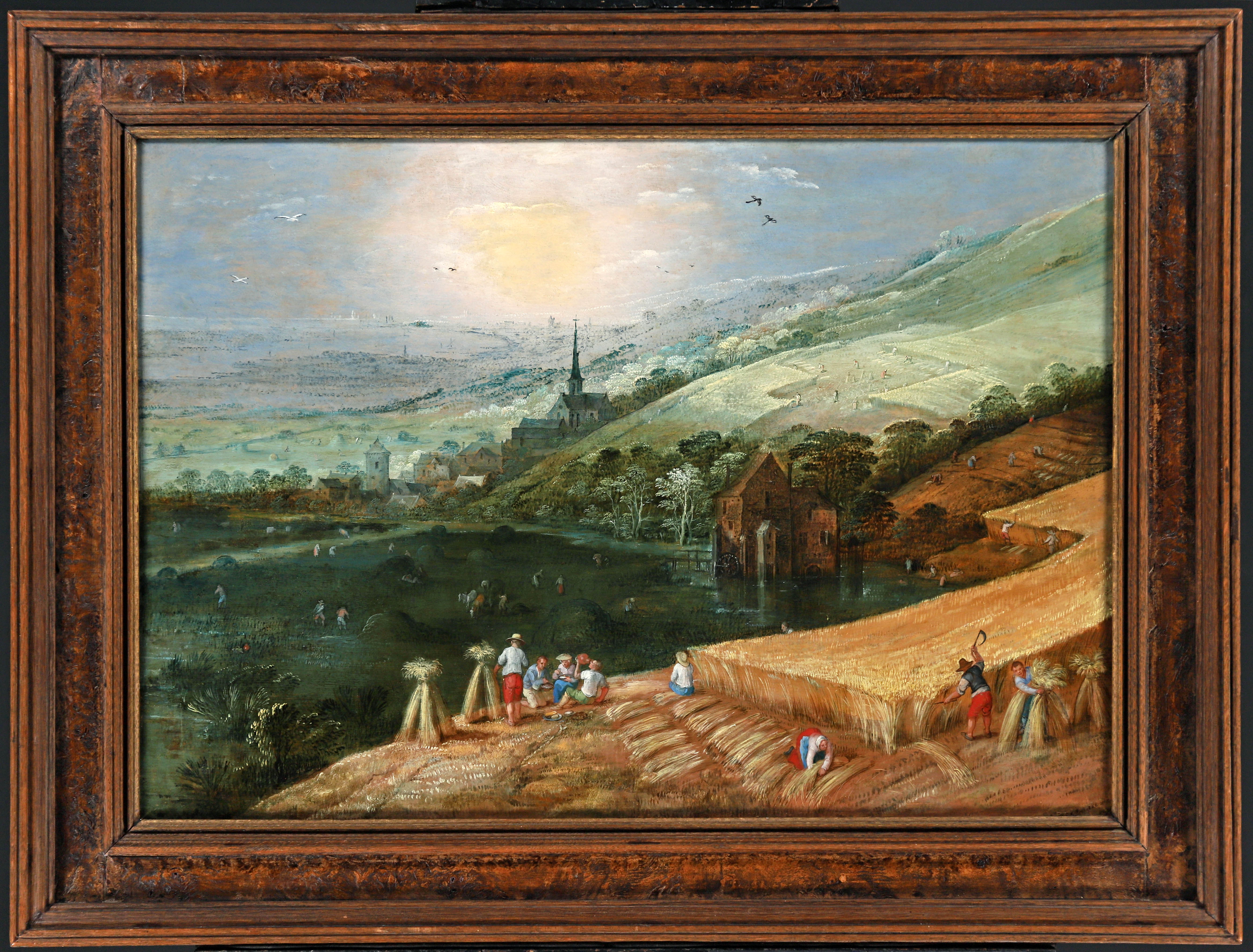
“Summerlandscape, Harvesting Corn”
Oil on panel: 46 x 66,5 cm;
painted circa 1610
"*" indicates required fields
Notes
Such summer landscapes with harvesters were clearly amongst De Momper’s most popular picture types for he painted more than several of them, of varying sizes, throughout the 1610s and ’20s. Almost all follow the same compositional arrangement, with a hay or corn field set in a panoramic valley landscape. They too are often populated by the same figures: the man in the lower right, with scythe raised, wearing red breeches, white chemise with blue vest and a wide-brimmed hat, is found in several other works as described by Klaus Ertz. Harvesting scenes had appeared in calendars since the Middle Ages, illustrating the labours of the months. This painting however, like most of De Momper’s harvest scenes, does not specifically represent a month but could be generally regarded as an allegory of summer, as Ertz has also suggested.
De Momper’s landscape is populated by a vast assortment of farm labourers. Men cut the tall corn with scythes while women bundle it, probably to be loaded onto carts to be transportred off the field. A group is relaxing with a picknick. Quite apart from allegorising summer, the picture glorifies country living for an urban class of patrons eager for a window into the rural idyll.
Joos de Momper learned to paint from his father Bartholomeus de Momper and in 1581 he became a ‘vrijmeester’ or master in the Antwerp Guild of St. Luke. His registered pupils were Louis de Caullery, and Philippe de Momper. He was followed by Frans de Momper and Hercules Seghers. In the 1580s, he travelled to Italy to study art. De Momper primarily painted landscapes, the genre for which he was well regarded during his lifetime. He painted both fantasy landscapes, viewed from a high vantage point and employing a conventional Mannerist colour transition of brown in the foreground to green and finally blue in the background, and more realistic landscapes with a lower viewpoint and more natural colours. His wide panoramas also feature groups of figures. Only a small number of the 500 paintings attributed to De Momper are signed, and just one is dated.
Provenance
- Galerie St.Lucas Wenen
- art dealer P. Casirer, Amsterdam
- sold to a private collector in 1937
- with Douwes Fine Art, by 1996
- sold to a private collection in 1996, where it has remained up to the present.
Literature
- K. Ertz, ‘Josse de Momper der Jüngere, 1564-1635, Freren 1986, cat. no. 296, p. 549, text p. 224, ill. no. 243.