
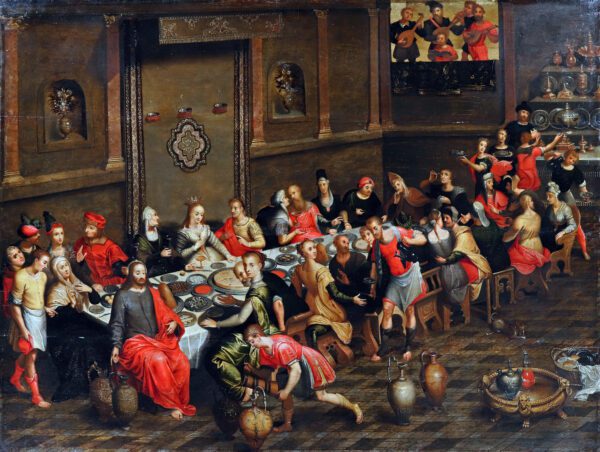
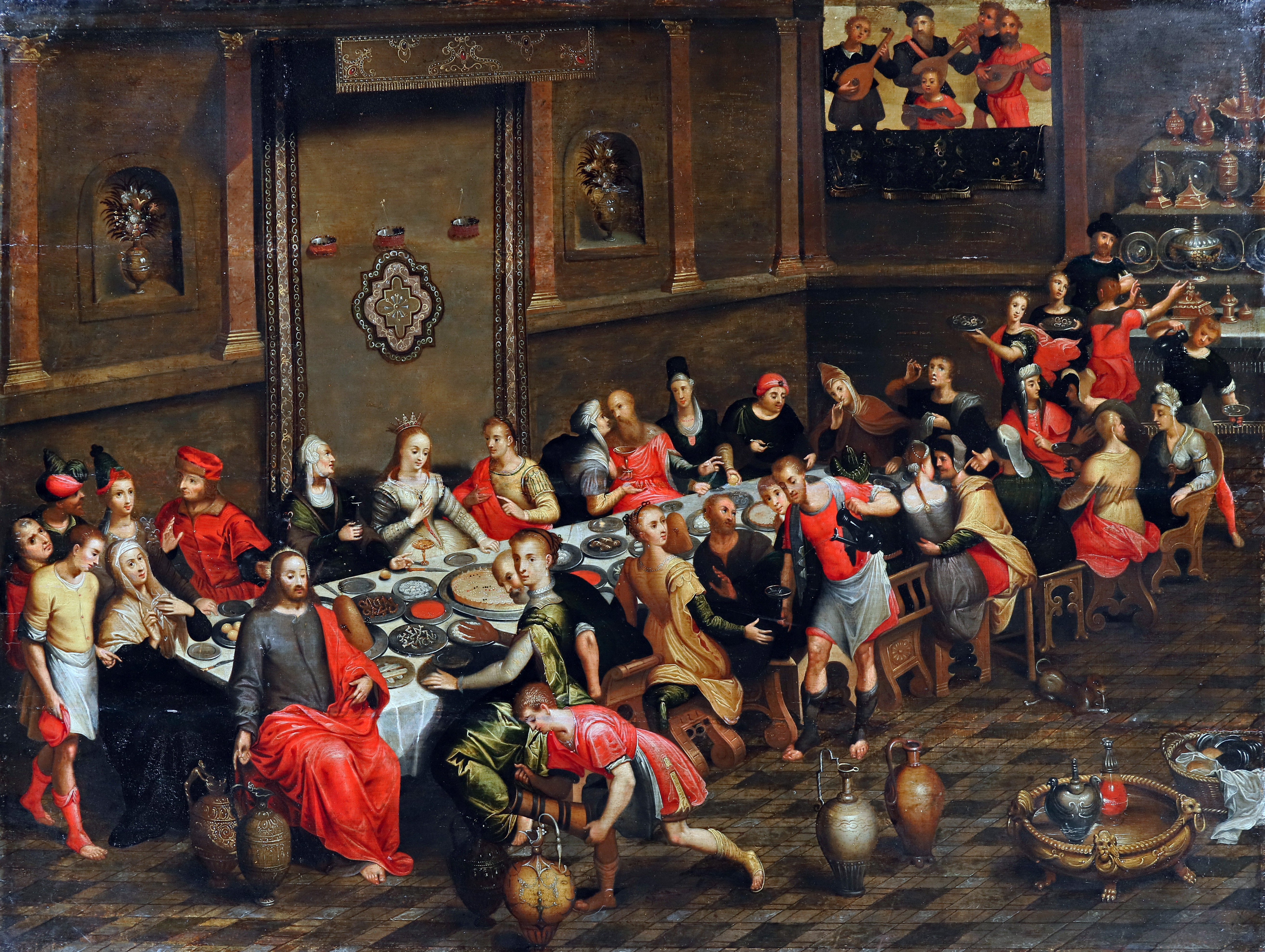
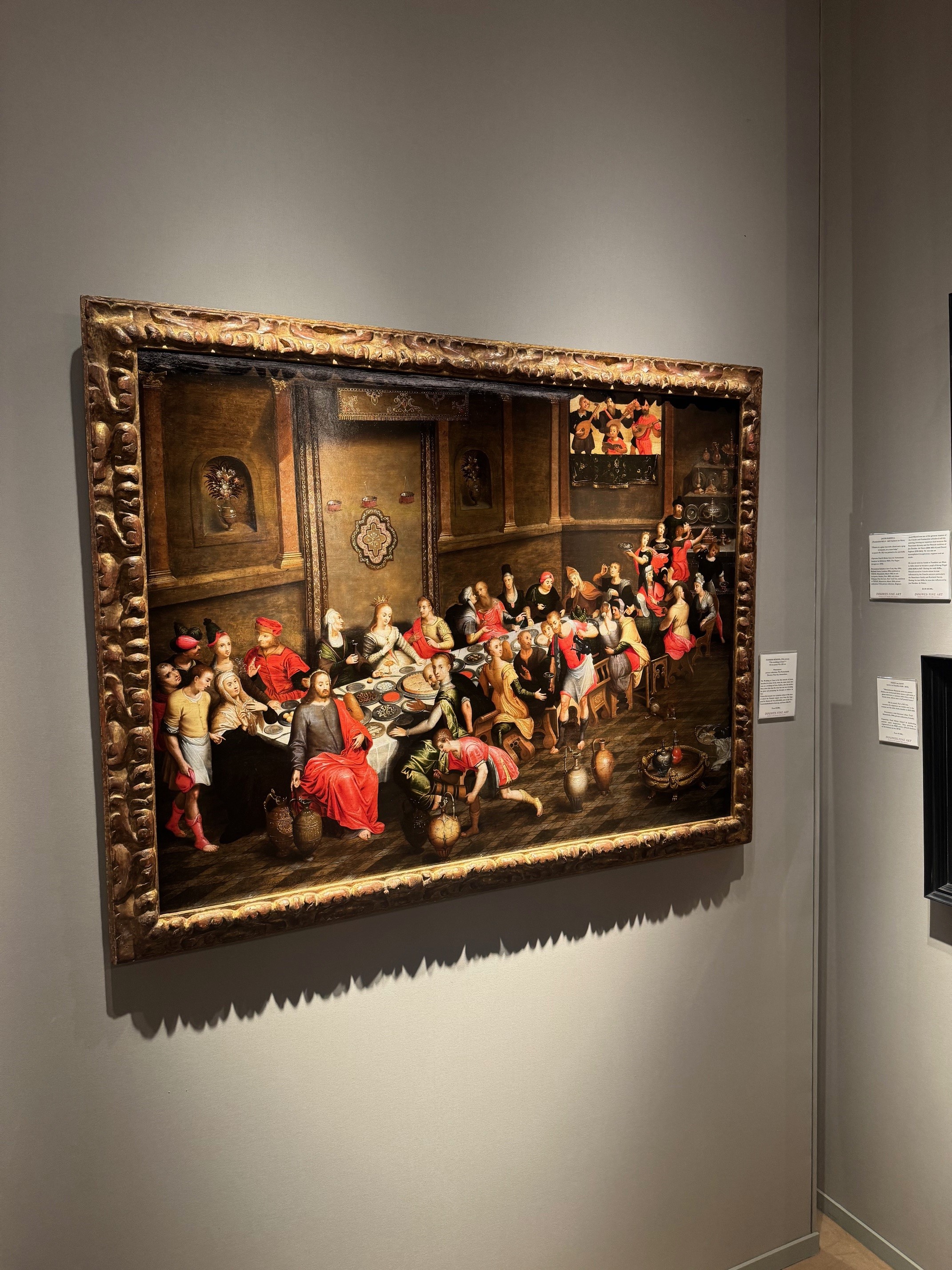
attr. Frans Francken II and studio
(1581 - Antwerp - 1642)
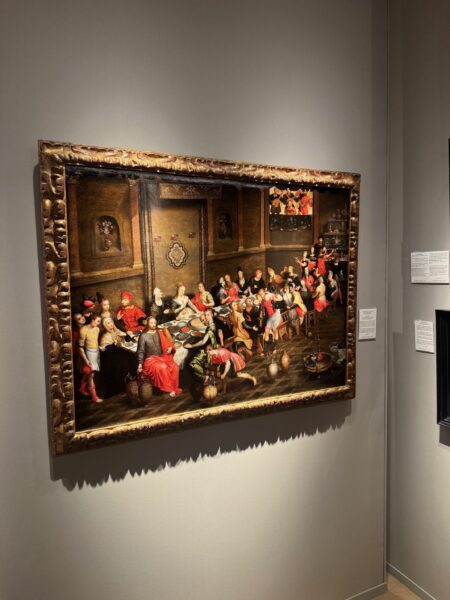
“The wedding at Cana”
Oil on panel: 92 x 122 cm
"*" indicates required fields
Notes
The Wedding at Cana is the first miracle of Jesus, described in John 2:1-11, where he turns water into wine at a wedding in Cana, Galilee, after his mother Mary alerts him that the wine has run out, revealing his glory and prompting his disciples to believe in him. This biblical event signifies the beginning of Jesus’ public ministry, symbolizes new life and abundance, and highlights Mary’s intercession, foreshadowing the Eucharist.
Frans Francken the Younger was a Flemish painter and the best-known member of the large Francken family of artists. He played an important role in the development of Flemish art in the first half of the 17th century through his innovations in many genres including genre painting and his introduction of new subject matter. He was a frequent collaborator of leading Antwerp painters of his time.
Frans Francken the Younger likely first worked in the family workshop before he became an independent master in the Antwerp Guild of Saint Luke in 1605. He was deacon of the Guild in 1616. Francken’s talent was recognised from an early age. Already in 1607 he was able to buy a house in the city centre where he established his residence and workshop. He became a very successful artist and operated a large workshop.
Frans Francken the Younger was a versatile artist who practised in many genres and introduced new subjects into Flemish art. Many of his works are small historical, allegorical and biblical cabinet paintings with the focus on figures. He also invented or popularized several new themes that became popular in Flemish painting, such as genre scenes populated by monkeys (also referred to as singeries) and Kunstkammer or gallery paintings displaying a wealth of natural and artistic treasures against a neutral wall. Frans Francken the Younger introduced many other unusual themes that later became popular, such as the ‘Triumphal Procession of Amphitrite’ and ‘Croesus and Solon’. Francken also made a series of paintings depicting witches and witchcraft, including portrayals of witches’ sabbats.
Provenance:
- private collection, The Netherlands
- Douwes Fine Art, Amsterdam.